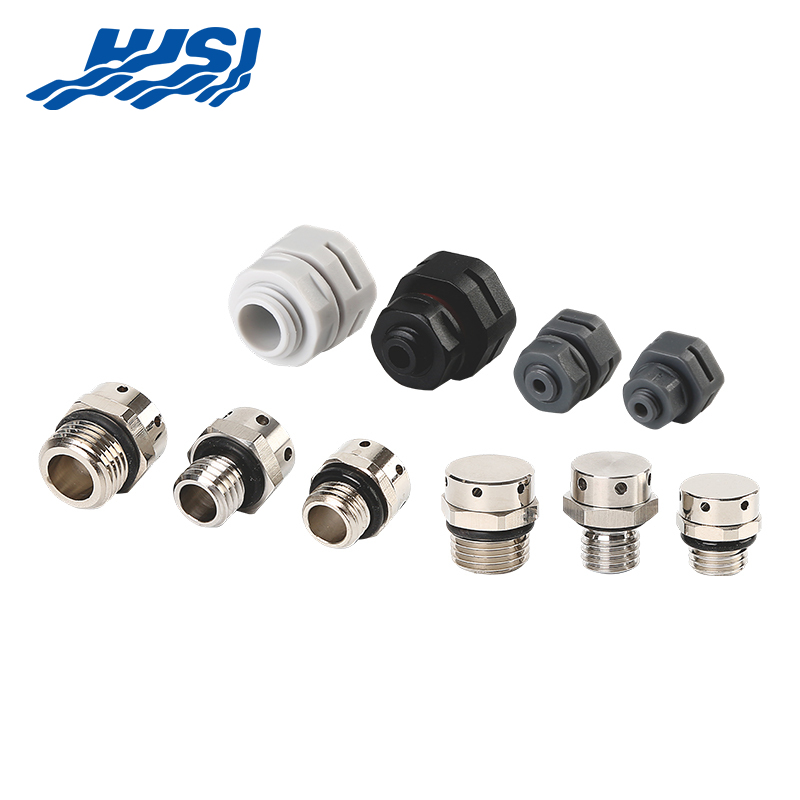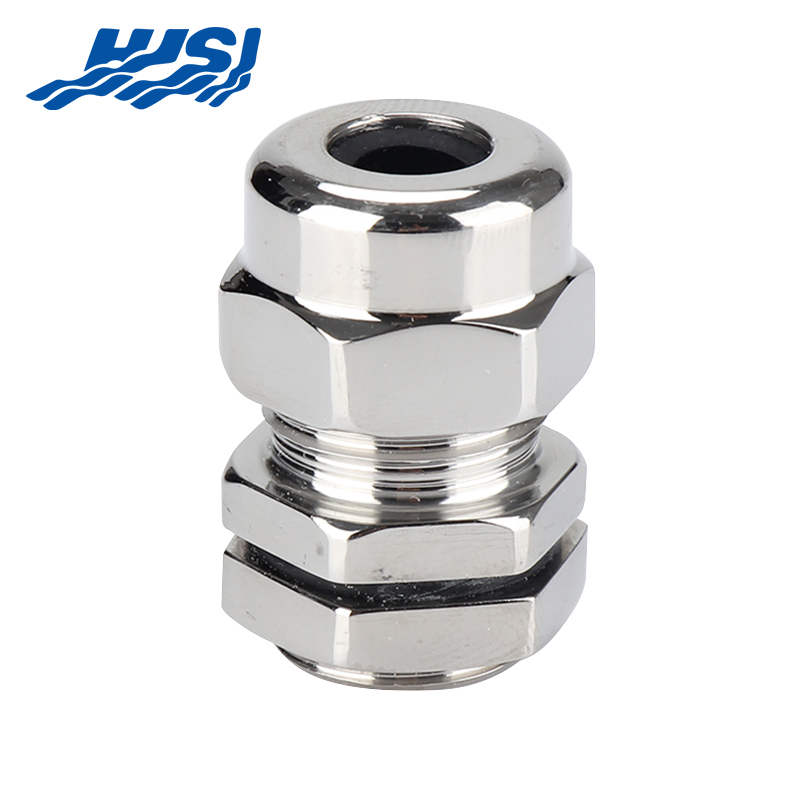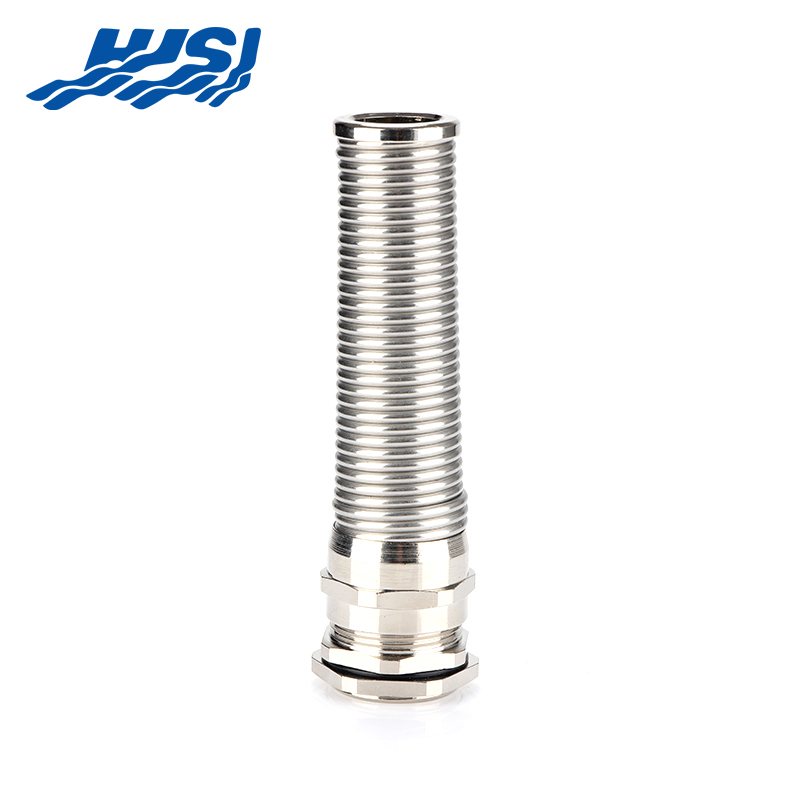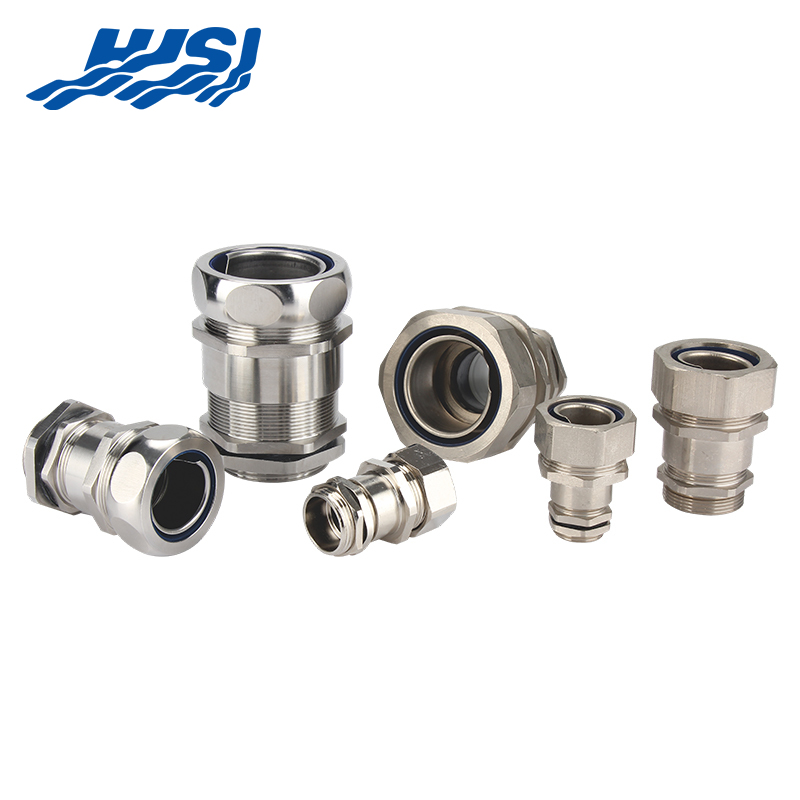
Conduit systems create protected routes for electrical conductors, communication lines, and related utilities across buildings, industrial sites, outdoor areas, and buried installations. These routes safeguard contents against mechanical injury, arrange pathways through structural elements, and limit exposure to surrounding conditions. Connectors serve as the joining elements between conduit lengths, manage directional shifts, adjust for size differences, or link to enclosures and devices. Every connection introduces possible entry points for external elements unless sealing establishes an effective barrier. Among the specialized components designed to address these vulnerabilities, the Conduit Gland plays a particularly important role by providing secure, sealed cable entry while preserving the overall integrity of the conduit system. Many installers and engineers source high-quality solutions from a reputable Conduit Gland Factory that produces glands engineered for demanding environments, ensuring consistent performance in moisture-prone, hazardous, or vibration-heavy applications.
Sealing builds a continuous defense at junctions to block water, condensation, dust, particulates, vapors, gases, or small organisms from entering or migrating through the system. This defense preserves the conduit's shielding function from start to end. Absent reliable sealing, installations encounter progressive deterioration, abrupt malfunctions, or escalated risks that influence operational safety, continuity, and lifespan.
Conduit deployments occur in varied contexts. Interior dry zones manage ambient humidity or airborne particles. Damp interior spaces handle occasional liquid contact or vapor buildup. Exterior pathways confront rainfall, temperature cycles, and airborne contaminants. Buried sections face groundwater pressure, soil chemistry, and subterranean gases. Industrial surroundings bring chemical atmospheres, process dust, mechanical vibration, or elevated temperatures. Across these settings, connectors stand as pivotal locations where sealing quality shapes overall dependability.
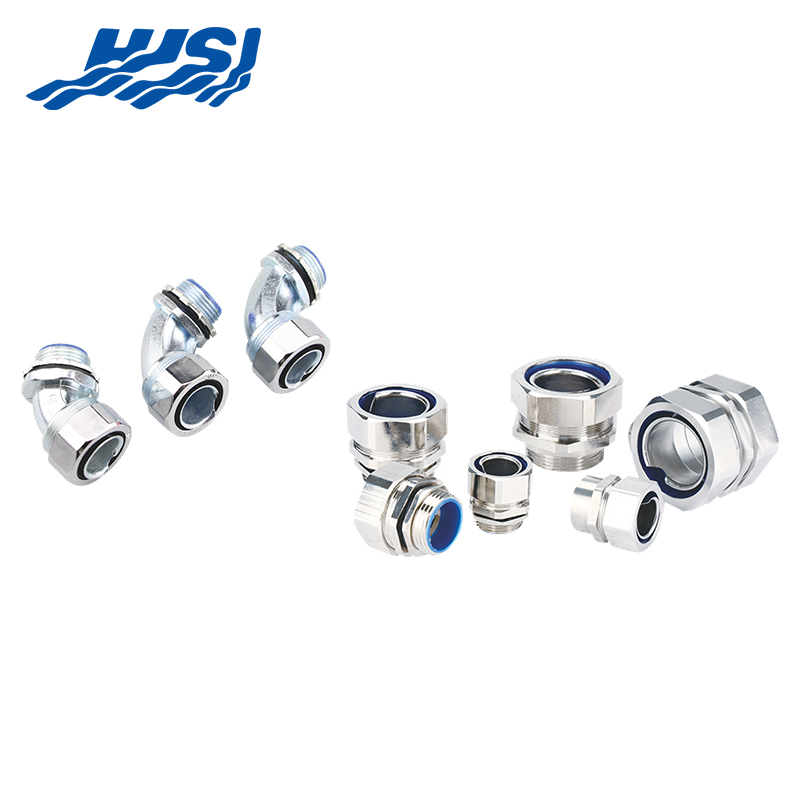
Connectors appear in diverse forms to address conduit characteristics and pathway needs. Straight couplings unite sections in line for extended straight segments. Elbow connectors support angular changes to navigate around barriers. Reducers bridge diameter variations, while adapters reconcile material differences between metallic and non-metallic conduits. Unions enable separation for inspection or modification without full disassembly.
Metallic conduits, including rigid types, commonly feature threaded interfaces. Threads deliver firm attachment but form helical channels susceptible to passage without supplementary barriers. Non-metallic conduits depend on adhesive-bonded joints or compression fittings equipped with embedded sealing components. Cross-material connections necessitate adapters engineered for compatibility.
| Conduit Type | Connection Type | Sealing Requirement |
|---|---|---|
| Metallic | Threaded | Supplementary barriers needed (helical path) |
| Non-metallic | Adhesive-bonded | Seal via bonding |
| Non-metallic | Compression fitting | Built-in embedded seals |
| Cross-material | Engineered adapters | Compatibility-focused sealing |
Sealing expectations vary by location. Dry interior placements concentrate on excluding dust to limit internal accumulation. Exposed or damp zones require barriers against liquid penetration to avoid degradation or conductivity problems. Classified zones necessitate containment of vapors or restriction of flame travel.
Connectors subject to vibration need seals capable of enduring repeated motion while retaining contact. Thermal swings demand substances that preserve characteristics across ranges without embrittlement or excessive yielding. Connector geometry influences sealing options; certain designs incorporate recesses for gaskets, whereas others depend on surface-applied layers.
Insufficient sealing generates issues that build slowly or manifest suddenly. Liquid or vapor entry ranks as a primary concern. Moisture fosters oxidation on internal metallic surfaces and weakens conductor coverings. Ongoing oxidation raises electrical resistance, produces localized heating, and increases the likelihood of interruptions or breakdowns.
Solid particle entry adds complications. Dust or debris collects on surfaces, leading to wear or unintended conductive links. In conductor systems, such deposits foster surface discharge or sparking. Fluid pathways encounter restrictions or pollution from outside matter.
Vapor or gas movement creates substantial concerns in particular arrangements. Unblocked routes enable flammable or harmful substances to spread, forming dangerous mixtures or compromising air conditions. Within structures, external gases may travel inward, affecting occupied zones or delicate apparatus.
Thermal variations aggravate weaknesses. Cyclic expansion and contraction apply stress to barriers, expanding openings when substances lack adequate adaptability. Mechanical oscillations from adjacent machinery or external sources gradually displace connections, enlarging access routes.
Safety threats arise from these developments. Conductor faults elevate chances of contact injury, overheating, or ignition sources. In process environments, releases endanger individuals or require emergency measures.
Service interruptions follow. Installations call for reactive repairs, part exchanges, or decontamination. Outages diminish output, while persistent difficulties inflate upkeep efforts.
Guideline violations incur repercussions. Examinations identify unsealed areas as shortcomings, prompting corrections, sanctions, or activity halts. Coverage provisions may come under review when events trace back to sealing deficiencies.
Ecological outcomes encompass unintended emissions that influence adjacent ground, water bodies, or atmosphere. Reliable sealing curbs these occurrences, contributing to protection aims.
Deliberate sealing produces gains in protection, endurance, consistency, and resource management. External defense shields internal parts, decelerating breakdown processes. Coverings stay functional longer, extending replacement cycles.
Operational duration lengthens as oxidation slows and physical strain reduces. Conduits and connectors sustain capabilities closer to starting levels across extended periods.
Protection levels rise with lowered malfunction probabilities. Liquid-related conductivity losses decline, vapor or ignition spread risks decrease in suitable scenarios, and general exposure diminishes.
Operational steadiness advances. Systems proceed without entry-linked disruptions, delivering reliable energy transfer or material movement.
Resource consumption improves in applicable configurations. Unbroken routes restrict inefficiencies from pressure fluctuations or buildup.
Adherence to provisions eases. Configurations fulfill code stipulations, accelerating verifications and acceptances.
Upkeep intervals shorten. Planned activities supplant urgent responses, stabilizing expenditures.
Exposed surfaces retain appearance without oxidation marks or discharge evidence.
These outcomes render sealing a strategic component in conduit oversight.
Sealing strategies include compression-based, substance-applied, and integrated techniques. Gaskets, frequently elastomeric, compress between interfaces to adapt to surface variations. They suit threaded or mated connections where applied force forms the barrier.
Tapes encircle threads or unions, conforming to profiles and supplying adaptable layers.
Substances, provided as pastes, moldable masses, or fluids, occupy interstices and solidify to establish barriers. Certain varieties expand modestly during setting for enhanced fill.
End caps or bushings block terminations or idle ports, restricting access at extremities.
Substance selection matches circumstances. Elastomers supply pliability for oscillation or thermal adjustment. Specific compositions withstand solvents, lubricants, or broad temperature bands. Others emphasize liquid exclusion or vapor impermeability.
Multi-layer applications reinforce defense. A gasket paired with tape or substance provides overlapping safeguards.
Interface preparation holds importance. Clean, moisture-free surfaces facilitate bonding or consistent compression. Residue elimination prevents compromised zones.
Application proceeds in structured stages. Uniform distribution avoids cavities or surplus that obstructs joining.
Verification assesses outcomes. Visual assessment detects openings, while pressure or conductivity evaluations uncover breaches where relevant.
Advance evaluation initiates efforts. Location analysis pinpoints exposures, directing selections. Dimensional checks confirm compatibility across elements.
Cleaning occurs prior to application. Threads or mating faces undergo treatment to eliminate contaminants.
Procedure-specific actions follow. Tape applies with consistent overlap in appropriate orientation. Substances spread evenly, reducing enclosed air.
Joining aligns components linearly, preventing torsion that strains barriers. Securing achieves firm engagement without displacing material excessively.
In lengthy assemblies, connectors progress sequentially to sustain alignment.
Conductor installations ensure barriers do not obstruct movement. Unobstructed interiors ease insertion.
Examination post-joining verifies positioning and removes surplus.
Avoiding hurried execution prevents mistakes like irregular coverage or disregarded surroundings.
Records capture substances and procedures for subsequent reference.
Sustained attention extends sealing durability. Visual assessments identify fractures, alterations, displacements, or leakage indications adjacent to connectors.
Scheduled actions renew applications in vulnerable zones or substitute deteriorated gaskets.
Examination supports include illumination for concealed areas and straightforward instruments for probing.
Interval adjustment responds to conditions. Severe exposures require frequent review compared to controlled interior placements.
Documentation captures observations, identifying recurring patterns for modification.
Enhancements during service integrate refined substances.
Instruction highlights recognition of deterioration markers such as liquid evidence or loosened components.
Embedding within standard system supervision maintains sealing focus.
In a commercial building, connectors in a moist lower level remain unsealed. Condensation accumulates, oxidizing conductors and generating sporadic interruptions. Correction disrupts activity and necessitates segment renewal.
A parallel configuration with sealed connectors withstands ambient vapor, preserving uninterrupted service.
An industrial operation with vapor presence allows unsealed connectors to release contents, producing unsafe conditions and examinations.
Sealed equivalents retain materials, sustaining protection.
Exterior conduit exposed to precipitation suffers conductivity losses without barriers. Protected arrangements persist reliably through varying weather.
These instances reveal sealing's concrete effects.
Provisions detail sealing expectations across contexts. Requirements encompass liquid exclusion in damp placements, vapor containment in designated zones, and broad entry prevention.
Knowledge of stipulations assists compliant configuration.
Intermittent revisions mirror practice development, calling for ongoing awareness.
Incorporation at outset avoids subsequent alterations.
Sealing limits early deterioration, prolonging utility and decreasing resource demands for renewal.
Emission prevention restricts unintended releases, guarding nearby environments.
Substance preferences lean toward reduced-impact alternatives in manufacturing or disposal phases.
Preserved efficiency from barriers aids lower consumption patterns.
Evolution in Sealing Technology
Progress introduces substances with elevated endurance. Certain compositions respond to limited impairment independently.
Selected arrangements embed monitoring for timely detection.
Such innovations raise capability in rigorous applications.
Education provides workers with approach familiarity, substance knowledge, and error prevention.
Applied sessions replicate settings to cultivate expertise.
Programs affirm proficiency.
Continued learning follows advancements.
Initial commitment to quality sealing offsets through prevented corrections, minimized interruptions, and prolonged duration.
Assessment contrasts preliminary expenditure with enduring advantages.
Upkeep allocation averts substantial future costs.
Broad-scale endeavors coordinate extensive connectors, necessitating uniform execution.
Non-standard pathways require versatile solutions.
Capability-practicality equilibrium guides determinations.
| Challenge | Core Need / Action | Decision Driver |
|---|---|---|
| Large-scale projects | Uniform execution across many connectors | — |
| Irregular / complex routes | Versatile, adaptable solutions | — |
| Overall selection | — | Balance capability vs. practicality |
Investigation pursues enduring, flexible substances. Monitoring combination delivers forward indicators.
Sustainability directs recyclable or minimized-impact selections.
These trajectories promise strengthened safeguarding moving forward.
Manufacturers such as Zhejiang HJSI Connector Co., Ltd. contribute to this field by producing a range of cable and conduit glands in materials like brass, stainless steel, and nylon, designed to achieve reliable IP-rated protection, accommodate armored or flexible conduits, and support applications from marine and industrial settings to explosive-risk zones.
These components, through features such as compression sealing, integrated gaskets, and robust threading, provide a secure entry point that maintains the conduit's integrity while allowing controlled cable passage. As installations continue to evolve toward greater resilience and adaptability, incorporating well-engineered conduit glands represents a practical step in reinforcing long-term performance and safety at connection interfaces.

2nd Floor, Building 2, No. 188, Punan 3rd Road, Economic Development Zone, Yueqing City, Wenzhou City, Zhejiang Province, China

Copyright @ Zhejiang HJSI Connector Co., Ltd. All rights reserved.

China Waterproof Breathable Valve Manufacturer
 +86-15858552966
+86-13356176555
+86-15858552966
+86-13356176555
 English
 русский
 عربى
عربى