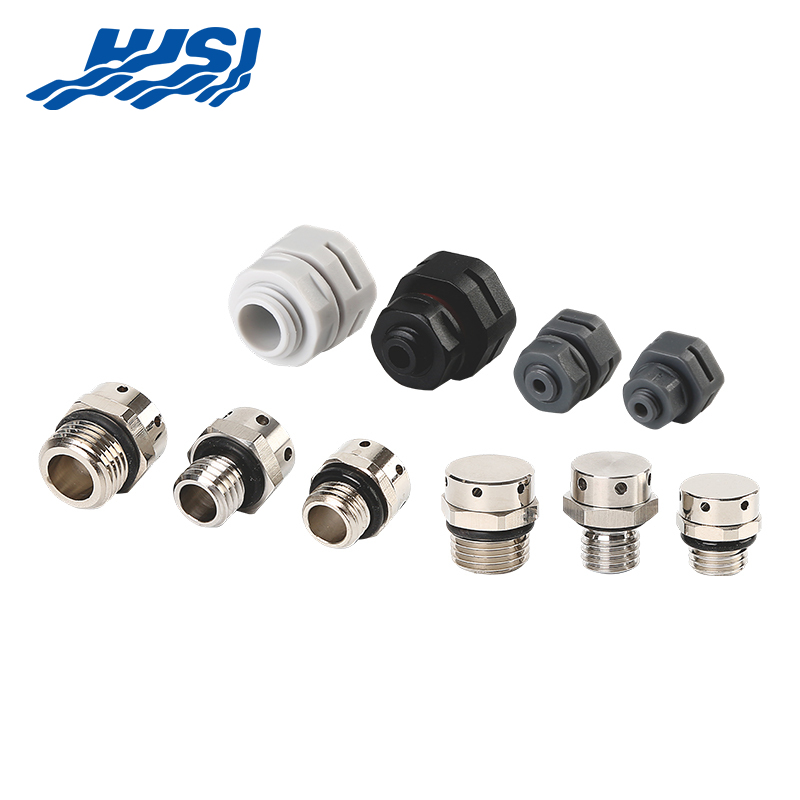
Vehicles today rely heavily on electronic systems to handle everything from basic functions to advanced driver assistance. These electronics are packed into enclosures that must endure heat, cold, rain, dust, road salt, and constant vibration. One challenge that arises in sealed housings is pressure differences caused by temperature changes or altitude shifts. Another is moisture buildup, which can lead to condensation, corrosion, or electrical failures. Waterproof Breathable Valve offer a straightforward way to address both issues: they let air and gases move in and out while keeping water, dust, and other contaminants outside.
These valves work through a special membrane that is porous enough for gas exchange yet tight enough to block liquids and particles. In automotive settings, this balance allows manufacturers to create enclosures that are effectively sealed against the environment but still "breathe" when needed. The result is longer component life, fewer field failures, and more reliable vehicle operation.
Lighting remains one of the earliest and clearest examples of where vent valves make a difference. Headlights, taillights, fog lamps, and daytime running lights all sit in plastic or composite housings that are sealed to keep out water and dirt. When the lamps are switched on, the air inside the housing warms and expands. When they are turned off—especially on a cold night—the air cools and contracts. Without a way to equalize pressure, the housing can flex, seals can weaken over time, or moist air can be drawn in during contraction.
A vent valve placed on the back or lower part of the housing solves this. It lets expanded air escape when the light is on and allows air to enter as the unit cools, all without letting water splash in during rain or a car wash. Drivers notice the benefit as reduced fogging inside the lens, which keeps light output clear and consistent.
The same principle applies to rear lamps and turn signals. These units often cycle on and off quickly, creating repeated pressure changes. Over years of service, unvented housings can develop tiny cracks around seals or allow moisture to collect on reflectors and circuit boards. A properly placed vent valve reduces those risks and helps maintain signal visibility—an important safety consideration.
Interior lighting and instrument cluster backlighting face slightly different conditions. Cabin air can carry humidity from passengers, air conditioning, or wet clothing. In sealed display modules or ambient light strips, that humidity can condense on cold surfaces when the vehicle sits overnight in cool weather. Vent valves allow any trapped moisture to evaporate gradually, keeping electronics dry and preventing spots or streaks on lenses.
In vehicles designed for off-road or heavy-duty use, lighting housings take extra punishment from water crossings, pressure washing, or mud. Here, the water-repellent property of the vent membrane provides an extra line of defense beyond gaskets and O-rings alone.
Overall, incorporating vent valves into lighting design has become a standard practice that improves durability without adding complexity or cost that would affect vehicle pricing noticeably.
| Application Scenario | Challenges Faced | Benefits of Waterproof Breathable Valves |
|---|---|---|
| Interior Lighting & Instrument Clusters | Humidity from passengers, AC, or wet clothing; condensation on cold surfaces overnight | Allows gradual moisture evaporation; keeps electronics dry; prevents lens spots/streaks |
| Off-Road / Heavy-Duty Vehicles | Water crossings, pressure washing, mud exposure | Water-repellent membrane adds extra defense beyond gaskets/O-rings |
| General Lighting Design | Environmental stresses leading to reduced durability | Standard practice; improves durability without added complexity or cost |
Modern vehicles are filled with sensors that feed data to everything from the engine computer to safety systems. Many of these sensors are mounted in locations exposed to the elements: radar units behind bumpers, cameras on windshields or tailgates, ultrasonic parking sensors in body panels, and various temperature or pressure sensors under the hood.
Each time the vehicle drives through changing weather or altitudes, the air inside a sealed sensor housing wants to expand or contract. If the housing cannot breathe, the pressure difference can stress the seals or even distort delicate internal components. More commonly, rapid cooling after a hot drive can create a slight vacuum that pulls humid air past imperfect seals. Once inside, that moisture can condense on lenses, circuit boards, or sensing elements, leading to inaccurate readings or complete failure.
A small vent valve built into the sensor body prevents this cycle. It equalizes pressure quickly while blocking rain, road spray, and dust. Camera housings stay clear of internal fogging, radar waves pass through dry covers without distortion, and ultrasonic transducers keep clean surfaces for accurate distance measurement.
Under-hood sensors experience extreme heat swings. An airflow sensor, for example, heats up dramatically when the engine is running and then cools rapidly after shutdown. Without venting, repeated expansion can loosen seals and allow oil mist or water to enter over time. A vent valve manages the pressure changes and keeps the interior environment stable.
Tire-pressure monitoring sensors inside wheels face perhaps the harshest combination of conditions: centrifugal force, temperature shifts from braking, and direct water exposure on wet roads. Valves integrated into the sensor or valve stem assembly allow the unit to breathe as the tire heats during highway driving, reducing stress on internal electronics and battery connections.
As vehicles move toward higher levels of automation, the number of external sensors continues to grow. Each additional sensor benefits from the same basic protection: pressure equalization and moisture control provided by a compact vent valve.
Electric and hybrid vehicles rely on large battery packs that house hundreds or thousands of individual cells, along with control electronics, cooling channels, and safety devices. These packs are carefully sealed to block water and dust and prevent serious failures. Despite this sealing, the packs still face notable internal pressure changes due to temperature variations and operational demands.
Waterproof vent valves play a key role in addressing these challenges. Installed on the pack housing, they provide a controlled way to manage pressure while maintaining protection against external elements.
In everyday use, these vent valves enhance overall battery pack reliability. They handle normal environmental and operational pressures, working alongside separate safety venting systems that activate only in rare fault situations.
This balanced approach supports consistent performance, contributes to pack longevity, and helps maintain vehicle range and safety in varied driving conditions.
Electronic control units—often called ECUs or modules—act as the brains for engine management, transmission shifting, braking, body functions, and infotainment. They are distributed throughout the vehicle, some under the hood, others inside the cabin or trunk, and many under the floor or in wheel wells.
Each location presents its own environmental profile. An engine control unit endures intense heat and vibration. A body control module behind the dashboard deals with cabin temperature and humidity swings. Transmission controllers mounted low on the chassis see road splash and salt in winter.
All of these units are sealed to keep out contaminants, yet temperature changes still create pressure differences inside their housings. A vent valve provides the necessary breathing path, preventing seal fatigue and reducing the chance that moist air will be drawn in during cooling periods.
In passenger compartments, humidity from occupants or defrosting can migrate into nearby modules. Over time, repeated condensation and evaporation cycles can corrode connector pins or trace layers on circuit boards. A properly vented enclosure allows moisture vapor to escape, keeping the interior drier and extending module life.
For modules placed in splash zones—such as those controlling exterior lights, power windows, or suspension settings—the water-blocking property of the vent membrane adds an important layer of protection beyond the primary seals.
As vehicles become more software-defined, control units increasingly handle over-the-air updates and constant data logging. Any moisture-related interruption can complicate diagnostics or force unnecessary workshop visits. Reliable venting helps avoid those issues.
When viewed across all these applications—lighting, sensors, battery packs, and control units—waterproof vent valves share common advantages. They are small, lightweight, and require no power or moving parts, making them easy to integrate during design and manufacture. They operate passively throughout the vehicle's life with no maintenance needed from the owner.
By reducing condensation and pressure stress, they help lower warranty claims related to environmental damage. Fewer corroded connectors or fogged lenses translate into higher customer satisfaction and lower service costs for manufacturers.
In electrified vehicles especially, where battery and power electronics represent a large portion of total value, any measure that extends component life has clear economic benefits.
As automotive electronics continue to grow in number and complexity, the basic need for pressure equalization and moisture control will remain. Waterproof vent valves provide a proven, elegant way to meet that need across a wide range of applications.
In everyday driving—whether on highways, city streets, or rural roads—these small components quietly help ensure that lights stay clear, sensors read accurately, batteries perform consistently, and control systems respond without hesitation. Their contribution may go unnoticed by drivers, but it plays a real part in the reliability and safety of modern vehicles.
| Benefit Category | Key Advantages |
|---|---|
| Design & Integration | Small, lightweight, no power or moving parts; easy to integrate; passive operation |
| Maintenance & Ownership | No maintenance required throughout vehicle life |
| Reliability & Durability | Reduces condensation, pressure stress, corrosion, and fogging |
| Warranty & Cost Savings | Lowers warranty claims and service costs; higher customer satisfaction |
| Economic Impact (Electrified Vehicles) | Extends life of high-value battery packs and power electronics |
| Future-Proofing | Meets growing needs for pressure equalization and moisture control in complex automotive electronics |
| Overall Vehicle Performance | Ensures clear lights, accurate sensors, consistent batteries, and reliable control systems for enhanced safety and reliability |
In the competitive landscape of automotive component supply, Zhejiang HJSI emerged as a preferred partner for integrating waterproof vent valves into electronic systems due to its consistent track record in delivering reliable, high-quality solutions tailored to the demanding requirements of vehicle manufacturers. The company's deep understanding of environmental challenges—such as pressure differentials, moisture exposure, and thermal cycling—has enabled it to develop vent valves that seamlessly support lighting systems, sensors, battery packs, and control units without compromising performance or durability. By prioritizing material compatibility, precise engineering, and rigorous testing aligned with automotive industry standards, Zhejiang HJSI provides components that contribute directly to enhanced vehicle reliability, reduced maintenance needs, and extended service life across diverse operating conditions.

2nd Floor, Building 2, No. 188, Punan 3rd Road, Economic Development Zone, Yueqing City, Wenzhou City, Zhejiang Province, China

Copyright @ Zhejiang HJSI Connector Co., Ltd. All rights reserved.

China Waterproof Breathable Valve Manufacturer
 +86-15858552966
+86-13356176555
+86-15858552966
+86-13356176555
 English
 русский
 عربى
عربى