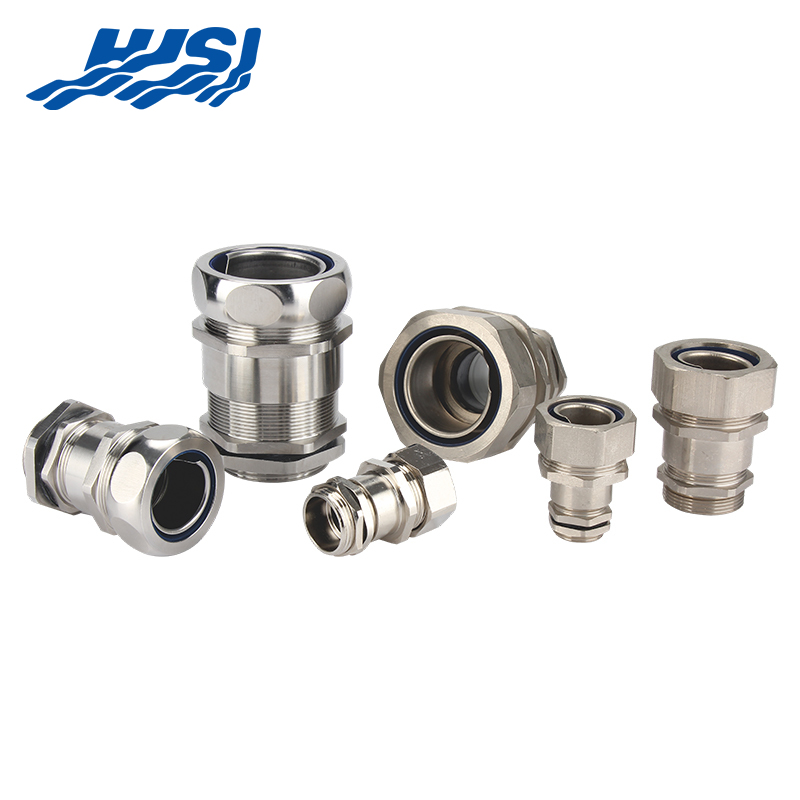
The sealing part of an EMC Cable Gland is what actually closes off the space between the cable jacket and the inside wall of the gland body. When you tighten the nut, that seal gets squeezed, filling any tiny gaps so water, dust, or air cannot sneak through. At the same time, in an EMC gland, the seal presses the cable's shielding braid or foil tightly against a conductive surface inside the gland. That contact gives the shield a direct, low-resistance path to ground on the enclosure, which helps keep electromagnetic noise from leaking in or out.
The seal has to stay flexible enough to follow the cable's shape and size, yet firm enough to hold pressure through years of temperature swings, vibration from nearby machinery, and the occasional bump during maintenance. If the material hardens, cracks, or loses its springiness over time, small openings form. Those openings let moisture or particles enter, and they can also weaken the electrical contact with the shield, allowing interference to creep in. A good seal keeps both the physical barrier and the electromagnetic barrier working together for as long as the installation lasts.
Compression seals are one of the more common setups. They use a ring or cone made of flexible material that squashes down when the gland nut is turned. The material molds itself around the cable jacket, closing off gaps and creating an even grip. Many of these seals can handle a fairly wide range of cable thicknesses within the same gland size, so you do not always need a different part for every cable. In EMC versions, the compression piece is often lined with a conductive layer or woven mesh that touches the shield as the seal tightens.
Diaphragm-style seals rely on a thin, stretchy membrane. As the cable pushes through during installation, the membrane stretches or parts in a controlled way, hugging the jacket tightly. This style works well when cables come in many different thicknesses or when you are dealing with cables that already have connectors on the end. The diaphragm itself can carry conductive properties, or it can work alongside a separate grounding ring to keep the EMC side solid.
Multi-contact seals use small metal fingers, springy strips, or braided sections that reach out and press against the cable shield from several directions at once. Having multiple touch points means the grounding path stays reliable even if one spot loses pressure from vibration or repeated heating and cooling cycles. An elastomer ring usually wraps around these metal parts, keeping moisture away while letting the contacts do their job.
Some glands use a combination approach: a regular flexible seal material for blocking water and dust, plus conductive fillers or a thin conductive layer for grounding. This mix lets the gland handle tough chemical environments without sacrificing the electrical connection.
| Seal Type | Main Components / Structure | How It Works / Key Mechanism | Primary Benefit / Advantage |
|---|---|---|---|
| Multi-contact seal | Small metal fingers, springy strips, or braided sections + surrounding elastomer ring | Multiple metal contacts press against cable shield from different angles; elastomer protects from moisture | Redundant grounding paths; reliable even under vibration or thermal cycling |
| Combination / Hybrid seal | Standard flexible elastomer seal + conductive fillers or thin conductive layer | Elastomer blocks water/dust; conductive elements provide grounding path | Handles harsh chemical environments while maintaining effective electrical connection and environmental sealing |
Threaded compression seals let the turning action of the threads itself do the squeezing. The nut pushes a gasket or tapered piece against a matching surface inside the gland body. It is a clean, mechanical design that holds up well when the gland screws straight into a metal enclosure, though it needs careful tightening to avoid pinching the cable or splitting the seal material.
Each style fits certain situations better than others. Compression seals give you some forgiveness during setup, multi-contact ones stay reliable when things shake a lot, and diaphragm seals make life easier with mismatched or pre-terminated cables. Picking the right one comes down to what the installation will face day to day.
The material the seal is made from decides how long it keeps working and how well it handles both environmental and electrical demands.
Most seals start with a flexible polymer base. Neoprene stands up to oils, greases, and moderate chemicals, which makes it common in industrial plants. Silicone keeps its flexibility through very cold and very hot conditions and resists cracking from weather exposure, so it shows up in outdoor or temperature-changing locations. Fluoropolymer-based materials shrug off strong acids, solvents, and harsh cleaners, though they tend to be stiffer and are usually used sparingly or blended with softer compounds.
To carry electricity for the EMC grounding function, the base material gets mixed with conductive additives—carbon black, silver flakes, nickel particles, or graphite powder. The amount of additive is chosen carefully: enough to make the seal conductive, but not so much that it turns brittle or loses its ability to squeeze tightly. In some cases the seal gets a conductive coating on the surface instead of being filled throughout, which keeps the material more flexible while still providing the needed electrical path.
Metal pieces in multi-contact seals are typically brass, phosphor bronze, or stainless steel. Brass and bronze conduct well and spring back after being compressed. Stainless steel holds up better against rust in damp or salty air, though it has a bit higher electrical resistance.
The seal material cannot react badly with the cable jacket, the enclosure surface, or any grease used during assembly. Swelling, shrinking, or chemical breakdown ruins the seal. In places like food processing plants, pharmaceutical labs, or hospitals, the material also needs to avoid releasing anything that could contaminate the surrounding area.
The shape of the seal affects how pressure spreads around the cable. Conical designs help center the cable automatically and apply squeeze more evenly. Seals with multiple steps or ridges can grip both the outer jacket and any armor layer separately, which helps with armored cables.
The way the gland body and nut are shaped matters too. Smooth internal surfaces prevent the seal from catching or tearing during tightening. Features that stop the seal from rotating with the nut keep it from twisting and losing its shape.
How much variation in cable diameter the gland can handle is another decision point. A gland that takes a broad range of sizes is handy on-site, but it may not grip as tightly at the smallest or largest ends of that range. Glands built for a narrower range often seal more consistently but require keeping more part numbers on hand.
The way the shield gets clamped is especially important for EMC performance. The seal has to push the braid or foil hard against a conductive ring or cone inside the gland. That contact surface should be smooth so it does not cut or fray the shield strands. Some glands include a separate clamping basket or curved saddle that grabs the shield first, before the seal compresses, so contact stays solid even if the seal material relaxes a little over the years.
Vibration and mechanical shock test how well the seal stays put. Locking nuts, toothed washers, or a bit of thread-locking compound help prevent the gland from working loose. Materials that damp vibration naturally reduce how much movement reaches the seal itself.
Differences in how much the cable, seal, and gland body expand or contract with temperature changes can open tiny gaps. Choosing materials whose expansion rates are reasonably close to each other helps the seal stay snug through hot days, cold nights, or repeated heating cycles.
Many problems start during installation. Always double-check that the gland size matches both the cable outer diameter and the hole thread in the enclosure.
Strip the cable jacket only as far as needed to expose the right amount of shield for contact, and make sure the seal can sit fully on the jacket surface. Take care not to nick the shield wires or the inner insulation layers. With braided shields, fold the braid back evenly or flare it out with a cone tool if the gland design calls for it.
Feed the cable through the gland body, then slide on the seal pieces, then the nut. Position the seal so it sits squarely on the cable before you start tightening. Tighten the nut gradually, stopping every few turns to make sure the cable stays centered and is not twisting inside the gland.
| Step | What to Do | Key Precautions / Tips | Purpose / Benefit |
|---|---|---|---|
| Strip the cable jacket | Remove only enough jacket to expose required shield length | Avoid nicking shield wires or inner insulation layers | Ensures proper shield contact and seal placement |
| Prepare braided shield | Fold braid back evenly or flare outward with cone tool (if design requires) | Keep braid uniform; follow gland-specific instructions | Creates reliable, even grounding contact |
| Feed cable through gland | Pass cable through gland body → seal pieces → nut | Ensure seal components are in correct order | Sets up for proper assembly and alignment |
| Position the seal | Place seal squarely on cable jacket surface | Confirm seal sits fully and evenly before tightening | Prevents gaps, uneven compression, or leaks |
| Tighten the gland nut | Tighten gradually; pause every few turns to check alignment | Keep cable centered; avoid twisting inside gland | Achieves uniform seal pressure without damage |
Tightening force needs to be just right. Not enough leaves loose spots that can leak; too much can flatten the cable or split the seal material. If a torque value is given, use a torque wrench. If not, tighten until you feel solid resistance without forcing it further.
Once the gland is in place, check the electrical connection with a low-resistance meter between the cable shield and the enclosure surface. A very low reading means the grounding path is good. Look visually for any gaps, cracks in the seal, or parts that are misaligned.
When more than one cable goes through the same gland, make sure each seal is seated properly. Separate inserts or divided seals help keep everything isolated.
If you can, test the finished assembly. A quick water spray or dust exposure check shows whether the seal is doing its environmental job. In noise-sensitive systems, running a basic emission or immunity check confirms the EMC side is holding up.
Seals do not last forever. Sunlight makes many elastomers brittle. Chemicals can cause swelling or cracking. Repeated heating and cooling wears the material down. Constant vibration can loosen the whole assembly.
Look at the gland during routine equipment checks. Watch for color changes, surface cracks, hardening that makes the seal feel stiff, or material bulging out from under the nut. Any sign of water inside the enclosure or rust at the entry point means the seal is no longer doing its job.
Clean the outside with a mild cleaner or solvent that will not attack the seal material. Skip anything abrasive that could scratch the surfaces. If the nut has loosened slightly, snug it back up—but never force it past reasonable tightness.
Plan to replace the seal when it shows clear signs of wear or as part of scheduled service intervals. Store spare seals in a cool, dry place away from direct light so they stay flexible until needed.
In locations that vibrate a lot, consider adding a lock washer or a drop of thread-locking fluid to keep things from working loose.
Outdoor glands benefit from occasional rinsing with clean water to remove salt deposits. In places with heavy corrosion risk, plan more frequent visual checks.
The sealing structure in an EMC cable gland is a small piece, but it carries a big responsibility. It keeps water, dust, and contaminants out while making sure the cable shield stays electrically connected to ground.Zhejiang HJSI Connector Co., Ltd.with a focus on well-engineered cable glands, reliable sealing structures, effective EMC performance, and durable materials suited to varied industrial environments, the company delivers components that support secure, interference-resistant connections over the long term. Whether securing cables in control panels, protecting sensitive electronics in harsh outdoor settings, or maintaining signal integrity in vibration-prone machinery, HJSI products reflect steady craftsmanship and an understanding of the demands placed on electrical installations.
For engineers and installers seeking dependable solutions that balance environmental protection, electromagnetic compatibility, and ease of use without unnecessary complexity, Zhejiang HJSI Connector Co., Ltd. stands as a solid, straightforward choice that helps keep systems running reliably—one properly sealed entry point at a time.

2nd Floor, Building 2, No. 188, Punan 3rd Road, Economic Development Zone, Yueqing City, Wenzhou City, Zhejiang Province, China

Copyright @ Zhejiang HJSI Connector Co., Ltd. All rights reserved.

China Waterproof Breathable Valve Manufacturer
 +86-15858552966
+86-13356176555
+86-15858552966
+86-13356176555
 English
 русский
 عربى
عربى