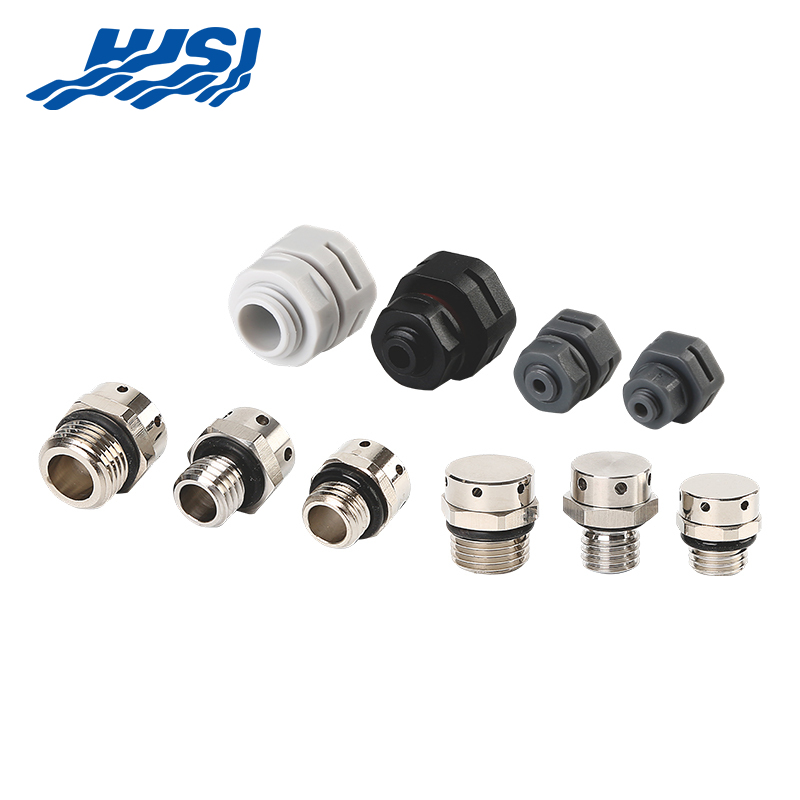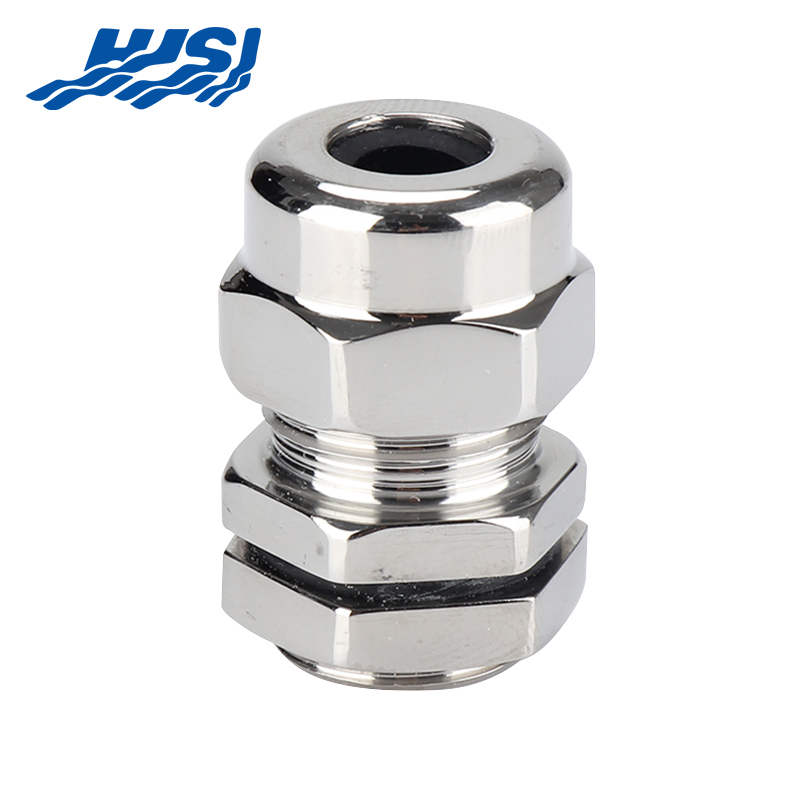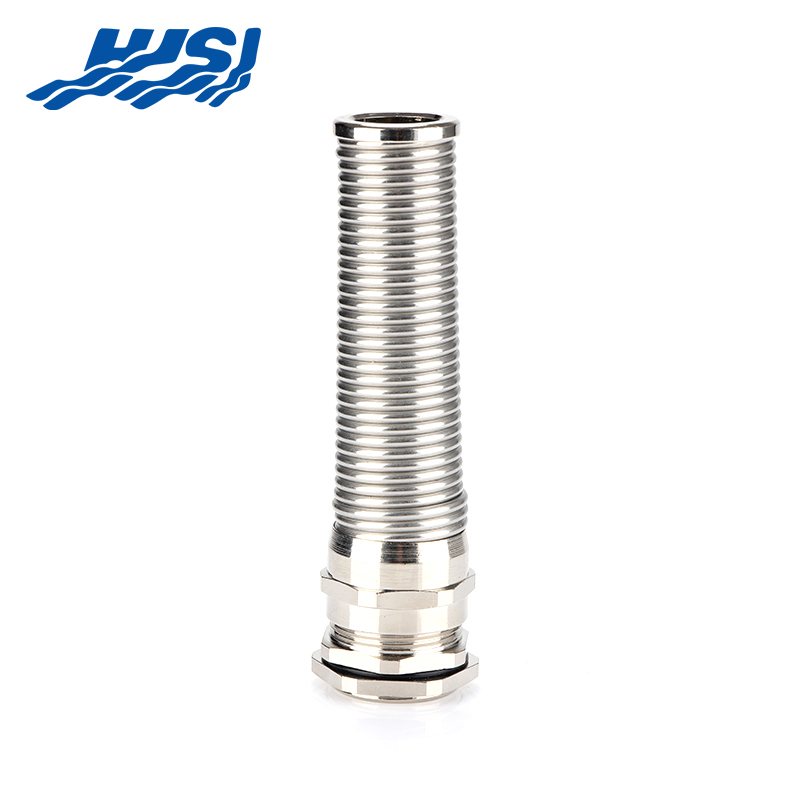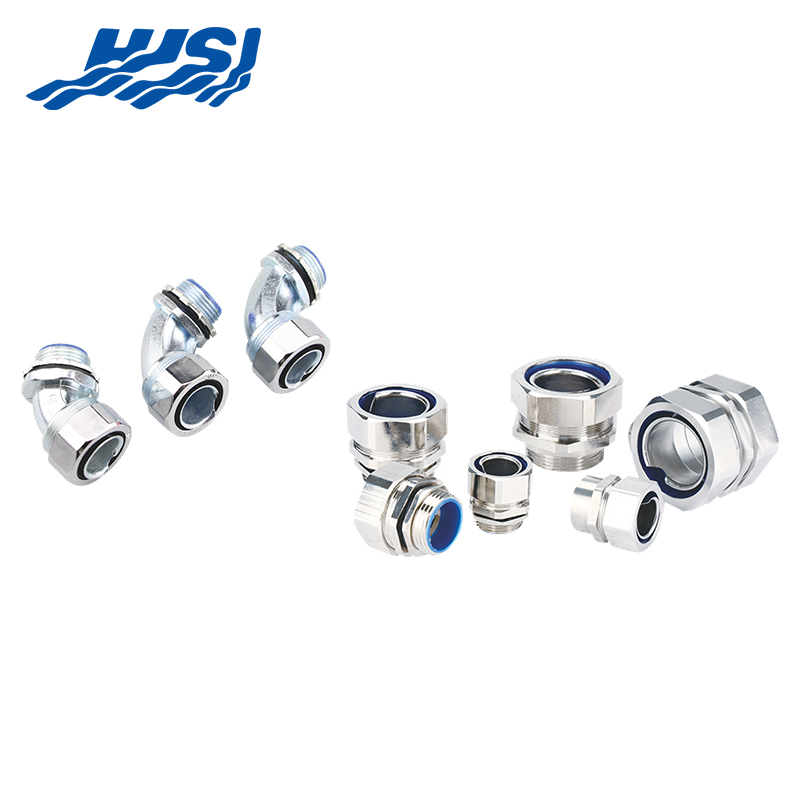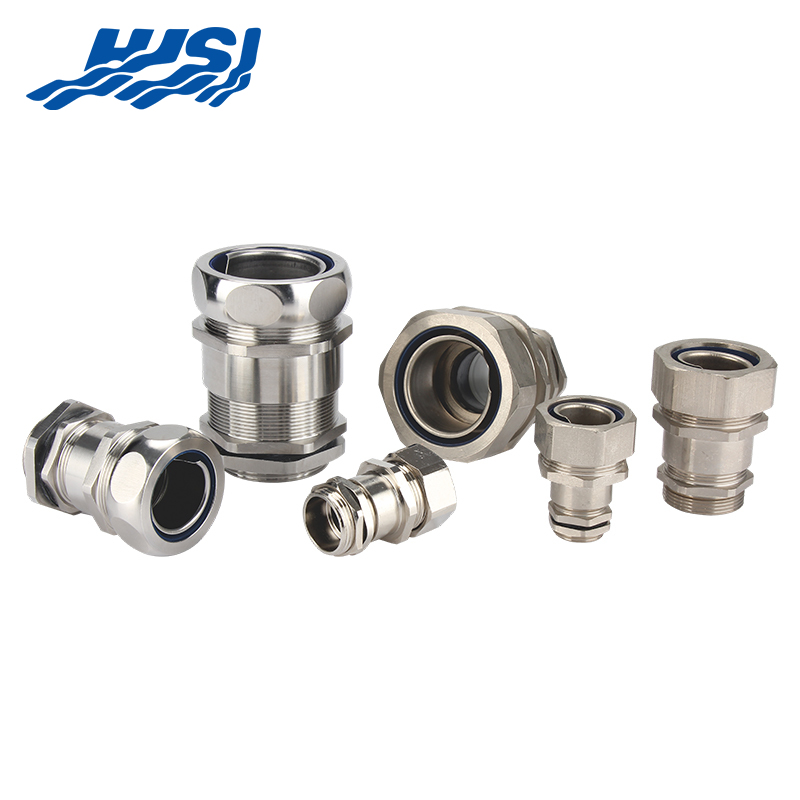
When selecting a cable entry component for an electrical enclosure, the material can affect more than appearance. A nylon cable connector and a metal cable connector may perform a similar basic task, but their characteristics can make one more suitable than the other for a particular installation.
For buyers, the decision is rarely about choosing one material for every situation. A more practical approach is to look at the enclosure, cable, surrounding environment, installation method, maintenance needs, and expected service conditions together.
This comparison explains the practical factors that can help buyers evaluate nylon and metal cable connectors without relying on a single feature.
A cable connector creates a controlled entry point where a cable passes through an electrical enclosure, control cabinet, equipment housing, or similar structure. It can help with cable retention, sealing, and protection around the entry point.
The material used for the connector affects how that component behaves during installation and operation.
Nylon and metal have different physical characteristics. Nylon is a polymer material with a relatively light structure and useful resistance to many everyday environmental conditions. Metal connectors, depending on the material and construction, can provide a rigid connection and may be considered where mechanical demands or specific environmental conditions require a metal component.
This does not mean that one material automatically fits every application.
That question brings the comparison closer to the real purchasing decision.
At first glance, the two types may look similar because both can be designed around cable entry, retention, and sealing.
The differences become clearer when buyers look at handling, installation, environmental exposure, and equipment design.
| Consideration | Nylon Cable Connector | Metal Cable Connector |
|---|---|---|
| Material | Polymer-based construction | Metal construction |
| Weight | Generally lighter | Generally heavier |
| Handling | Easy to handle during installation | More rigid and substantial |
| Electrical behavior | Non-metallic construction | Conductive material may require consideration |
| Corrosion concerns | Does not rust like conventional metal | Material selection matters in corrosive environments |
| Mechanical requirements | Suitable for many general equipment applications | May be considered where rigid construction is important |
| Installation environment | Commonly considered for electrical and control equipment | Used across a range of industrial installations |
| Design considerations | Material compatibility and environmental exposure | Metal type, surface condition, corrosion resistance, and grounding considerations |
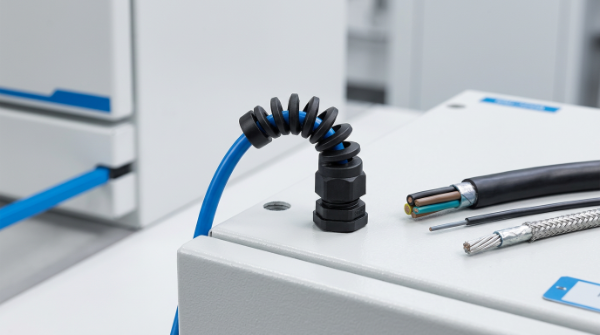
The cable itself should be part of the selection process.
Consider its outer construction, flexibility, diameter range, and how it will move after installation. A connector needs to work with the cable rather than simply fit the enclosure opening.
If the cable is flexible and subject to movement, retention and strain relief deserve particular attention. If the cable remains relatively fixed, other factors may become more important.
Connector selection should follow cable requirements, not replace them.
The enclosure and connector need to work together.
A polymer enclosure may naturally pair with a nylon component when the application does not call for a metal entry point. A metal enclosure may be used with either type, depending on the installation requirements.
The physical connection also matters. The mounting area should provide a suitable surface for the connector to sit securely and seal around the cable entry.
An indoor control cabinet and an outdoor electrical enclosure do not face the same conditions.
Outdoor installations may experience:
The material should therefore be considered in relation to the actual surroundings.
A connector that works well in a clean indoor cabinet may need different material considerations when installed on equipment exposed to weather or industrial substances.
A nylon cable connector is often considered when a lightweight, non-metallic cable entry solution fits the equipment design.
This can be useful in electrical cabinets, automation equipment, control systems, lighting equipment, communication equipment, and other applications where cable entry protection is needed without adding a metal component.
Several factors can make nylon relevant to the selection process.
Weight can matter when an enclosure contains many cable entry points or when equipment needs to remain easy to handle during installation and servicing.
A nylon component can reduce the amount of added material around cable entry points compared with a metal alternative.
This does not mean weight should decide the purchase by itself. It is simply one part of the overall equipment design.
A non-metallic connector may be useful when the application calls for electrical isolation around the cable entry.
This can be relevant in equipment where the connector material needs to remain separate from conductive enclosure components or where the system design does not require a metal cable entry.
The electrical design should always be reviewed as a complete system rather than assuming the connector alone determines the outcome.
Nylon does not rust in the same way as conventional metal.
That characteristic can be useful in environments where moisture is present or where corrosion of exposed metal components is a concern.
However, buyers should not assume that every nylon product is automatically suitable for every outdoor or chemical environment. Material formulation, connector construction, sealing components, and exposure conditions all need to be considered.
Metal connectors remain relevant in many industrial applications.
Their rigid construction can be useful where equipment design, mechanical conditions, or installation practices call for a metal cable entry.
Metal may also be considered when the enclosure system has specific requirements involving grounding, bonding, mechanical connection, or compatibility with other metal components.
But "metal" is not a single material category.
Different metals and surface treatments behave differently. Buyers should therefore look at the actual material and construction rather than treating every metal connector as equivalent.
Some installations expose cable entry points to repeated movement, physical contact, vibration, or other mechanical forces.
In such situations, connector construction becomes an important part of the evaluation.
That leads to a more application-specific decision.
Some electrical systems use metal components as part of a grounding or bonding arrangement.
When this is relevant, the connector needs to be considered as part of the complete electrical system.
A nylon connector does not provide the same conductive path as a metal connector. Therefore, where bonding or grounding through the cable entry is part of the design, the material choice needs to be reviewed carefully.
No.
Outdoor use alone does not determine whether nylon or metal should be selected.
An outdoor electrical enclosure may use a nylon cable connector when its material, sealing design, cable compatibility, and environmental suitability match the application.
At the same time, some outdoor installations may call for metal because of mechanical conditions, system design, grounding requirements, or other project-specific factors.
The key is to separate outdoor exposure from material selection.
Outdoor conditions should trigger a review of:
Only after these factors are understood does the material comparison become useful.
The connector material is only one part of cable entry performance.
The sealing structure also deserves close attention.
A connector normally works with sealing elements that create contact around the cable and between the connector and enclosure. If the cable does not match the connector design, sealing may not work as intended.
Useful questions for buyers include:
These questions apply to both nylon and metal products.
A metal connector does not automatically solve a sealing problem, and a nylon connector does not automatically create one. The complete cable entry design matters.
Cable retention is another factor that can easily be overlooked.
Once a cable is installed, external movement can place force around the entry point. If the cable is pulled, bent, or moved repeatedly, the connector needs to manage that movement appropriately.
A suitable design can help keep the cable positioned correctly and reduce unnecessary stress around the enclosure opening.
This is particularly relevant for equipment that is serviced regularly or exposed to cable movement during operation.
When comparing nylon and metal, buyers should therefore examine the actual retention structure rather than judging the connector only by its material.
A component may appear suitable on paper but become difficult to work with during installation.
This is especially relevant when an electrical cabinet contains many cable entry points.
Installers may need to consider:
A lighter component can be easier to handle in some situations, while a rigid metal component may fit another installation method more naturally.
The practical installation process should be part of procurement discussions rather than something considered after the products arrive.
| Application Condition | Points to Review |
|---|---|
| Indoor control cabinet | Cable fit, sealing, installation, maintenance |
| Outdoor electrical enclosure | Moisture, sunlight, sealing, material compatibility |
| Equipment with frequent cable movement | Strain relief and cable retention |
| Corrosive surroundings | Material compatibility and surface exposure |
| Systems involving grounding | Conductive path and bonding requirements |
| Lightweight equipment | Component weight and enclosure construction |
| Industrial machinery | Mechanical conditions and installation method |
| Communication equipment | Cable construction, sealing, and enclosure design |
This approach keeps the comparison practical instead of turning it into a simple material debate.
"Nylon" and "metal" describe broad material categories.
They do not tell the buyer everything about the finished connector.
Design, sealing structure, manufacturing quality, cable compatibility, and installation requirements can all affect suitability.
Outdoor exposure does not automatically require a metal component.
The correct question is whether the connector can handle the environmental conditions expected at the installation location.
A connector may fit the cable diameter but still be unsuitable for an application involving repeated movement.
Cable retention should be reviewed alongside basic dimensional compatibility.
The purchase price is only one part of procurement.
Installation time, maintenance access, replacement needs, material compatibility, and equipment service conditions can also affect the practical cost of a cable entry solution.
A lower initial price does not necessarily mean lower total project cost, while a higher purchase price does not automatically mean a better fit.
A control cabinet inside a clean building and an electrical box mounted outdoors may use similar cables but face very different operating conditions.
Selection should follow the environment rather than a fixed purchasing habit.
A short application-based process can make the evaluation easier.
Step 1: Define the Installation
Identify where the enclosure will be installed and what conditions surround it.
Step 2: Understand the Cable
Review the cable construction, flexibility, movement, and compatibility requirements.
Step 3: Review the Connector Design
Look at the sealing structure, cable retention, mounting arrangement, and overall construction.
Step 4: Compare Materials
Only after understanding the application should nylon and metal be compared directly.
Step 5: Consider Future Maintenance
Think about how the enclosure will be opened, serviced, rewired, or relocated later.
This process can reduce the chance of selecting a connector simply because its material seems familiar.
When buying cable connectors for a project, clear questions can help avoid misunderstandings.
The answers should relate directly to the intended application.
A supplier should be able to explain the product in practical terms rather than relying only on general material descriptions.
The choice becomes easier when buyers stop asking which material is universally preferable and instead ask which characteristics the application requires.
A nylon cable connector may be considered when the project values a lightweight, non-metallic cable entry solution and the environmental and mechanical conditions are compatible with the material.
A metal connector may be considered when rigid construction, grounding or bonding considerations, mechanical conditions, or other system requirements make metal appropriate.
Neither material should be selected based on appearance alone.
The connector needs to work with the cable, enclosure, environment, and installation method as one system.
Nylon and metal cable connectors serve similar basic purposes, but their different material characteristics can affect how they fit into an electrical enclosure system.
For buyers, the comparison should go beyond material names. Cable compatibility, sealing, strain relief, environmental exposure, enclosure construction, grounding considerations, installation, and future maintenance all deserve attention.
The most useful purchasing process is therefore not a simple nylon-versus-metal decision. It is a structured review of the conditions surrounding the cable entry.
When those conditions are clear, buyers can narrow the available options based on actual application needs rather than relying on assumptions about one material or the other.
For buyers looking at different cable entry options, working with a manufacturer that understands both nylon and metal connectors can make product selection easier. Zhejiang HJSI Connector Co., Ltd. manufactures cable connectors and related wiring accessories, including nylon cable glands, metal and brass cable glands, marine cable glands, and other cable entry components. The company also supports customized connector solutions for different installation needs.

2nd Floor, Building 2, No. 188, Punan 3rd Road, Economic Development Zone, Yueqing City, Wenzhou City, Zhejiang Province, China

Copyright @ Zhejiang HJSI Connector Co., Ltd. All rights reserved.

China Waterproof Breathable Valve Manufacturer
 +86-15858552966
+86-13356176555
+86-15858552966
+86-13356176555
 English
 русский
 عربى
عربى