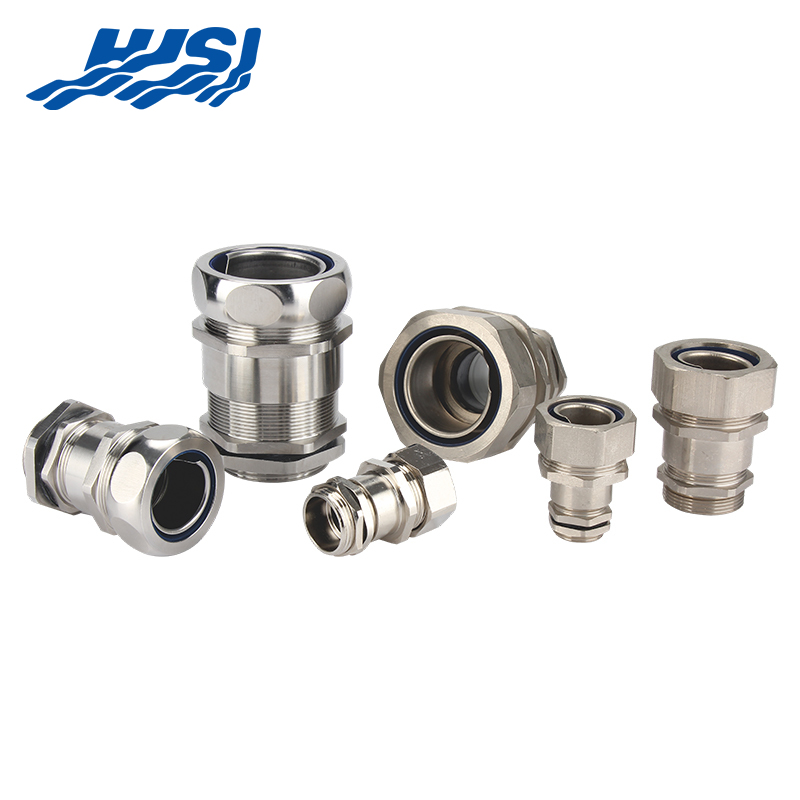
Outdoor electrical enclosures have to deal with conditions that indoor equipment usually avoids. Rain, moisture, dust, sunlight, temperature changes, vibration, and cable movement can all affect the point where a cable enters an enclosure. This makes the choice of cable entry hardware an important part of outdoor electrical design.
A nylon cable connector can be suitable for outdoor electrical enclosures when its material, sealing structure, cable range, and installation method match the application. The important point is that outdoor suitability does not depend on the word nylon alone. The connector needs to work as part of the complete enclosure system.
An enclosure is designed to protect electrical components from the surrounding environment. Yet every cable entering the housing creates an opening that needs to be managed.
The cable entry has several functions at the same time. It needs to hold the cable in place, support the sealing area, connect securely with the enclosure, and help limit the entry of unwanted moisture or particles.
Outdoor conditions make these requirements more noticeable.
A cabinet installed inside a dry workshop may have limited exposure to moisture. A control box mounted outside may experience rain, condensation, dust, sunlight, and repeated temperature changes. The cable entry therefore becomes part of the enclosure's overall protection strategy.
This is why selecting a connector based only on size or purchase cost can create problems later.
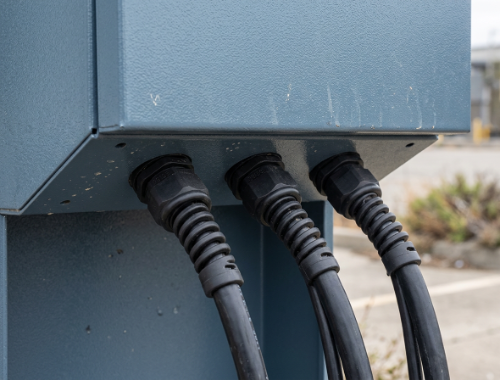
Yes, nylon cable connectors can be used for certain outdoor electrical enclosure applications when the product is designed for those conditions.
Nylon, commonly associated with polyamide materials, is widely used in electrical and cable management components because it combines useful mechanical and electrical properties with a relatively lightweight construction.
However, not every nylon connector is intended for every outdoor environment.
The actual suitability depends on the complete application.
Important factors can include material formulation, connector construction, sealing arrangement, cable compatibility, environmental exposure, enclosure design, installation method, required protection level, temperature conditions, and chemical exposure.
This means buyers should evaluate the complete product rather than treating nylon as a universal solution for outdoor installations.
The connector needs to match the cable entering the enclosure.
The outside diameter of the cable affects how the sealing element grips the jacket. If the cable and connector are poorly matched, the intended sealing and retention performance may not be achieved.
Different cables can also have different jacket materials and levels of flexibility. A connector that works with one cable construction may not behave in exactly the same way with another.
For this reason, cable information should be part of the selection process from the beginning.
Outdoor equipment needs to manage moisture and contamination around cable entry points.
A cable connector normally uses a sealing component to create contact around the cable. The enclosure-side connection may also use a sealing ring or another interface depending on the construction.
These two areas should be considered separately.
The seal around the cable and the seal between the connector and enclosure serve different purposes. Both need to work correctly for the complete entry point to function as intended.
Cables do not always remain completely still.
Equipment may vibrate. Cables may be moved during maintenance. Flexible wiring can bend near an enclosure entrance. Outdoor equipment can also experience movement caused by the surrounding installation.
A suitable connector can provide mechanical retention around the cable and reduce unnecessary stress at the entry point.
This is one reason cable connectors are more than simple threaded fittings. Their design can influence how mechanical forces are transferred from the cable to the enclosure.
Outdoor equipment can experience several environmental factors at the same time.
Rain, humidity, condensation, and splashing water can all reach an exposed enclosure.
The connector and sealing system should therefore be selected according to the required environmental protection.
Long-term exposure to sunlight can affect some polymer materials. The response depends on the material formulation, product construction, exposure conditions, and application.
If an enclosure will remain outdoors for an extended period, the manufacturer should provide information relevant to the intended environment.
Dust can enter through poorly managed openings and may accumulate around electrical components.
The connector's sealing arrangement should therefore be considered together with the enclosure design rather than as an independent component.
Outdoor equipment may experience repeated changes between warmer and cooler conditions.
Materials can respond differently to temperature changes, so the connector, seal, cable jacket, and enclosure should be considered as a complete system.
Industrial outdoor equipment may be exposed to oils, cleaning products, chemicals, or other substances.
The compatibility of the connector material and sealing material should be checked when such exposure is expected.
The choice between nylon and metal should depend on the application rather than a simple preference for one material.
Nylon connectors can be considered where electrical insulation, lightweight construction, corrosion considerations, and straightforward installation are relevant.
Metal connectors may be considered where the installation requires particular mechanical characteristics, grounding arrangements, shielding considerations, or other application-specific properties.
Consider the environment, cable, enclosure construction, sealing requirements, movement, installation method, maintenance needs, and connector material before making the selection.
| Selection Factor | Questions to Consider |
|---|---|
| Environment | Is the equipment exposed to rain, dust, sunlight, or chemicals? |
| Cable | What is the cable construction and outside diameter? |
| Enclosure | What material and wall structure are being used? |
| Sealing | What level of environmental protection is needed? |
| Movement | Will the cable bend or move during operation? |
| Installation | How will the connector be assembled and tightened? |
| Maintenance | Will cables need to be removed or replaced later? |
| Material | Which connector material matches the application? |
Outdoor applications vary considerably, but nylon cable connectors can be considered for a range of equipment where their characteristics match the working conditions.
Control cabinets and distribution housings may require several cable entry points. A suitable connector can help organize cables while supporting the enclosure's protection requirements.
Automation systems often contain multiple cables for power, control, sensors, and communication. When equipment is installed outside a building or in a semi-exposed area, cable entry design becomes part of the overall equipment layout.
Outdoor lighting housings need cable entries that correspond with the housing design and environmental conditions. Connector selection should take into account moisture exposure and the cable construction.
Outdoor communication equipment can have several incoming and outgoing cables. Proper cable management can make installation and future maintenance easier.
Electrical equipment used in energy-related installations can be exposed to changing weather conditions. Cable entry components should therefore be selected according to the actual location and enclosure requirements.
Machines positioned near outdoor production areas may encounter dust, moisture, vibration, and frequent maintenance activity. The cable connector needs to suit these working conditions rather than being selected simply because it fits the cable.
A cable connector may appear to be a small component, but a poor match can create several practical problems.
If the connector does not hold the cable properly, movement can place additional stress on the cable near the enclosure entrance.
An unsuitable cable range or incorrectly assembled sealing element can affect the intended protection at the cable entry.
A connector that does not match the enclosure opening or cable construction can make installation unnecessarily complicated.
If the cable entry is difficult to access or disassemble, future inspection and cable replacement may take more time.
A material that is suitable for one environment may not be appropriate for another. Outdoor exposure should always be considered when selecting the connector construction.
Purchase cost matters, but it should not be the only consideration. A component that does not match the application may create additional work during installation or maintenance.
The cable is important, but the enclosure wall, opening, thread, sealing arrangement, and environmental conditions also need to match.
Different nylon formulations and product constructions can have different characteristics. The actual product specification should be checked.
A suitable connector can still be installed incorrectly. Cable position, sealing components, assembly sequence, and tightening method can all affect the final result.
Outdoor installations are not all alike. A protected cabinet under a roof has different conditions from equipment directly exposed to weather.
A simple application-based process can reduce confusion.
Start with the cable.
Identify the cable construction and outside diameter. Then consider where the cable will enter the enclosure and how the connector will attach to the enclosure wall.
Next, look at the environment.
Ask whether the equipment will face rain, dust, sunlight, temperature changes, vibration, chemicals, or regular maintenance activity.
After that, review the connector construction.
Check the sealing arrangement, cable retention method, material, thread configuration, and available technical information.
Finally, consider installation.
A connector should not only match the design on paper. It should also be practical for the people installing and maintaining the equipment.
The connector is only one part of the cable entry system.
Correct assembly is important because the sealing and retention features need to be positioned as intended. The cable should be properly seated, and the connector should be assembled according to the manufacturer's instructions.
The enclosure surface should also be suitable for the connector and sealing interface.
This is particularly important outdoors because small installation errors can become more noticeable when the equipment is repeatedly exposed to changing environmental conditions.
For manufacturers and installers, clear installation instructions can therefore be just as valuable as a well-designed product.
From a manufacturing perspective, outdoor cable connectors need to be developed around real application conditions.
Material selection is only one part of the process. The body design, sealing element, locking structure, thread, cable retention, and compatibility between components all need to be considered together.
Manufacturers also need to understand that customers may use the same general product category in very different environments.
An equipment builder may need a connector for a protected control cabinet, while another customer may require a solution for equipment that remains outside throughout the year.
This is why product information should clearly explain the intended application, compatible cable range, available materials, installation method, and relevant environmental characteristics.
Clear information helps distributors and purchasing teams make decisions based on actual requirements.
Instead of asking: Is nylon suitable for outdoor use?
A better question is: Is this particular nylon cable connector suitable for this particular outdoor enclosure and working environment?
That small change in thinking can make product selection much clearer.
The connector needs to match the cable. The sealing system needs to match the environmental requirement. The mounting arrangement needs to match the enclosure. The material needs to suit the surroundings. And the installation needs to follow the product's intended assembly method.
When these elements are considered together, the cable entry becomes part of the enclosure design rather than an afterthought.
A nylon cable connector can be a practical option for outdoor electrical enclosures when the product construction and application requirements are properly matched.
Outdoor use involves more than exposure to rain. Dust, sunlight, moisture, temperature changes, cable movement, vibration, and chemical contact may all influence the selection.
For buyers and equipment manufacturers, the most useful approach is to evaluate the entire cable entry system. Cable characteristics, enclosure construction, sealing, strain relief, material compatibility, environmental conditions, and installation should all be considered before an order is placed.
The right question is therefore not simply whether nylon can be used outside. It is whether the selected connector has been designed and specified for the conditions where the equipment will actually operate.
That application-focused approach can help manufacturers, distributors, and installers build more practical cable entry solutions for outdoor electrical equipment.

2nd Floor, Building 2, No. 188, Punan 3rd Road, Economic Development Zone, Yueqing City, Wenzhou City, Zhejiang Province, China

Copyright @ Zhejiang HJSI Connector Co., Ltd. All rights reserved.

China Waterproof Breathable Valve Manufacturer
 +86-15858552966
+86-13356176555
+86-15858552966
+86-13356176555
 English
 русский
 عربى
عربى