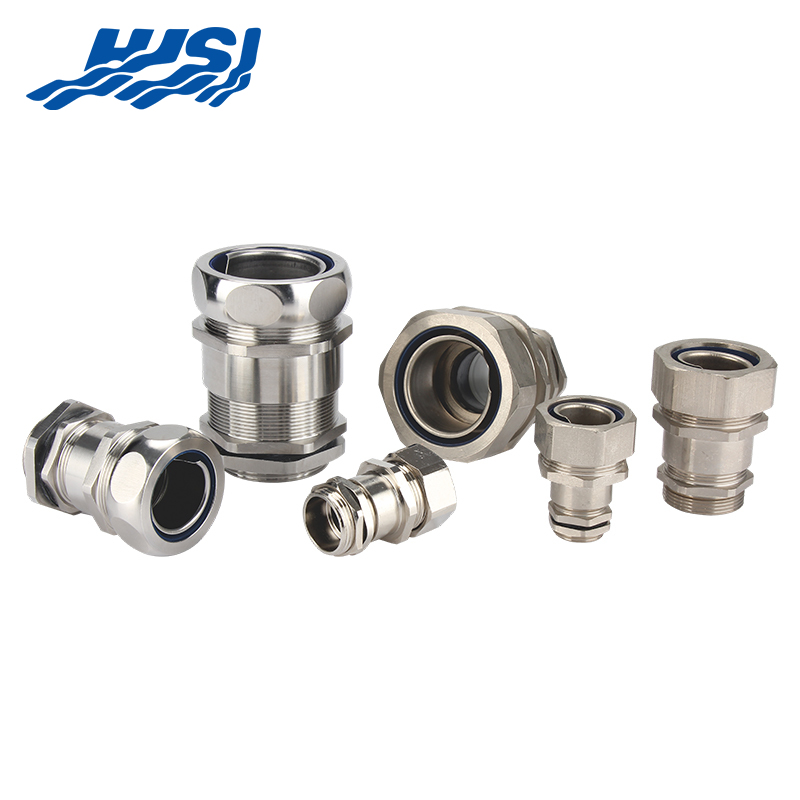
Pick the wrong cable fixing for a harsh environment and you won't find out right away. It usually shows up months later — moisture creeping into a junction box, a cable jacket wearing thin at the entry point, a fault nobody can trace back to its actual cause. Industrial Gland versus standard cable clamp sounds like a small distinction on paper. In practice, it's the difference between a system that survives real conditions and one that quietly fails under them. Anyone who's chased down a mystery fault three months after an install already knows how expensive that quiet failure can turn out to be.
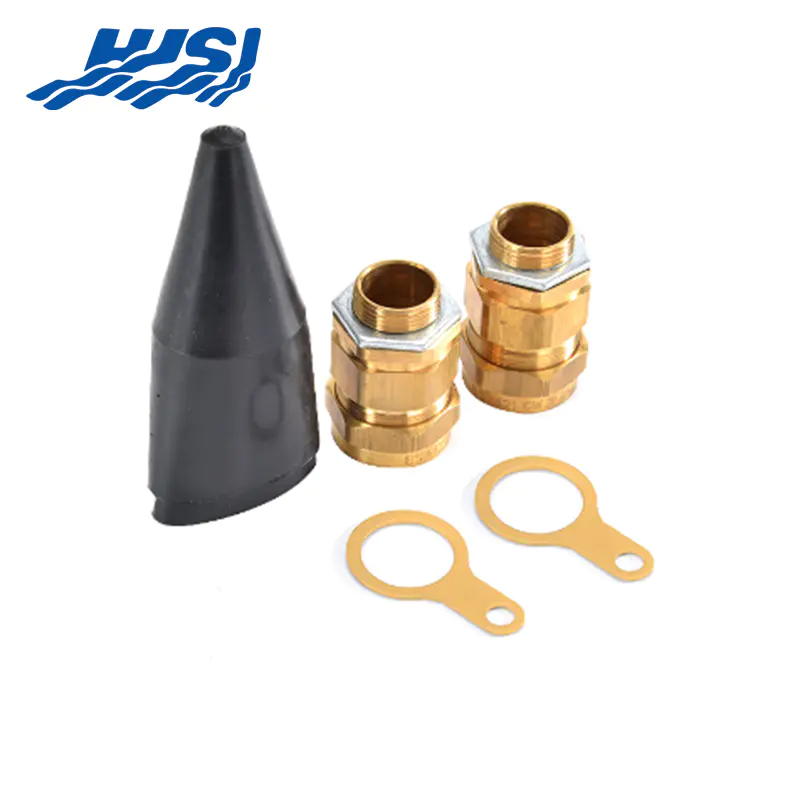
At a glance, both parts do something with a cable at an entry point. That's about where the similarity ends.
A cable clamp holds a cable in place. That's it, really. It stops the cable from shifting, sagging, or pulling loose from wherever it's mounted. Simple, mechanical, effective for what it's built to do.
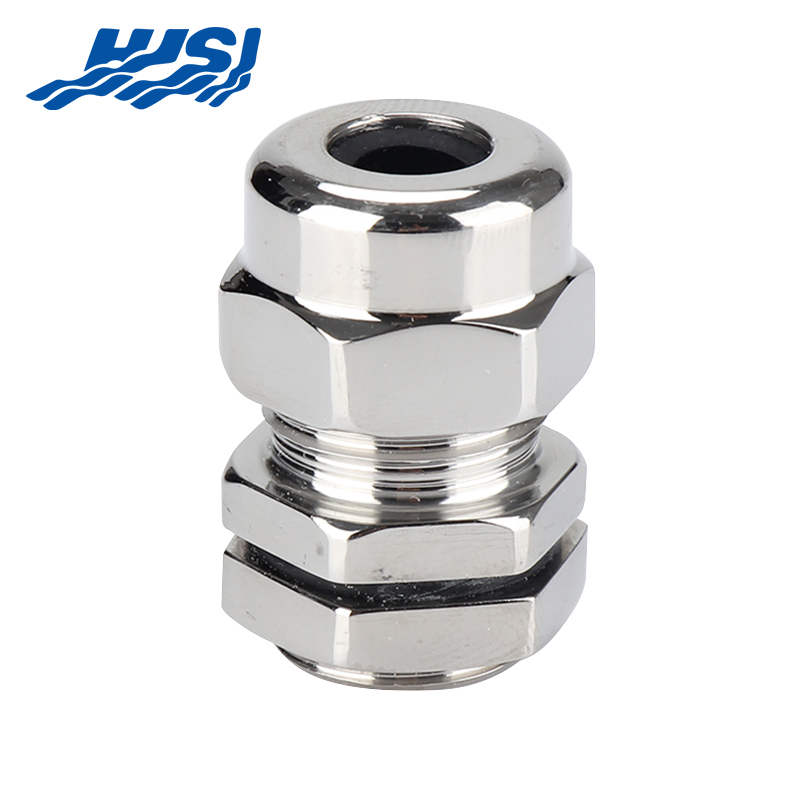
An Industrial Gland goes several steps further. It's not just holding the cable — it's sealing the entry point, managing strain, and often grounding the cable too, all at once.
Put plainly: a clamp restrains a cable. A gland protects the whole entry system around it. Confusing the two, or assuming one can substitute for the other, is exactly how preventable field failures happen.
It's worth saying plainly that neither product is "better" in some abstract sense. A clamp costs less, installs faster, and does exactly what's needed in the right setting. The mistake isn't choosing a clamp — it's choosing one without actually checking whether the application calls for something more.
Because the two products get chosen for completely different risk profiles, and picking wrong doesn't announce itself immediately.
A cable running through a climate-controlled office wall probably never needs a gland. A cable entering an outdoor enclosure, a marine deck box, or equipment sitting near a chemical process line is a different story entirely — and a standard clamp there is asking for trouble.
This is the part that trips people up most. A clamp might look tight and secure on the bench. It's not sealed. Water finds its way through gaps a clamp was never designed to close, and once moisture gets past the entry point, it's already inside the enclosure doing damage before anyone notices.
Without proper strain relief, mechanical stress on a cable transfers straight down to the internal wiring and terminations. Over time — sometimes a long time, sometimes surprisingly fast — that stress fatigues the connection. A gland absorbs that pulling and bending force at the entry point instead of letting it travel further in.
| Feature | Standard Cable Clamp | Industrial Gland |
|---|---|---|
| Primary function | Holds cable position | Seals and protects cable entry |
| Water and dust resistance | Minimal to none | Built in as a core function |
| Strain relief | Limited | Dedicated strain relief design |
| Grounding support | Rarely included | Often integrated |
| Suited environments | Indoor, low-stress settings | Harsh, outdoor, or hazardous settings |
Looking at it this way, the two aren't really competing products. They're solving different problems, and the environment tells you which problem you actually have.
A little, at the edges. Some heavier-duty clamps add basic strain relief. But none of that closes the sealing gap — the part that actually keeps water and dust out. If sealing matters at all, a clamp isn't a substitute, no matter how solid it feels in your hand.
There's also a labeling problem worth mentioning. Some products get marketed loosely as "industrial" clamps without actually meeting any sealing standard at all. The word on the packaging doesn't tell you much — checking the actual ingress protection rating, or the lack of one, tells you everything.
Facilities dealing with flammable gases, dust, or vapors need cable entries that meet specific protective standards. Cable glands for hazardous areas are built specifically for this — sealing tightly enough, and often designed to prevent ignition sources from ever reaching a spark-sensitive zone. This isn't a category where a general-purpose part gets specified and hoped for the best; the certification requirements exist precisely because the consequences of getting it wrong go well beyond a simple equipment failure.
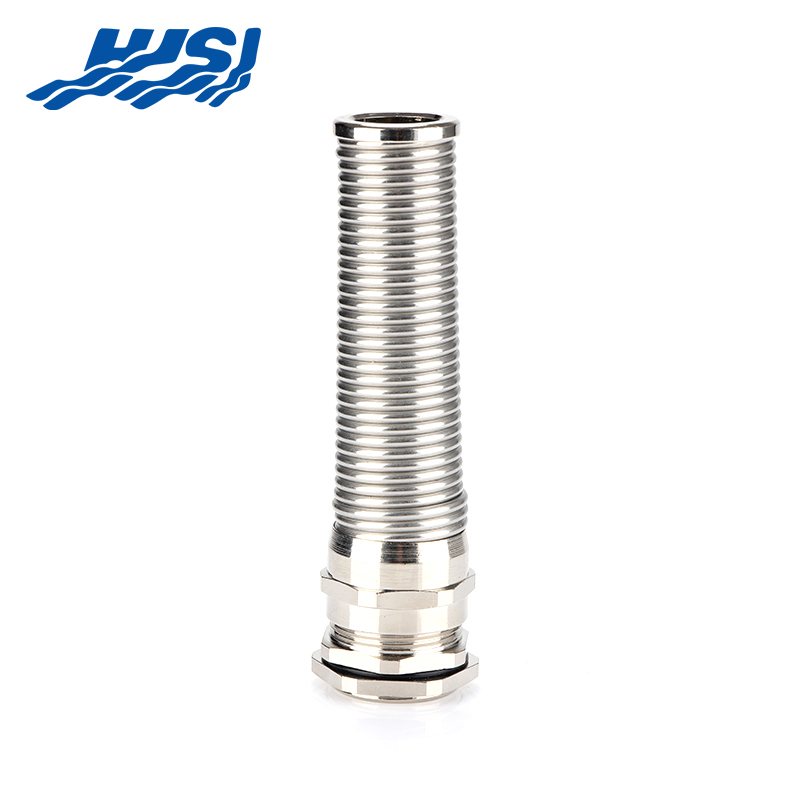
Equipment that flexes, rotates, or moves repeatedly puts cables through constant bending stress at the entry point. An Anti-bending Cable Gland is designed to manage this directly, controlling the bend radius so the cable doesn't crack, fray, or fatigue at exactly the spot where it enters the housing.
Rain, salt spray, temperature swings, direct sun — outdoor gear takes a beating a standard clamp was never built to handle. Marine and outdoor-rated glands are made to shrug off exactly this kind of exposure without degrading, and the sealing compounds used in these designs are chosen specifically to resist the kind of long-term UV and moisture cycling that would break down a standard clamp's material within a much shorter span of time.
Machinery running continuously generates vibration that loosens fittings over time. A gland's tighter mechanical grip and sealing design resists this loosening far better than a basic clamp ever could, which matters a lot in unattended equipment where nobody's checking connections daily. It's easy to underestimate how much small, constant vibration adds up over months of continuous operation — nothing dramatic happens in any single hour, but the cumulative effect on a loosely gripped clamp is very different from what a properly rated gland experiences under the same conditions.
A short mental walkthrough beats guessing every time.
If even one of these points to yes, a gland is almost certainly the right call. A clamp only makes sense when every answer lands solidly on the low-risk side.
Nothing dramatic at first. That's the problem. A clamp used where a gland was needed doesn't fail on day one — it fails slowly, invisibly, until moisture or mechanical stress finally reaches something critical. Fixing it after the fact usually costs more than choosing correctly would have, both in downtime and in the actual repair.
There's also a reputational cost that's easy to underestimate. A facility that keeps having unexplained cable faults starts losing trust in its own maintenance records, and eventually every fault gets over-investigated just in case it's the same root cause repeating itself. One wrong component choice, multiplied across dozens of installation points, turns into a much bigger ongoing headache than the small upfront saving ever justified.
A cable gland wholesaler serving distributors or large projects needs a different relationship with a factory than someone buying a handful of units for a single job. Volume consistency, lead time reliability, and batch-to-batch quality control matter more here than they do for a small one-time order — and it's worth asking directly how a supplier manages that consistency before committing to a large purchase. A supplier that performs well on a fifty-unit sample order doesn't automatically scale that same reliability to a five-thousand-unit contract, and finding that out after the fact is far more expensive than confirming it beforehand.
Too loose, and the seal never fully compresses — moisture finds a way through eventually. Too tight, and the sealing material can deform or crack, which oddly enough creates the exact same problem from the opposite direction. Torque specifications exist for a reason, and skipping them because "tight feels safer" tends to backfire.
A gland rated for one cable diameter range doesn't seal properly on a cable that's noticeably thicker or thinner than intended. This sounds obvious written out, yet it's one of the most common field issues technicians run into — someone grabs whatever gland is on hand instead of checking the actual spec against the cable in front of them. A gland that's technically installed but sitting outside its rated range offers little more protection than a plain clamp would have, which defeats the entire point of choosing it in the first place.
Some enclosures position cable entries in a way that lets water pool right at the gland if it's installed at the wrong angle. A gland can be perfectly rated and still underperform if gravity is working against it. Thinking through orientation during installation, not just component selection, closes this gap.
A gland installed correctly on day one can still loosen slightly after vibration, thermal cycling, or a few maintenance visits where someone bumped the enclosure. Building periodic re-inspection into a maintenance schedule catches this before it turns into an actual failure, rather than discovering the problem only after water damage has already happened.
Choosing between an Industrial Gland and a standard cable clamp really comes down to being honest about what the installation actually faces — moisture, movement, vibration, hazardous classification — rather than defaulting to whatever's cheapest or most familiar on the shelf. A clamp does its job well in the right setting, and there's no need to overspend on a gland where none of the real risk factors apply. But the moment sealing, strain relief, or grounding genuinely matter, a clamp stops being a shortcut and starts being a liability waiting for the right conditions to expose it. That gap between "seems fine for now" and "actually built for this environment" is exactly where most preventable failures come from, and it rarely announces itself until the repair bill is already on the table. For engineers, procurement teams, and OEM buyers looking to specify or source the right cable gland for a demanding application, reaching out to Zhejiang HJSI Connector Co., Ltd. is a practical next step toward finding a product built for the actual conditions it needs to survive.

2nd Floor, Building 2, No. 188, Punan 3rd Road, Economic Development Zone, Yueqing City, Wenzhou City, Zhejiang Province, China

Copyright @ Zhejiang HJSI Connector Co., Ltd. All rights reserved.

China Waterproof Breathable Valve Manufacturer
 +86-15858552966
+86-13356176555
+86-15858552966
+86-13356176555
 English
 русский
 عربى
عربى