
 English
 русский
 عربى
عربىA cable that fails at the point where it enters an enclosure rarely fails because of the cable itself. An industrial gland sitting at that entry point absorbs the stress of bending, vibration, and moisture intrusion, or it passes that stress straight onto the cable, and the gap between those two outcomes shows up as downtime, repair costs, and occasionally a safety incident in settings where failure carries real consequences. Anyone who has traced a recurring fault back to a cracked seal or a frayed cable jacket at an entry point already knows this small component deserves more scrutiny than it usually gets during procurement.
What Is an Industrial Gland and How Does It Work?
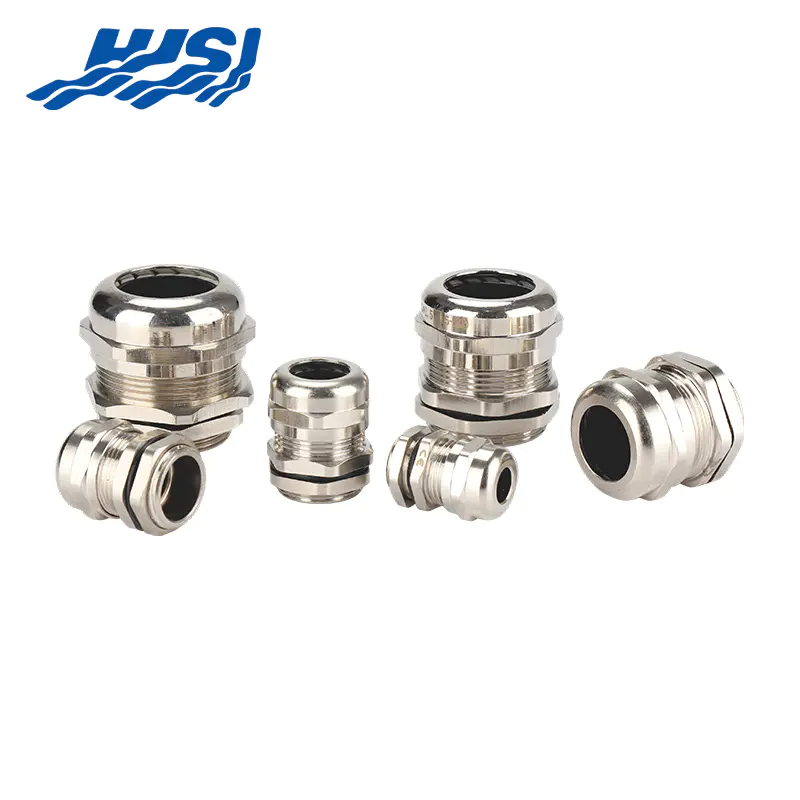
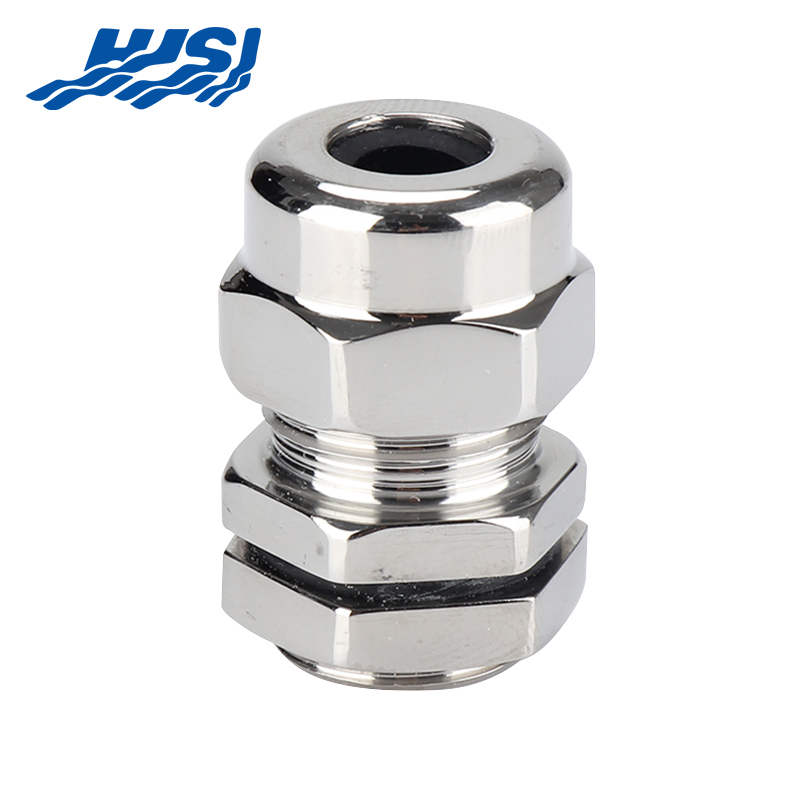
This component forms the connection point where a cable passes through an enclosure wall, panel, or junction box. It seals that opening while gripping the cable firmly enough to keep movement from transferring stress onto the conductors inside. Two jobs happen at once: sealing against the outside environment and mechanically securing the cable against pulling, twisting, or vibration.
A compression mechanism inside the body clamps down around the cable jacket once tightened, creating both the seal and the grip in a single action. Take away either job, sealing without grip or grip without sealing, and the part stops doing what it was built for.
Correct installation matters just as much as correct selection. A gland tightened too loosely fails to grip the cable jacket securely, while one tightened past its rated torque can crush the jacket or compress the seal beyond the point where it forms an effective barrier. Manufacturer torque specifications exist to avoid both outcomes, and skipping that step during installation can undermine even a well chosen part. A torque wrench calibrated to the manufacturer's specification, used consistently across an installation, removes much of the guesswork that hand tightening alone tends to introduce.
How Does This Protection Mechanism Prevent Cable Damage?
Cable damage at an entry point generally traces back to a handful of recurring stress sources. A properly selected gland addresses each one directly, leaving the cable with very little stress left to absorb on its own.
A few mechanisms work together to provide that protection:
- Strain relief that transfers pulling force away from the conductors and onto the gland body
- A compression seal that blocks moisture, dust, and contaminants from reaching the cable interior
- A bend radius limiter that prevents the cable from flexing sharply right at the entry point
- Vibration dampening that reduces the chafing and fatigue that constant movement causes
Skipping any one of these functions tends to shift the failure point somewhere else rather than removing it. A cable might stay dry but still suffer fatigue cracking from unrestrained bending, or it might stay secure but still let in enough moisture to corrode the conductors over time.
An Anti Bending Cable Gland Addresses a Specific Failure Point
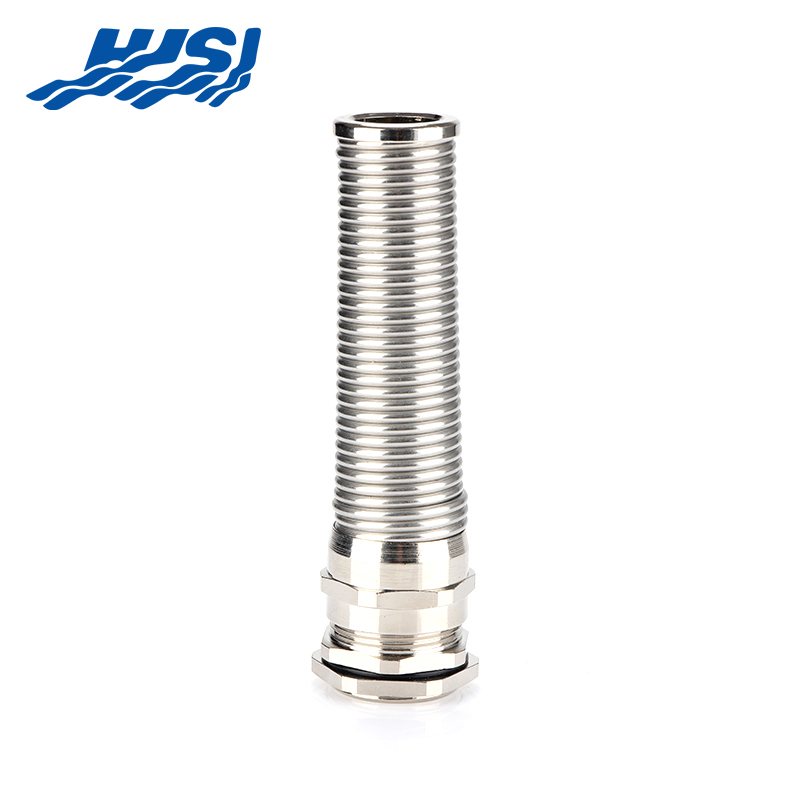
Bending stress concentrates heavily right where a cable exits a rigid gland body and transitions into open air, and that transition point is where fatigue cracks and conductor breaks commonly begin. A gland built around this concern uses a flexible boot or reinforced collar that spreads the bending force across a longer section of cable instead of letting it pile up at one sharp edge.
This design earns its place in installations where cables move repeatedly, such as machinery with moving parts, robotic arms, or equipment subject to regular vibration. Standard rigid glands installed under these conditions often show fatigue damage well before a properly designed flexible alternative would, simply because the stress has nowhere gentle to go.
Why Do Hazardous Areas Require Specialized Certification?
Cable glands for hazardous areas need to address a risk that standard industrial settings never face: a spark, arc, or excess heat at the cable entry point igniting a flammable atmosphere. Facilities handling combustible gases, vapors, or dust live with this risk constantly, and the gland becomes part of the safety system rather than a simple mechanical fitting.
Certification for these environments generally confirms that a gland holds its sealing and containment properties even under fault conditions, keeping any internal spark or heat buildup from reaching the surrounding atmosphere. Buyers specifying equipment for offshore platforms, chemical processing plants, or mining operations need documentation showing a gland has passed testing relevant to the hazard classification present at that site.
Substituting an uncertified gland into a hazardous area installation, even one that looks similar to the correct part, creates liability well beyond the cost of the component itself. Inspectors and insurers typically require documented proof of certification for every fitting in a hazardous classification zone, and a missing or mismatched certificate can halt a project or trigger a costly remediation process during an audit.
How Does Material and Structure Affect Protection Performance?
Body material and internal sealing structure both shape how well a gland performs once installed, and the right choice depends heavily on the environment a cable will actually face.
| Comparison Point | Nylon Body | Stainless Steel Body | Brass Body |
|---|---|---|---|
| Corrosion Resistance | Good in mild conditions | Strong across many environments | Moderate, varies by coating |
| Weight | Light | Heavier | Moderate |
| Cost | Lower | Higher | Moderate |
| Typical Use | Indoor, light industrial | Marine, chemical, offshore | General industrial settings |
Sealing structure adds another layer to this decision. A single seal design suits drier, more controlled environments. A double seal structure provides a backup barrier that holds up better wherever moisture or dust exposure happens continuously rather than occasionally.
Does Cable Diameter and Thread Sizing Affect Sealing Reliability?
A gland sized incorrectly for the cable it surrounds rarely seals as well as one matched precisely to the cable diameter, no matter how well the body material or structure suits the environment. Too wide a clamping range forces the seal to compress unevenly, leaving gaps where moisture or dust can work through over time.
Thread compatibility with the enclosure entry point matters just as much. A mismatched thread either fails to seat properly or strips during installation, undermining the connection before the gland even starts doing its job. Buyers working from existing equipment drawings should confirm both cable diameter range and thread specification instead of assuming a generic size fits well enough across a project. A quick measurement check against the actual cable and enclosure catches the occasional mismatch that creeps in when equipment changes between project phases, a small step that avoids reordering parts later in a project timeline.
How Should Buyers Compare Standard and Anti Bending Glands?
Choosing between a standard rigid gland and a flexible anti bending alternative comes down to how much movement and bending stress the installation actually involves. Defaulting to whichever option costs less upfront skips that question entirely.
A short comparison helps frame the decision:
- Fixed installations with little vibration generally perform fine with a standard rigid gland
- Equipment with moving parts or frequent relocation benefits from a flexible bend tolerant design
- Outdoor or marine installations exposed to wind induced cable movement often favor the flexible option as well
- Cost conscious projects with stable, low movement conditions may not need the added expense of a specialized design
Matching the gland to actual movement conditions, not to a default assumption that every application needs the more advanced option, keeps procurement spending aligned with genuine performance need.
How Should Buyers Evaluate a Cable Gland Factory Before Ordering?
Selecting a dependable cable gland factory matters just as much as choosing the correct gland type. Manufacturing consistency decides whether a part performs the way its specification sheet claims once it reaches an installation site.
A few points worth confirming before committing to a supplier:
- Manufacturing capability across multiple body materials and sealing structures
- Testing documentation supporting hazardous area or environmental certification claims
- Quality control procedures applied during production and before shipment
- Willingness to support custom specifications for unusual cable diameters or mounting requirements
- Communication and technical support available throughout the ordering process
A supplier willing to share testing data and walk through how a product meets specific certification requirements lowers the risk of specifying a part that looks correct on paper but fails to meet actual site requirements. Asking how a factory handles a failed batch during its own quality checks reveals more about its standards than simply asking whether quality control exists. A supplier that treats a failed batch as a process to investigate, rather than an inconvenience to quietly ship around, tends to carry that same discipline into every order that follows.
What Should Buyers Confirm When Working With a Cable Gland Wholesaler?
Sourcing at wholesale volume brings planning considerations that single unit purchasing rarely involves, particularly around consistency across an order destined for multiple installation sites or project phases.
- Batch to batch consistency in sealing performance and dimensional accuracy
- Documentation confirming certification status applies across the full order, not just a sample unit
- Packaging suited to bulk shipping without damaging seals or threading during transit
- Compatibility across the specific range of cable diameters a project actually requires
- Production turnaround that aligns with installation schedules across multiple project phases
Confirming these details before finalizing a large order heads off the kind of compatibility or certification gap that only surfaces once parts have already reached a project site, where fixing the mistake costs far more than catching it during sourcing.
What Signs Indicate a Gland Needs Replacement?
Cable glands rarely fail without warning. A few inspection checks during routine maintenance often catch developing problems before they cause an actual fault. Visible cracking around the body or boot, especially near the cable exit point, signals that material has begun degrading from age, chemical exposure, or repeated flexing.
A few additional signs worth checking during scheduled inspections:
- Discoloration or chalking on the gland body, which often points to ultraviolet or chemical degradation
- Looseness at the cable grip point, felt as the cable shifting slightly when pulled gently
- Visible moisture or corrosion inside an enclosure near the entry point, suggesting a seal has already failed
- Stiffness or cracking in a flexible boot that has lost its original elasticity
Replacing a gland during scheduled maintenance, once any of these signs appears, costs far less than dealing with an unplanned failure that takes equipment offline without warning. Building gland inspection into an existing maintenance checklist makes this kind of preventive replacement far more likely to actually happen on schedule, instead of getting pushed aside in favor of more visible repairs.
Choosing the Right Gland for Demanding Environments
Matching gland design to actual site conditions, bending stress, hazardous classification, moisture exposure, and material compatibility, produces far more reliable cable protection than treating every entry point as interchangeable. A flexible anti bend design earns its added cost on equipment with constant movement, while a properly certified option becomes non negotiable the moment a hazardous classification applies to the installation site. Zhejiang HJSI Connector Co., Ltd. supports buyers working through these decisions, offering gland production across multiple materials and sealing configurations suited to demanding industrial and hazardous area applications, along with documentation to confirm certification and compatibility before an order ships. Engineers and procurement teams specifying cable protection for a new project, or addressing recurring cable failures at an existing installation, are welcome to share their site conditions and request guidance on matching the right gland to the application.