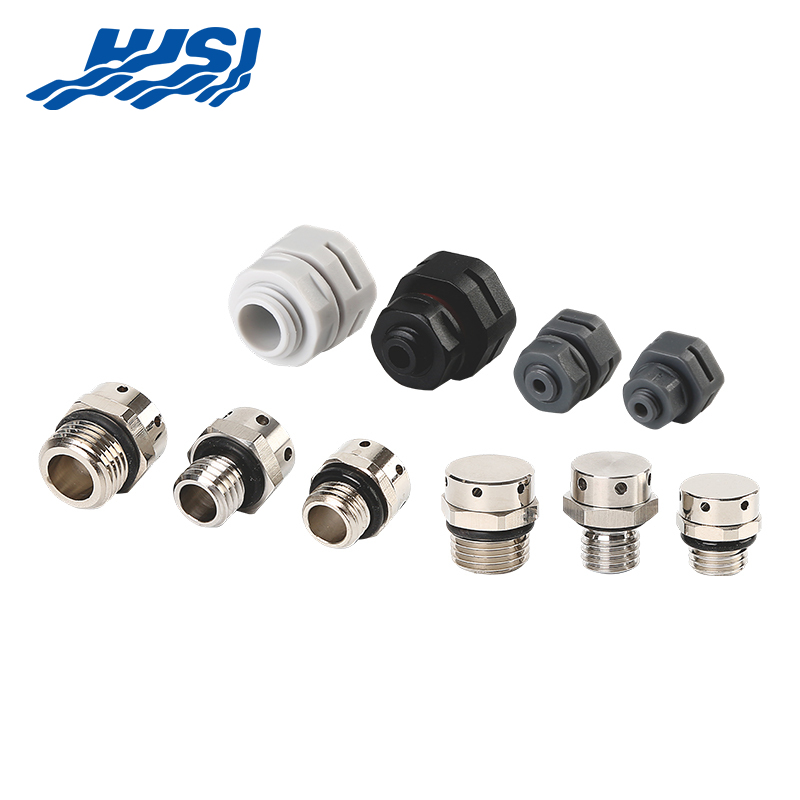
Sealed electronic enclosures fail in ways that are difficult to trace. The circuit board looks intact, the connections are secure, and yet the unit stops responding after weeks in the field. Corrosion appears at connector pins with no obvious path for water entry. Insulation resistance drops without a single visible crack in the housing. In many of these cases, the damage source is condensation — moisture that formed inside the enclosure from vapor already present when the unit was sealed. A Waterproof Breathable Valve addresses this problem not by keeping more water out, but by allowing the pressure and humidity conditions inside the enclosure to remain close to those outside it, eliminating the conditions that cause condensation to form at all.
Why Condensation Forms Inside Electronic Enclosures
SEAL
Sealed Does Not Mean Stable
An enclosure that is sealed against liquid water ingress is not sealed against air. At the moment of assembly, the housing captures a volume of air at whatever temperature and humidity conditions exist at that time. As the unit moves through its operating environment — day-to-night temperature cycles, seasonal changes, geographic transitions between humid and dry climates — the conditions inside the housing do not stay fixed. They cannot. Temperature change is the primary driver. When the enclosure warms, the trapped air expands. When it cools, the air contracts. In a truly rigid sealed housing, this creates positive and negative pressure differentials relative to the outside. In a practical housing, minor seal imperfections allow small amounts of air exchange at these pressure transitions. That air exchange is not controlled — it draws in ambient air when the pressure differential reverses, and with it, ambient humidity.
DEW
How the Dew Point Creates Condensation
Humidity in air is measured relative to the air's capacity to hold water vapor at a given temperature. Warm air holds more vapor than cold air. When air cools below its dew point — the temperature at which its actual vapor content exceeds the capacity of the cooler air — the excess moisture precipitates out as liquid water. Inside an enclosure that has absorbed humid air during a warm cycle, the dew point follows the humidity concentration of that air. When the enclosure cools at night or after the device is powered down, the air inside can reach the dew point while the enclosure walls and internal components are still cooling. The result is condensation on the coldest surfaces inside the housing — typically the circuit board, connector pins, and any metallic component with higher thermal mass.
CYCLE
Why Repeated Temperature Cycling Makes the Problem Cumulative
Each thermal cycle that allows humid air in and then cools below the dew point deposits a small amount of moisture on internal surfaces. At any individual cycle, the amount is small. Over weeks or months of repeated cycling, the cumulative moisture exposure is sufficient to cause electrochemical corrosion, dendrite growth between traces, and insulation degradation. These are the failures that appear without an obvious immediate cause.
How a Waterproof Breathable Valve Works
Pressure Equalization
The fundamental mechanism of this component is pressure equalization between the interior of the enclosure and the external environment. By providing a controlled pathway for air to move in and out as pressure differentials develop from temperature change, the valve eliminates the accumulation of pressure that drives uncontrolled air exchange through minor seal imperfections. When the enclosure warms and internal pressure rises, air exits through the valve. When it cools and internal pressure drops, air enters through the valve. In both cases, the exchange happens through the valve's membrane rather than through random seal pathways, and the membrane controls what comes through.
Microporous Membrane
The membrane at the center of the valve is a microporous structure with pore sizes calibrated to allow gas molecules — including water vapor — to pass while physically blocking liquid water droplets. Water droplets are orders of magnitude larger than gas molecules. This size differential is what allows the membrane to be permeable to vapor and air while remaining impermeable to liquid water. The membrane also has a hydrophobic surface treatment that causes liquid water to bead and run off rather than spreading across the pore openings. Without this surface characteristic, liquid water under pressure or prolonged contact could eventually penetrate through the pores. The hydrophobic treatment maintains the selectivity of the membrane under realistic field conditions.
Moisture Vapor Exchange
Because the membrane allows water vapor to pass, the relative humidity inside the enclosure gradually equilibrates with the ambient humidity over time when conditions allow. This is not an immediate process — vapor diffusion through the membrane is slow compared to free air movement. But over the course of hours, it allows elevated internal humidity to dissipate rather than accumulating. The practical result is that even if humid air entered the enclosure before the valve was installed, or if condensation occurred during an early thermal cycle, the valve provides a pathway for that moisture to leave in vapor form when ambient conditions are drier. Without this pathway, moisture trapped inside a sealed enclosure has no exit route and continues to accumulate.
Condensation Prevention: The Mechanism in Practice
Pressure Stability Prevents Uncontrolled Moisture Ingress
An enclosure with a functioning breathable valve maintains internal pressure close to external pressure throughout temperature cycling. Because the valve provides a controlled exchange pathway, the pressure differential that would otherwise drive uncontrolled air exchange through seal imperfections does not develop. The seals continue to block liquid water, and the valve handles the gas exchange that the temperature cycling requires. This changes the ingress dynamic fundamentally. Without the valve, every pressure differential event is an opportunity for uncontrolled air — carrying whatever humidity the ambient contains — to enter through whatever minor path is available. With the valve, that exchange is mediated through the membrane, which allows air but slows humidity equilibration and blocks liquid.
Dew Point Risk Decreases When Humidity Is Controlled
Condensation occurs when internal humidity is high enough that the dew point falls within the operating temperature range of the enclosure. If internal humidity is maintained at a level that puts the dew point well below the enclosure's operating temperature, condensation does not occur regardless of how rapidly the enclosure cools. The valve contributes to this by preventing the humidity spikes that occur when large volumes of humid air enter the enclosure through uncontrolled paths during rapid pressure transitions. The controlled, slow exchange through the membrane damps these humidity spikes and keeps internal humidity closer to the ambient average rather than the ambient peak.
PCB and Connector Protection Is the Direct Outcome
The surfaces particularly vulnerable to condensation damage — printed circuit boards, connector pins, and solder joints — are protected by maintaining the conditions under which condensation cannot form. This is a different approach from conformal coating or potting, which accept that condensation may occur and try to protect surfaces from its effects. Pressure equalization through a breathable valve addresses the cause rather than the symptoms.
Applications Where Waterproof Breathable Valves Are Used
The applications are defined by a shared set of conditions: enclosed electronics, temperature cycling, exposure to ambient humidity, and a reliability requirement that makes condensation failure unacceptable.
Industrial Control and Power Distribution Equipment
Control cabinets and power distribution boxes in outdoor or semi-outdoor installations experience substantial temperature variation between day and night and across seasons. They are sealed to meet IP protection ratings against dust and water, but that sealing creates exactly the conditions for condensation accumulation. Breathable valves are widely incorporated into these enclosures to maintain the IP rating while managing internal pressure and humidity.
Outdoor Lighting Systems
LED driver electronics inside outdoor luminaires are enclosed for weather protection and typically see significant temperature cycling as the unit heats during operation and cools when powered off or during cold nights. The combination of high internal operating temperature, which drives moisture out during operation, and low external temperature, which creates dew point conditions during cooling, makes these applications particularly prone to condensation on the driver electronics.
Telecommunications Infrastructure
Outdoor telecom equipment — antenna connection units, remote radio heads, and junction boxes — is often deployed in locations where maintenance access is infrequent and failure is costly. The reliability requirement in these applications is high, and condensation failure is one of the documented failure modes that breathable valves are specifically selected to address.
Automotive Electronics
Electronic control units, sensors, and actuator housing in automotive applications experience a wide operating temperature range over the vehicle's service life. The sealed housings that protect automotive electronics from road spray and wash-down also trap internal humidity. Breathable valves in automotive applications are sized and specified for the vibration, thermal range, and chemical exposure conditions of the vehicle environment.
Waterproof Breathable Valve vs Sealed Enclosure Without Venting
The comparison between a vented enclosure and a fully sealed one is not about protection level — both can achieve the same IP rating against liquid water ingress. The difference is in how each approach manages the internal environment over time under temperature cycling.
| Feature |
With Waterproof Breathable Valve |
Fully Sealed Enclosure |
| Internal pressure during temperature cycling |
Equalized with external |
Develops positive and negative differentials |
| Uncontrolled air exchange through seal imperfections |
Reduced — valve handles exchange |
Occurs at pressure differentials |
| Internal humidity over time |
Equilibrates toward ambient average |
Accumulates, especially after humid ingress |
| Condensation risk during cooling cycles |
Reduced |
Higher, especially after humid air ingress |
| Dew point conditions on internal surfaces |
Less likely to occur |
More likely after repeated cycling |
| Long-term circuit board and connector exposure |
Lower |
Higher, particularly over many thermal cycles |
| IP rating |
Maintained — membrane blocks liquid |
Maintained — solid seals |
What Fully Sealed Enclosures Cannot Prevent
A fully sealed enclosure assembled in humid conditions carries that humidity inside it indefinitely. The initial cooling cycle below the dew point deposits moisture on internal surfaces. Subsequent cycles may re-evaporate that moisture back into the air, but as long as the internal humidity remains high, each cooling cycle recreates the condensation risk. The sealed enclosure provides no mechanism for the trapped humidity to leave.
How to Select a Waterproof Breathable Valve for an Application
Match Equalization Rate
How quickly the valve equalizes pressure determines how effectively it prevents pressure differentials from accumulating. An enclosure that experiences rapid temperature change — such as outdoor equipment in direct sunlight that heats quickly and then cools quickly after sunset — needs a valve with adequate airflow to equalize pressure at the rate the temperature is changing. A valve that equalizes too slowly relative to the thermal cycling rate provides less protection than one sized correctly.
Confirm IP Compatibility
The valve must maintain the enclosure's required IP rating against liquid water ingress while providing the breathability needed for pressure equalization. Valve selection should specify the IP rating the membrane assembly achieves and confirm that this is compatible with the enclosure's protection requirements. A valve that passes air but admits liquid water when subjected to jet wash or immersion conditions invalidates the enclosure's IP certification.
Evaluate Membrane Material
Membrane materials vary in their resistance to the chemicals and UV exposure conditions in the operating environment. An enclosure used in industrial environments with solvent vapors, cleaning agents, or chemical splash requires a membrane specified for resistance to those substances. Outdoor environments require UV resistance. The membrane's hydrophobic treatment should also be assessed for durability under the specific environmental conditions the unit will face.
Mechanical Integration
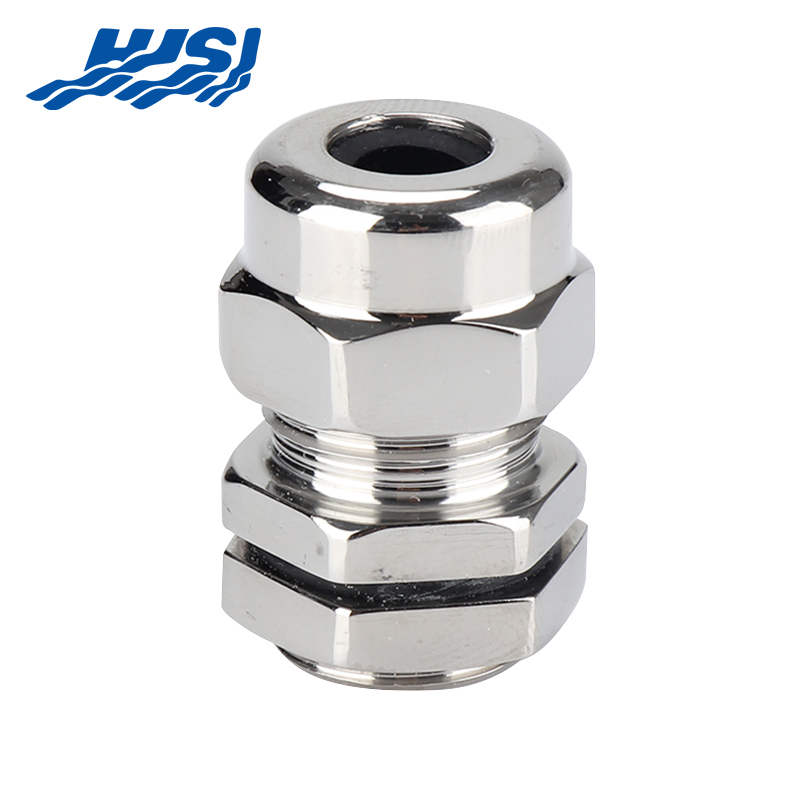
These components are available in threaded, snap-fit, and adhesive-mount configurations. The integration method must match the enclosure's wall material and thickness, and the installation should not compromise the enclosure's seal at the valve mounting point. Thread quality and sealing at the valve body-to-housing interface are as important as the membrane performance for maintaining overall IP integrity.
Why Manufacturers Integrate Breathable Valves Into Product Design
Reliability Engineering Over Product Lifetime
The decision to integrate a breathable valve into an electronics enclosure is a reliability engineering decision. It accepts that temperature cycling will create pressure differentials, that ambient humidity is a variable condition that cannot be controlled, and that the enclosure needs a mechanism to manage both. Products designed with this assumption built in from the start have a different failure mode profile in the field than products that rely entirely on sealed construction.
Reduction in Field Failure Rates
Condensation-related failures — corrosion, insulation degradation, intermittent electrical contact — are among the failure modes with the longest latency between cause and symptom. They develop over months or years of thermal cycling and appear as reliability problems long after the unit is deployed. Preventing condensation at the design level removes an entire category of latent failure from the product's field performance profile.
Support for Compact and Lightweight Enclosure Designs
Pressure differentials in sealed enclosures impose structural requirements on the housing walls and seals. If the housing must withstand repeated positive and negative pressure without deforming or fatiguing the seals, the design needs heavier walls or more robust seals than a pressure-equalized enclosure. A breathable valve that removes the pressure differential also removes this structural loading, which can support lighter or more compact enclosure designs without compromising seal integrity.
Questions Engineers Commonly Ask
Q1
What causes condensation inside a sealed electronic enclosure?
Temperature change causes the air inside the enclosure to expand when warm and contract when cool. This creates pressure differentials that drive uncontrolled air exchange through minor seal imperfections. When humid air enters during a warm cycle and the enclosure then cools below the dew point, moisture precipitates from the air onto internal surfaces. Repeated thermal cycles accumulate moisture over time.
Q2
How does a Waterproof Breathable Valve prevent this without letting water in?
The valve contains a microporous membrane that allows gas molecules — including water vapor — to pass in both directions while physically blocking liquid water droplets. The pore sizes are calibrated for this selectivity, and the membrane surface has a hydrophobic treatment that prevents liquid water from spreading across the pores under contact or pressure. The result is controlled gas exchange without liquid water ingress.
Q3
Does a breathable valve reduce an enclosure's IP rating?
A properly selected and installed valve maintains the enclosure's IP rating. The valve is rated for a specific level of protection against liquid water ingress, and that rating must match or exceed the enclosure's requirement. The valve replaces a section of solid enclosure wall with a membrane assembly that provides the same liquid water protection while adding breathability.
Q4
Where are breathable valves typically installed on an enclosure?
On a wall or face of the enclosure that is not directly exposed to water jets or immersion, where feasible. The orientation should allow condensed liquid inside the enclosure to drain away from the valve opening rather than pooling at the membrane. Many installations place the valve on a downward-facing or sheltered surface for this reason.
Q5
What is the difference between a breathable valve and a desiccant solution?
A desiccant absorbs moisture passively until it is saturated, after which it provides no further protection and may release absorbed moisture under temperature change. A breathable valve provides ongoing pressure equalization and vapor exchange throughout the product's service life without saturation or replacement under normal conditions. For long-service applications where maintenance access is limited, the breathable valve approach is generally more reliable.
Q6
How does temperature range affect valve selection?
The membrane material and hydrophobic treatment have defined operating temperature ranges. A valve specified for standard outdoor conditions may not perform correctly in environments with sustained high temperatures or temperature extremes. Valve selection should confirm that the membrane material and housing construction are rated for the full temperature range the enclosure will experience.
Q7
Can a breathable valve be retrofitted to an existing enclosure?
Yes, provided the enclosure wall can accommodate the valve's mounting hardware without compromising structural integrity or existing seals. Threaded and adhesive-mount valve formats are commonly used for retrofit applications. The retrofit installation should be sealed at the valve-to-housing interface to the same standard as the original enclosure seals.
Condensation inside electronic enclosures is a reliability problem with a physical cause that can be addressed at the design level. The mechanism — temperature-driven pressure differentials causing humid air ingress followed by cooling below the dew point — is predictable, and this venting component addresses it by removing the pressure differentials that drive uncontrolled air exchange, while providing a controlled pathway for vapor to equilibrate between the internal and external environments.
About the Manufacturer
For engineers and procurement specialists evaluating breathable valve solutions for outdoor, industrial, or automotive electronics applications, Zhejiang HJSI Connector Co., Ltd. supplies Waterproof Breathable Valve products with membrane specifications suited to varied IP rating requirements, temperature ranges, and mounting configurations. Connecting with their engineering team with your enclosure specifications and operating conditions provides the technical detail needed to confirm product compatibility before integration into your design.





 +86-15858552966
+86-13356176555
+86-15858552966
+86-13356176555
 English
 русский
 عربى
عربى