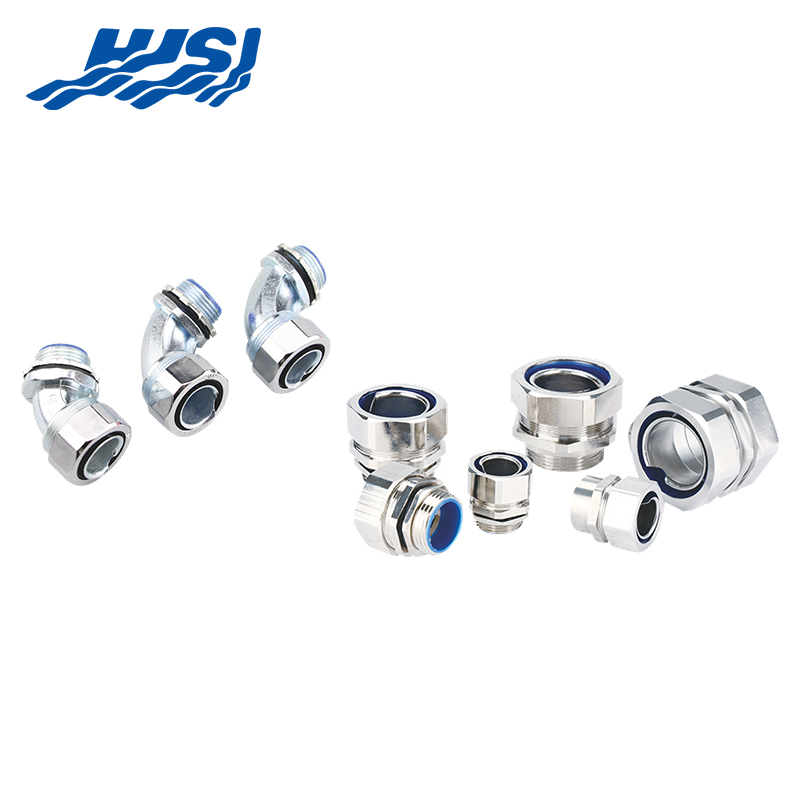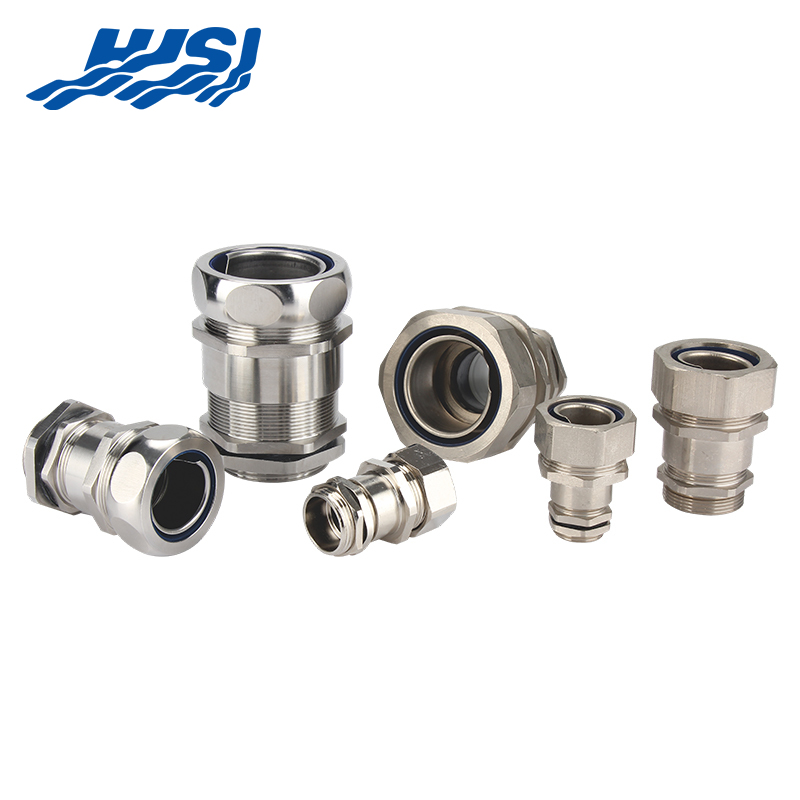
Working with electrical systems outdoors is never just about running wires from one point to another. The environment plays an active role in how those systems perform over time. Rain, humidity, sunlight, and physical movement all add layers of stress that indoor installations don't usually face. In many of these scenarios, Flexible Steel Conduit is often used as part of the protection strategy, especially where both durability and routing adaptability are required.
That's why conduit selection matters so much in these situations. Liquidtight flexible metal conduit is often chosen when wiring needs protection but also needs to follow complex or shifting installation paths. It sits in a middle space—strong enough to shield wiring, yet flexible enough to adapt to real-world layouts.
Instead of being a rigid pipeline, it behaves more like a protected channel that can bend, adjust, and still keep external elements away from the conductors inside.
The idea behind "liquidtight" is fairly straightforward, even if the execution is more involved. It refers to reducing the chances of water entering the conduit during normal environmental exposure.
Rather than relying on a single barrier, the system uses multiple layers of protection. A metallic structure gives it shape and strength, while an outer covering forms a continuous surface that limits direct contact with water.
The important detail is continuity. Water rarely enters through the middle of a conduit run—it usually finds weak points like joints, fittings, or poorly secured ends. So performance depends just as much on installation quality as it does on the material itself.
Outdoor wiring paths are rarely clean or straight. Equipment might be mounted at different heights, walls may not align perfectly, and structures often introduce obstacles that force direction changes.
This is where flexibility becomes more than a convenience—it becomes a practical requirement.
Flexible metal conduit allows installers to route wiring without constantly relying on rigid bends and additional fittings. That reduces both installation complexity and potential weak points along the system.
It also helps in situations where vibration or minor movement is expected. Instead of transferring that motion directly into the wiring, the conduit can absorb small shifts and reduce stress on internal conductors.
Moisture exposure is one of the most persistent challenges in outdoor electrical work. It doesn't always arrive in dramatic ways like heavy rain—sometimes it's slow, like humidity buildup or condensation forming overnight.
Liquidtight flexible metal conduit is designed with this in mind. The outer layer acts as a barrier that discourages water from entering during normal exposure.
While no system is completely immune to all conditions, the goal is to keep moisture from becoming a constant internal presence. When water is kept out of the conduit path, wiring systems are less likely to experience degradation over time.
Outdoor environments bring multiple forces into play at once. Sunlight can slowly affect surface materials, temperature shifts cause expansion and contraction, and wind introduces repeated mechanical movement.
| Aspect | Key Factor | Simplified Description |
|---|---|---|
| Sunlight | UV exposure | Gradual material aging |
| Temperature | Expansion & contraction | Structural stress from changes |
| Wind | Mechanical movement | Repeated physical impact |
Over time, these factors add up. A material that performs well indoors might degrade faster outside simply because it isn't designed for constant environmental variation.
Liquidtight flexible metal conduit addresses this by combining structural reinforcement with a protective outer covering. The idea is not to eliminate all stress but to manage it so that it doesn't concentrate in one place or cause early failure.
In many outdoor installations, physical contact is unavoidable. Tools, equipment, or even routine maintenance work can put conduit systems under accidental stress.
The metal core provides resistance against crushing or deformation, which helps protect the wiring inside. At the same time, flexibility ensures that minor impacts are absorbed rather than transferred directly inward.
This balance matters because electrical systems don't fail only from major damage—small repeated stresses over time can be just as impactful.
Even a well-constructed conduit system can be compromised if the connections aren't handled properly. Joints, fittings, and entry points are often the first places where moisture intrusion begins.
That's why installation detail matters so much. A liquidtight system is not just about the conduit itself—it's about how consistently the system is sealed from end to end.
A strong central run won't perform well if the weakest point is at the edge.
Metal-based systems always need to consider corrosion, especially in environments where moisture is frequent. Over time, exposure can gradually weaken untreated surfaces.
The protective outer layer of flexible metal conduit helps reduce direct contact with these environmental factors. This slows down surface degradation and helps maintain structural integrity for longer periods.
In more demanding environments, this becomes especially important for keeping systems functional without frequent replacement.
Even when a conduit is well protected from outside water, moisture can still appear inside under certain conditions. Temperature shifts between the conduit surface and the surrounding air often create a situation where condensation slowly forms over time.
This is something commonly seen in outdoor installations, and it's not always easy to fully avoid. What a liquidtight system contributes is a reduction in the amount of external moisture that can enter in the first place. By limiting that entry point, the overall buildup of internal water is generally kept under better control.
Installation details also matter more than they might seem at first. Routing that avoids dips or low points helps prevent water from collecting in one area, which can otherwise become a long-term weak spot in the system.
In actual electrical layouts, flexible conduit is rarely used as a standalone solution. It is usually part of a mixed system that includes rigid conduit as well.
Rigid sections are typically used where the path is straight and structural stability is important. Flexible conduit comes into play where movement, vibration, or alignment differences make rigid installation less practical.
The combination of both approaches creates a more balanced system—one that is stable where it needs to be, and adaptable where conditions are less predictable.
Outdoor electrical systems are not judged only at the time of installation. Their real value becomes clear over extended periods of exposure to weather and environmental changes.
Flexible metal conduit is designed with that longer timeline in mind. It is expected to go through repeated cycles of heat, cold, moisture, and physical movement while still maintaining its basic protective function.
| Aspect | Key Idea | Simplified Description |
|---|---|---|
| Long-term use | Designed for extended service life | Handles repeated environmental cycles over time |
| Environmental stress | Heat, cold, moisture, movement | Withstands changing outdoor conditions |
| Functional goal | Stable protection | Maintains basic shielding performance over time |
That said, long-term reliability is not completely passive. Periodic inspection is still part of responsible maintenance. Looking for surface wear, checking fittings, and confirming that protective layers remain intact can help prevent small issues from developing into larger problems later on.
As outdoor electrical systems become more layered and interconnected, installation conditions are rarely fixed or simple. Equipment may shift, expand, or be replaced over time, and environmental exposure remains a constant factor.
Liquidtight flexible metal conduit fits into this type of environment because it doesn't depend on rigid alignment or perfectly controlled conditions. Instead, it allows systems to adjust while still maintaining a level of protection around the wiring.
It doesn't remove environmental stress, but it helps manage it in a way that keeps installations functional under changing conditions.
In actual installation and construction scenarios, flexible steel conduits are frequently favored—not merely for a single outstanding attribute, but rather for the consistently stable performance they demonstrate under less-than-ideal operating conditions. Such conditions include confined wiring spaces, environments subject to continuous vibration, or settings where both robust protection and flexible adaptability are simultaneously required.
Zhejiang HJSI Connector Co., Ltd. is frequently selected for such applications—not because it fundamentally alters the core function of the conduit itself—but because, through rigorous manufacturing quality control and an application-oriented design philosophy, it effectively upholds the high standards of reliability expected of these conduit systems. When a project relies on a conduit system that must maintain structural integrity even while undergoing bending or deformation—and must integrate seamlessly into the overall electrical layout—the inherent stability of the material properties becomes just as critical as the technical specifications themselves.
In this sense, the selection of a supplier transcends a mere procurement decision; it constitutes a pivotal step in ensuring that the conduit system continues to deliver its intended performance even after being deployed into the dynamic and unpredictable realities of actual field applications.

2nd Floor, Building 2, No. 188, Punan 3rd Road, Economic Development Zone, Yueqing City, Wenzhou City, Zhejiang Province, China

Copyright @ Zhejiang HJSI Connector Co., Ltd. All rights reserved.

China Waterproof Breathable Valve Manufacturer
 +86-15858552966
+86-13356176555
+86-15858552966
+86-13356176555
 English
 русский
 عربى
عربى