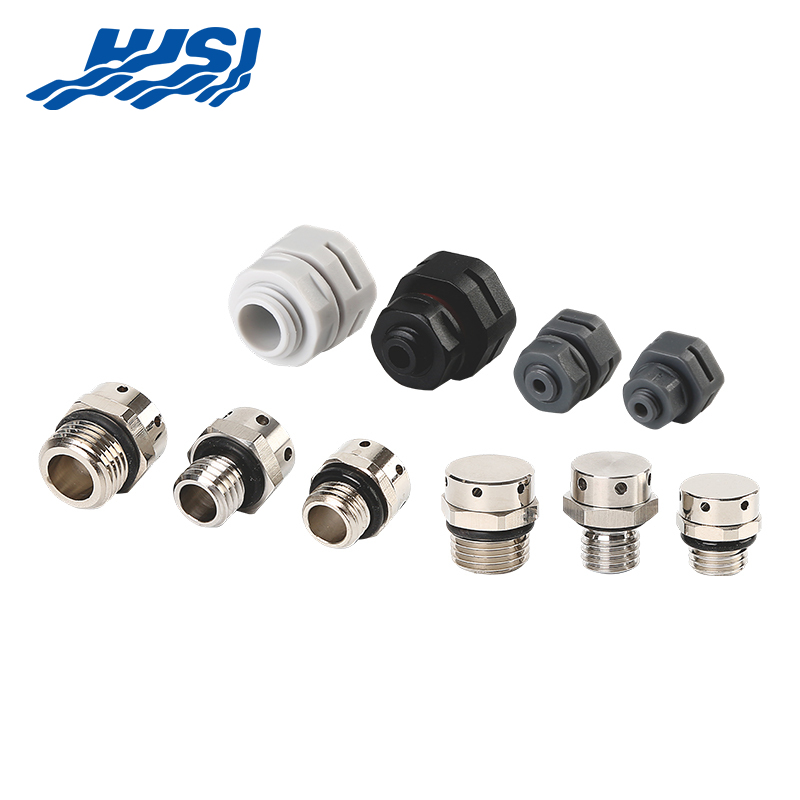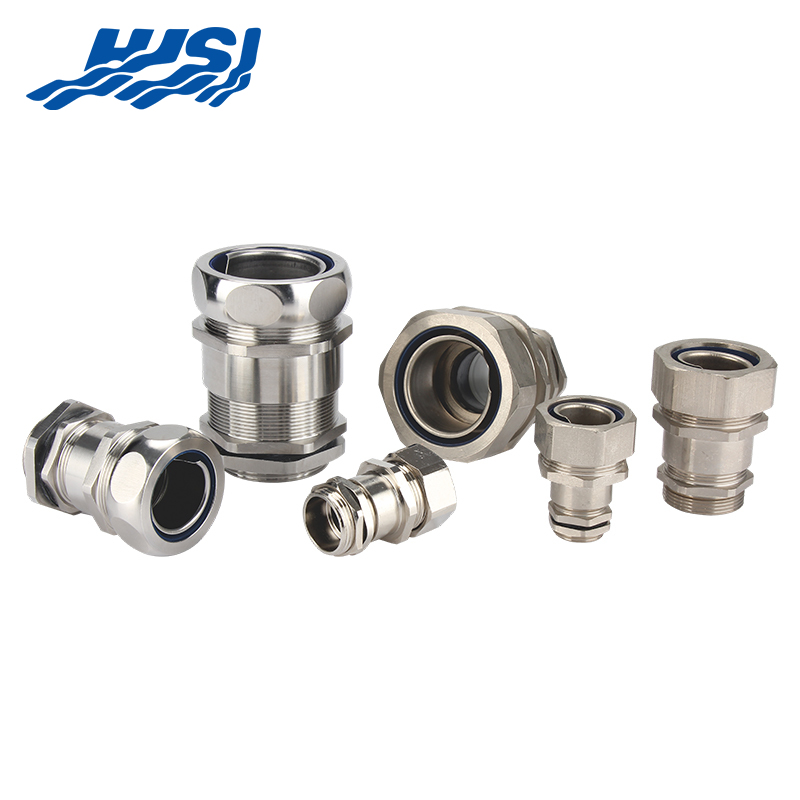
Installing a Waterproof Breathable Valve in the wrong orientation is one of the more common errors that occurs during assembly or field installation -- and one of the less visible ones. The component may look correctly seated, threads may be fully engaged, and no immediate sign of damage will appear. Yet the functional consequences can be significant. Understanding why orientation matters requires a clear picture of how these valves work and what happens when that structure is reversed.
A Waterproof Breathable Valve serves two purposes simultaneously: it blocks liquid water and contaminants from entering an enclosure, and it allows air and gas to move freely in both directions to equalize pressure. These two functions depend on a microporous membrane -- typically made from expanded PTFE -- that is structured to repel liquid while remaining permeable to gas molecules.
The membrane works because water exists as droplets that are far larger than air molecules. Liquid water cannot pass through the pores under normal conditions, while gases move freely in either direction as pressure differences form.
This component is not a symmetric one. The housing, membrane positioning, and protective cap or shield are arranged so that the membrane faces a specific direction relative to the external environment. The outer face is designed to shed water and resist direct contact with liquid. The inner face interfaces with the enclosed space.
When manufacturers specify an installation direction -- typically indicated by an arrow, a label, or a cap structure -- that direction reflects how the membrane and housing geometry interact with gravity, water contact, and airflow patterns. Reversing that orientation changes each of those interactions.
Under correct installation, water that contacts the valve exterior runs off the surface. The membrane faces a direction that limits standing water contact. When the component is inverted, the membrane may face upward or into a position where water can pool directly on it rather than draining away.
Water pressure -- even from a shallow pool -- can exceed the membrane's water entry threshold if sustained long enough. Once water penetrates the membrane, it loses its ability to block further ingress and the enclosure is no longer protected.
This component type allows bidirectional airflow. Temperature changes, altitude shifts, and thermal cycling all create pressure differentials between the inside of an enclosure and the external environment. Without proper equalization, these differentials build up and act against the gasket and sealing system.
When an inverted valve traps water against the membrane, airflow is restricted or blocked entirely. Pressure equalization slows or stops. The resulting internal pressure variation then stresses the enclosure seals from the inside -- a load they are not designed to handle on a sustained basis. Over time, this leads to gasket deformation and seal failure.
One of the indirect roles of this vent component is reducing internal condensation. When air can move freely in and out, moisture vapor also moves. This exchange prevents humid air from becoming trapped and condensing on internal components during temperature cycles.
An inverted valve that is partially or fully blocked stops this vapor exchange. Moisture accumulates inside the enclosure. Over repeated thermal cycles, this condensation deposits on circuit boards, connectors, and sensitive components -- causing corrosion, short circuits, and premature failure.
Many vent components of this type include a cap or hood structure on the exterior face to deflect rain, dust, and particulates away from the membrane. When the valve is inverted, this protective geometry faces inward or downward, leaving the membrane exposed from a direction the housing was not designed to protect.
Dust, fine particles, and contaminants can settle on or near the exposed membrane. Over time, clogging reduces airflow and further impairs pressure equalization -- compounding the functional problems caused by the orientation error.
Enclosure seals are designed to handle external pressure -- the force of water pressing inward. They are not designed to handle sustained internal pressure pushing outward. When pressure equalization fails and internal pressure builds, the seal is stressed from the wrong direction. This accelerates compression set, reduces seal contact force, and eventually creates a path for water ingress that is unrelated to the valve itself.
Once moisture enters an enclosure, the damage timeline depends on the sensitivity of the components inside and how frequently the enclosure is subject to thermal cycling. Moisture accelerates oxidation on metal contacts, degrades insulation resistance, and can trigger corrosion failures on soldered joints and connector pins. In automotive, outdoor lighting, and industrial electronics applications, these failures are often traced back to enclosure ingress -- and the ingress is often traced back to a failed or incorrectly installed vent component.
An enclosure's ingress protection rating is validated under specific assembly conditions, including correct component orientation. An inverted vent component does not maintain the rated protection level, even if the enclosure was originally tested and certified with the valve correctly installed. For procurement teams and system integrators, this is a compliance consideration as well as a reliability one -- field installations that deviate from validated assembly procedures effectively operate outside the tested protection specification.
Most vent components of this type carry clear orientation markings. These include:
Where markings are unclear or absent, the manufacturer's installation sheet is the authoritative reference. Do not assume symmetry.
The protective cap or hood on the valve is placed on the exterior face. When correctly installed, the cap faces outward and sheds water downward and away from the membrane. If the cap is facing inward after installation, the valve is inverted.
After installation, assess whether water contacting the valve can drain away from the membrane under gravity. The membrane face should not be in a position where liquid can pool against it under normal exposure conditions.
In enclosures where the valve is threaded into position and rotational alignment is not fixed, mark the correct final orientation on the housing before starting installation. This avoids the situation where tightening rotates the valve past the correct position.
Over-tightening can compress or damage the membrane and alter how the housing aligns with the enclosure surface. Follow specified torque values and avoid hand-tightening to an arbitrary stop point.
Before sealing the enclosure, confirm:
Orientation errors are more common when installers treat this component as a generic plug rather than a directional functional part. A brief explanation of what it does and why orientation matters reduces field errors more effectively than labeling alone.
If the component has been installed incorrectly and exposed to water or contamination in that position, do not simply reinstall it in the correct orientation and consider the issue resolved. Inspect the membrane for water penetration, debris clogging, or physical damage before reuse. A membrane that has been wetted through may not recover its full hydrophobic performance. In service-critical applications, replace the valve rather than reinstall a potentially compromised unit.
Orientation errors are installation problems, but they are compounded when valve housings lack clear directional markings or when technical documentation does not specify the correct face direction. Sourcing from a supplier that provides complete installation guidance, clearly marked components, and application-specific support reduces the risk of field errors. Zhejiang HJSI Connector Co., Ltd. supplies Waterproof Breathable Valve components with defined installation specifications and technical support for enclosure integration projects. If you are reviewing your current component sourcing or need guidance on valve selection and correct installation for a specific application, contact the team to discuss your requirements.

2nd Floor, Building 2, No. 188, Punan 3rd Road, Economic Development Zone, Yueqing City, Wenzhou City, Zhejiang Province, China

Copyright @ Zhejiang HJSI Connector Co., Ltd. All rights reserved.

China Waterproof Breathable Valve Manufacturer
 +86-15858552966
+86-13356176555
+86-15858552966
+86-13356176555
 English
 русский
 عربى
عربى