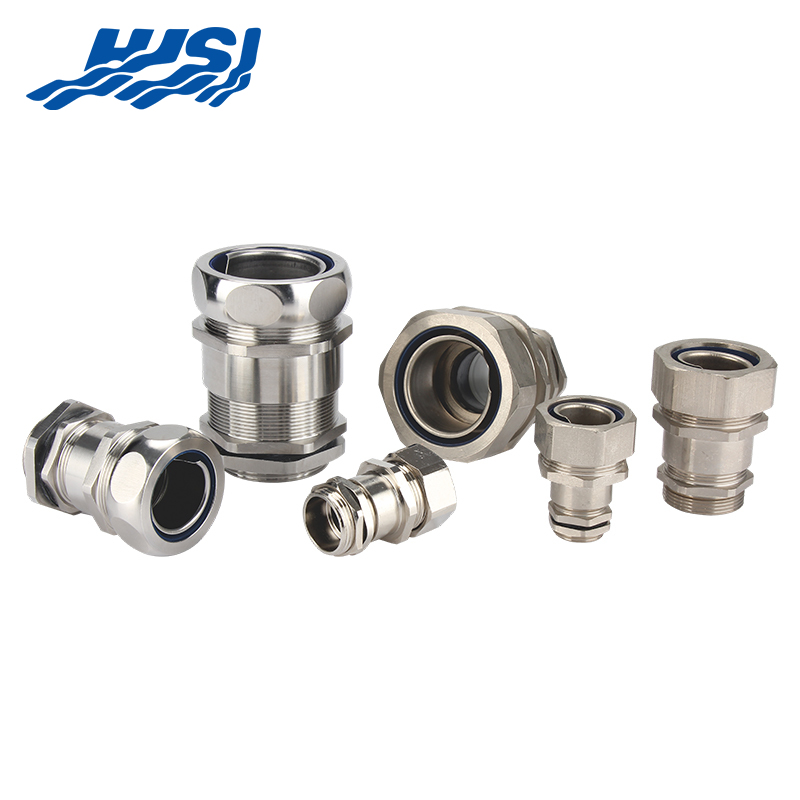
The long-term reliability of any Flexible Steel Conduit begins long before it reaches the job site. It is decided the moment engineers choose the base metal and the protective finish that will face years of heat, chemicals, moisture, abrasion, or fire. In demanding industrial, marine, and infrastructure projects, the right combination of core material and coating can extend service life from a few years to several decades while keeping installation practical and total cost low.
Core Material Options
1. Galvanized Steel (Hot-Dip Zinc-Coated Carbon Steel)
- Manufacturing process: steel strip is continuously hot-dip zinc coated before being formed into interlocked or square-locked conduit.
- Corrosion protection: thick zinc layer (typically 80–120 µm) sacrificially protects the underlying steel.
- Best applications: general outdoor use, wastewater plants, parking garages, light chemical exposure, and non-submerged areas.
- Advantages: excellent cost-to-performance ratio, good impact resistance, easy to cut and handle on site.
- Limitations: zinc eventually consumes itself in highly acidic or alkaline conditions; not recommended for continuous immersion or strong chloride environments.
2. Stainless Steel (304 and 316/316L Grades)
- 304 stainless: contains 18 % chromium and 8 % nickel. Good resistance to atmospheric corrosion and many organic acids.
- 316/316L stainless: adds 2–3 % molybdenum for superior resistance to chlorides (seawater, de-icing salts, bleach plants).
- Best applications: offshore platforms, food & beverage plants, pharmaceutical facilities, coastal installations, and any area with frequent wash-down or salt exposure.
- Advantages: lifelong corrosion resistance in aggressive atmospheres, retains flexibility after years of thermal cycling, accepted by hygiene authorities.
- Trade-offs: higher initial material cost, slightly heavier than galvanized versions of the same size.
3. Aluminium (Rare but Available)
- Occasionally used when extreme weight savings are needed or when galvanic corrosion with other metals must be avoided.
- Usually limited to instrumentation or indoor clean-room runs rather than heavy-duty power applications.
Jacket and Over-Coating Systems
The metal core provides mechanical strength; the outer jacket determines how long the core stays protected.
1. Standard Extruded PVC Jacket
- Temperature rating: –20 °C to +80 °C continuous (some formulations to +105 °C).
- Excellent resistance to oils, mild acids, alkalis, and sunlight when UV-stabilised.
- Widely used in factories, tunnels, and outdoor cable trays.
- Colour coding (black, grey, orange, blue) helps identify voltage or service type.
2. Liquid-Tight PVC (Heavy-Duty)
- Thicker, softer formulation with integral sealing compound between the metal core and jacket.
- Remains flexible at –40 °C and resists crushing better than standard PVC over braid.
- Standard choice for machine tools, petrochemical plants, and moving equipment.
3. Halogen-Free Polyolefin and Thermoplastic Elastomers
- Low smoke, zero halogen (LSZH/LSOH) versions for tunnels, rail carriages, airports, and confined public spaces.
- Slightly higher temperature rating and better abrasion resistance than standard PVC.
4. High-Temperature Silicone-Coated Fiberglass
- Continuous rating up to +200 °C, short-term peaks over +300 °C.
- Used around furnaces, glass plants, and engine compartments.
- Usually applied over stainless core for maximum life.
5. Polyurethane (PU) Jacket
- Outstanding abrasion and cut resistance.
- Common on robotic arms, drag chains, and mining equipment.
6. TPE-E and Nylon 12
- Very good chemical resistance and flexibility at low temperatures.
- Often chosen for offshore wind turbines and arctic installations.
Additional Protective Over-Braids and Coatings
When the standard jacket alone is not enough, manufacturers add secondary layers:
- Galvanized steel braid over PVC – extra crush and rodent protection.
- Stainless steel braid over PVC – combines corrosion resistance with extreme mechanical protection.
- Extruded TPU or polyethylene over-braid – used in underground mining and quarries.
- Ceramic-fibre or intumescent tapes – wound under the jacket for 2–3 hour fire survival circuits.
Specialised Finishes and Treatments
Hot-Dip Galvanising After Forming
Some manufacturers galvanise the finished conduit rather than the raw strip. This coats the inner surface as well, giving extra protection if the outer jacket is ever damaged.
Powder Coating
Applied over galvanised or stainless core for colour coding and additional UV protection in architectural-exposed installations.
Electroless Nickel Plating
Occasionally used on fittings and connectors for food/pharmaceutical plants where stainless is required but a smoother, brighter finish is preferred.
Anodised Aluminium Fittings
Paired with aluminium conduit to prevent galvanic corrosion.
Practical Selection Guidelines by Environment
Mild Indoor / Dry Outdoor
Galvanised core + standard PVC jacket → lowest cost, 20+ year life.
Coastal / Marine / Frequent Wash-Down
316 stainless core + heavy PVC or LSZH jacket → 30+ year life.
Chemical Plants (Acids, Solvents)
316 stainless + liquid-tight PVC or TPE jacket → confirmed chemical-compatibility chart required.
Steel Mills / Foundries
Galvanised or 304 stainless + silicone-fiberglass jacket → heat + occasional impact.
Tunnels / Mass Transit
Galvanised core + LSZH jacket + optional stainless braid → fire safety + mechanical protection.
Arctic / Extreme Cold
316 stainless + low-temperature PVC or TPE-E → remains flexible below –50 °C.
Food & Beverage (USDA/FDA Areas)
304/316 stainless + smooth-bore PVC or no jacket (bare metal periodically cleaned) → hygiene compliance.
Installation and Long-Term Performance Considerations
- Always match fitting material to conduit material to avoid galvanic corrosion (e.g., stainless conduit + stainless fittings).
- Store reels away from standing water before installation; zinc can develop white rust if left wet for weeks.
- Use proper support spacing; stainless is slightly heavier and may need closer clips on long horizontal runs.
- In fire-rated assemblies, follow tested termination methods (intumescent sealants, ceramic bushings).
- Keep a small stock of matching repair sleeves and heat-shrink boots for quick field fixes.
Cost vs. Lifecycle Reality
Stainless steel conduit costs roughly 2–3 times more per metre than galvanised, but in aggressive environments the replacement interval drops from every 5–8 years (galvanised) to virtually never (stainless). When factoring scaffolding, permits, shutdown time, and labour, the higher-grade material frequently becomes the cheaper option over 15–25 years.
Flexible steel conduit as a future development trend
Nano-ceramic coatings that add decades to galvanised conduit life.
Hybrid metal-polymer cores that maintain flexibility while increasing crush resistance.
Recycled-content stainless strips without performance loss.
Colour-through jackets that never show scratches or chips.
Choosing the correct core metal and protective coating is not about selecting the single toughest option; it is about matching expected service conditions with proven material combinations. Done correctly, a flexible steel conduit installed today will still be protecting cables long after the machinery around it has been replaced several times.
The right choices—whether galvanized for general outdoor use, 316 stainless for chloride-heavy coastal sites, or specialized high-temperature jackets for furnace zones—not only ensure compliance and safety but also minimize long-term maintenance and downtime. Zhejiang HJSI Connector Co., Ltd. addresses this need precisely, providing a full spectrum of flexible steel conduit solutions tailored to harsh conditions, backed by rigorous testing and a commitment to engineering excellence that keeps electrical systems protected and productive for the long haul.





 +86-15858552966
+86-13356176555
+86-15858552966
+86-13356176555
 English
 русский
 عربى
عربى