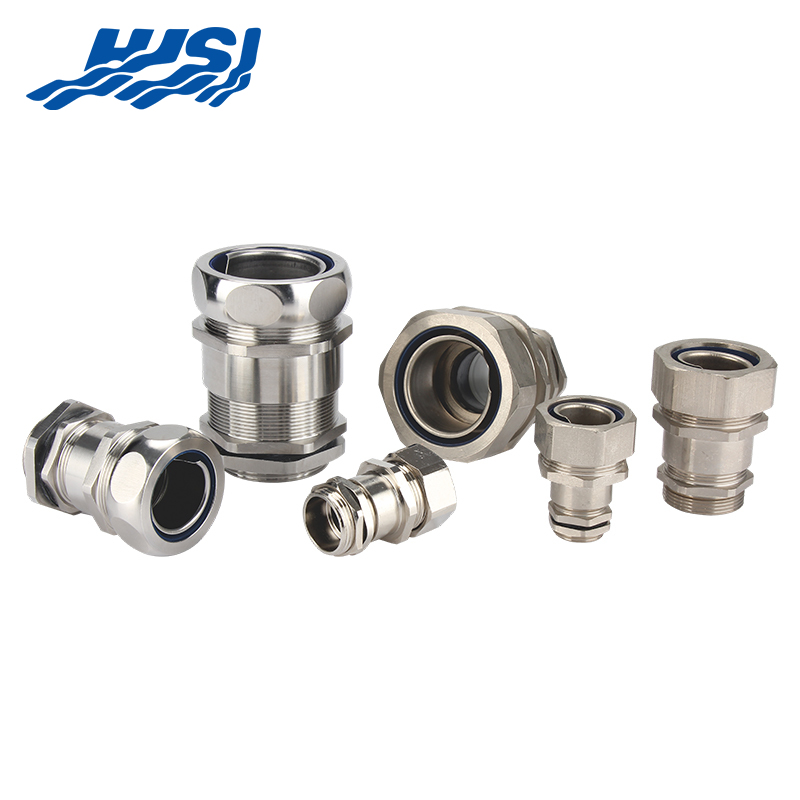
The difference between conduit connectors and cable glands comes down to how each fitting handles the entry of electrical conductors into enclosures, boxes, panels, or equipment. Both create secure, protected transitions, but conduit connectors are designed for systems that use protective tubing (conduit), while Conduit Gland are built for direct cable entry without any surrounding tube. The choice between them depends on the wiring method, environmental conditions, mechanical demands, and the level of sealing or strain relief needed.
Conduit connectors serve as the bridge between a length of conduit and an electrical enclosure. Conduit—whether rigid metal, flexible metal, or non-metallic—acts as a dedicated protective sleeve that carries multiple wires over distance. The connector attaches the end of that sleeve to a junction box, distribution panel, outlet box, or piece of equipment, ensuring the protective path continues right up to the point where the wires enter the enclosure.
Cable glands, by contrast, secure individual cables or multi-core cables directly into the enclosure. No conduit tubing is involved; the gland grips the outer jacket of the cable itself, provides mechanical hold, and seals the entry point against external elements. The gland is the sole interface between the cable and the enclosure.
This fundamental difference in purpose shapes everything else: design, installation, sealing capability, strain relief, grounding behavior, and typical applications.
| Fitting Type | Primary Purpose | Basic Function / How It Works | Key Difference in Approach |
|---|---|---|---|
| Conduit Connector | Bridges conduit tubing to an electrical enclosure | Attaches the end of protective conduit (rigid, flexible, metal or non-metallic) to a box, panel, or equipment; maintains continuous protective path for multiple wires | Relies on conduit as the protective sleeve; focuses on mechanical linkage to tubing |
| Cable Gland | Secures direct cable entry into an enclosure | Grips the outer jacket of individual or multi-core cables; provides mechanical hold and seals entry against dust, moisture, or other elements | No conduit involved; grips and seals the cable sheath directly |
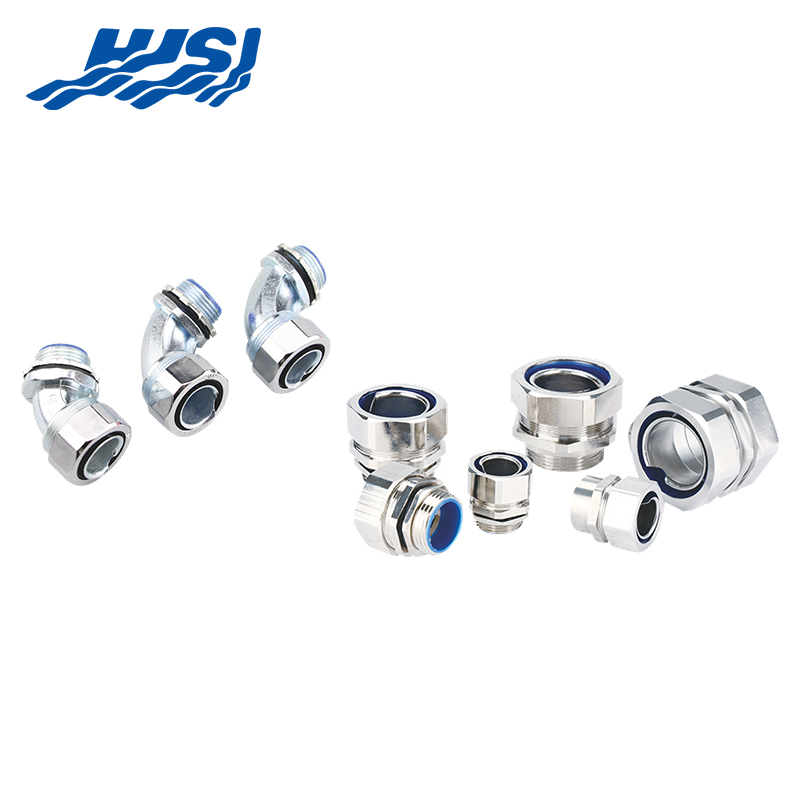
A conduit connector usually has a body with two distinct ends. The conduit side grips the tube using one of several methods: external threads that match the conduit threading, a compression ring tightened by a nut, or set screws that clamp the conduit wall. The enclosure side is designed to pass through a pre-punched knockout hole and is secured from the inside of the box with a locknut that threads onto the connector body.
Once installed, the connector holds the conduit firmly in alignment, preventing it from shifting or pulling away. An internal insulating throat or bushing covers any sharp edges at the knockout, protecting wire insulation during pulling and in service. In basic dry-location connectors, sealing is minimal or absent. In damp or wet-rated versions, rubber gaskets, O-rings, or sealing washers around the locknut side block water from following the conduit into the box.
Materials reflect the conduit type and installation environment. Steel or zinc-die-cast bodies provide mechanical strength and electrical continuity for grounding. Aluminum connectors reduce weight while resisting corrosion in outdoor or mildly corrosive settings. Plastic connectors match non-metallic conduit, offering complete corrosion immunity in damp basements, underground runs, or chemical plants.
The connector's primary job is mechanical linkage and alignment. It keeps the conduit run stable so wires inside remain protected and organized. Strain relief comes indirectly from the conduit system itself—clamps, straps, and supports along the run absorb pulls and vibrations. Direct cable strain is not the connector's focus.
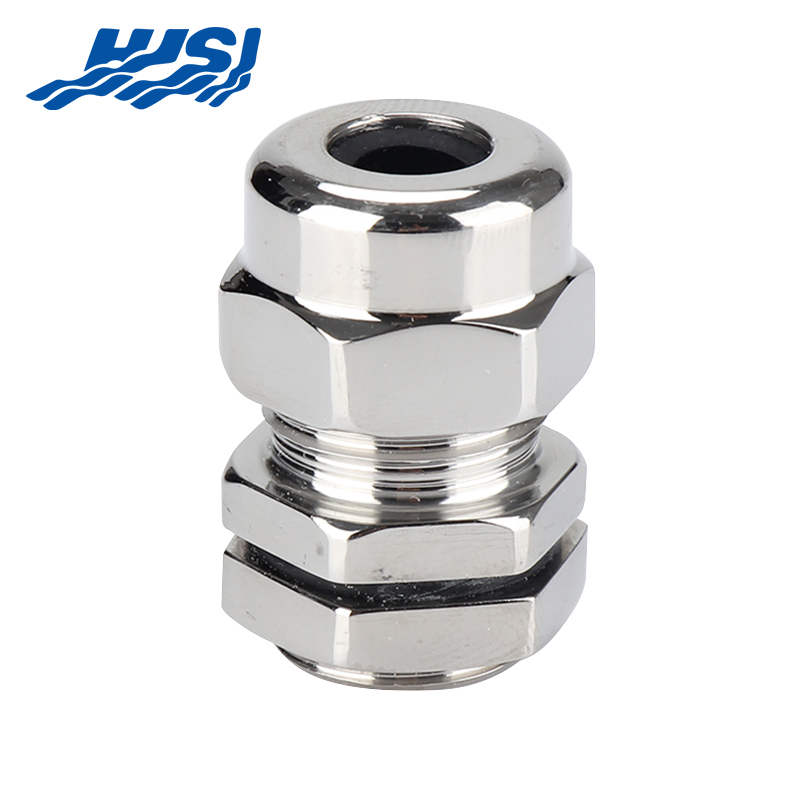
A cable gland has a threaded body that screws into a drilled or knocked-out hole in the enclosure. The cable passes straight through the gland. A compression nut at the outer end tightens down, forcing a flexible sealing ring (usually rubber or elastomer) to squeeze tightly around the cable's outer jacket. This dual action—gripping and sealing—happens in one motion.
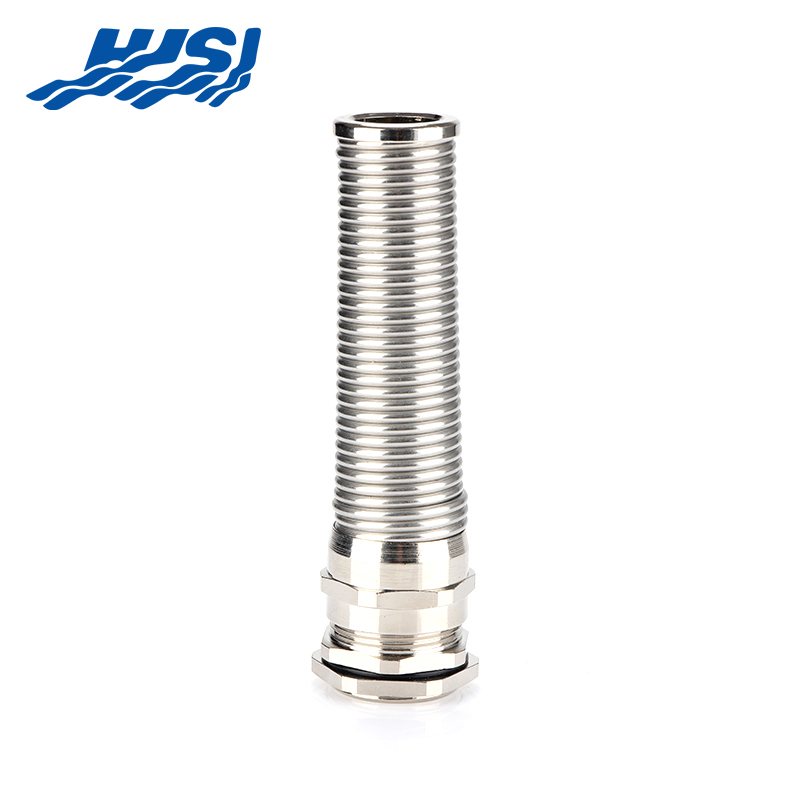
The seal prevents dust, water, oil, chemicals, or vapors from entering the enclosure along the cable. The grip provides mechanical strain relief, so pulling or twisting on the cable outside does not transfer force to the terminations inside. When the cable is armored (steel wire or tape), many glands include a separate clamping ring that bites into the armor, maintaining grounding continuity and adding crush protection.
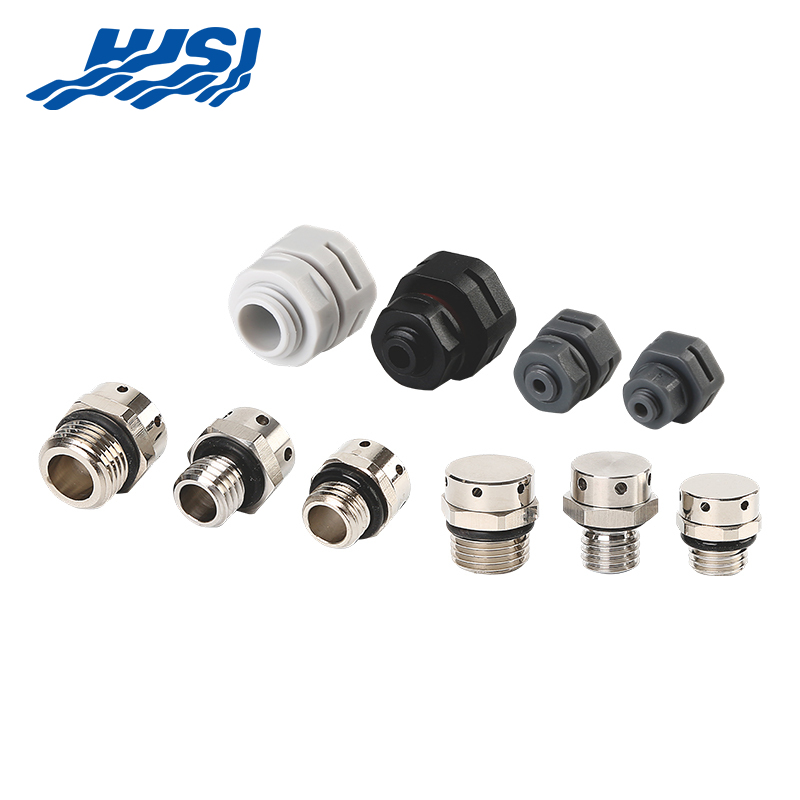
Materials include brass (often nickel-plated), stainless steel, or high-grade polymers. Brass offers excellent conductivity and corrosion resistance. Stainless steel handles aggressive chemical or marine environments. Plastic glands provide insulation and lightweight construction where conductivity is not required.
Installation focuses on cable preparation and gland tightening. The gland body threads into the enclosure first. The cable inserts through the gland, the compression nut is tightened to the correct torque, and the seal compresses evenly around the cable. Over-tightening can damage the jacket; under-tightening compromises the seal. Torque values are critical for maintaining ingress protection ratings.
The gland's primary job is direct cable protection and retention. It handles strain, sealing, and grounding (when armored) in one compact fitting.
Purpose drives the most noticeable differences, but many other characteristics follow.
Conduit connectors are the natural choice when wiring travels through protective tubing for any significant distance. In commercial office buildings, they connect conduit runs to outlet boxes, switchgear, or lighting panels. In residential construction, they link conduit to device boxes in walls or ceilings. In industrial facilities, they support long conduit runs feeding motors, control cabinets, or instrumentation.
Cable glands are preferred when cables enter equipment directly without conduit. In manufacturing plants, they secure power and signal cables to motor terminal boxes. In outdoor lighting installations, they provide weatherproof entry for fixture cables. In control panels, they organize bundles of instrument cables coming from field sensors. In hazardous locations (flammable gases, combustible dust), glands with appropriate ratings contain risks while sealing against vapors.
In mixed systems, both fittings may appear in the same project. Conduit might carry wiring along a factory wall, ending with a connector at a junction box, while short cable tails from the box enter a motor using glands.
Conduit connector installation integrates into conduit assembly. Cut conduit square, deburr ends, attach connector, secure with locknut, pull wire, and support the run. Mistakes include mismatched sizes, inadequate deburring (damaging insulation), loose locknuts, or forgetting bushings at entries.
Cable gland installation centers on cable preparation. Strip outer jacket if required by the gland design, insert cable, tighten compression nut to specified torque, and verify seal compression. Mistakes include incorrect gland size (poor seal), over-tightening (jacket damage), under-tightening (leak path), or failing to clamp armor properly.
Both require torque control and visual inspection after installation. In wet locations, both need careful sealing checks.
Conduit connectors benefit from periodic checks for loose locknuts, corrosion, or missing bushings. Vibration can loosen joints over time, so retightening or adding lock washers helps.
Cable glands need seal inspection for cracking, hardening, or compression loss. Compression nuts can loosen from vibration or thermal cycling, so periodic retightening is often necessary. Armor clamps should remain in firm contact.
Both last longer when properly sized, torqued, and inspected regularly.
Use conduit connectors when:
Use cable glands when:
Always verify local electrical code requirements for sealing, grounding, support, and hazardous-location use.
| Fitting Type | Use When... | Primary Reasons / Benefits |
|---|---|---|
| Conduit Connectors | - Wiring travels through protective conduit over distance - Structured routing along walls, ceilings, or trays is needed - Grounding through the conduit system is desired - Environment allows conduit as the main protective method |
Provides organized, long-run protection; supports grounding via conduit; maintains structured wiring paths |
| Cable Glands | - Cables enter equipment directly (no conduit) - High strain relief or sealing on the cable is critical - Armored cable requires grounding and crush protection - Environment needs robust ingress protection or hazardous-area ratings |
Delivers direct cable grip and strong sealing; excellent for strain relief; suits harsh, exposed, or classified locations |
Choosing HJSI products means finding the perfect practical and efficient match between your actual electrical needs and accessories that deliver stable and reliable performance. HJSI specializes in conduit connectors and cable glands, prioritizing robust mechanical connections, reliable environmental sealing, and effective strain relief, while avoiding unnecessary steps or complexity during installation.
Their designs emphasize compatibility with common conduit and cable types, providing reliable grounding continuity when needed, and durable construction that withstands vibration, temperature changes, moisture, and daily wear and tear in residential, commercial, and industrial environments. Installers and maintenance teams frequently praise their simple, reliable assembly process – connectors tighten evenly without stripping threads; seals maintain their integrity without frequent retightening; and components are durable and resistant to loosening or corrosion.

2nd Floor, Building 2, No. 188, Punan 3rd Road, Economic Development Zone, Yueqing City, Wenzhou City, Zhejiang Province, China

Copyright @ Zhejiang HJSI Connector Co., Ltd. All rights reserved.

China Waterproof Breathable Valve Manufacturer
 +86-15858552966
+86-13356176555
+86-15858552966
+86-13356176555
 English
 русский
 عربى
عربى