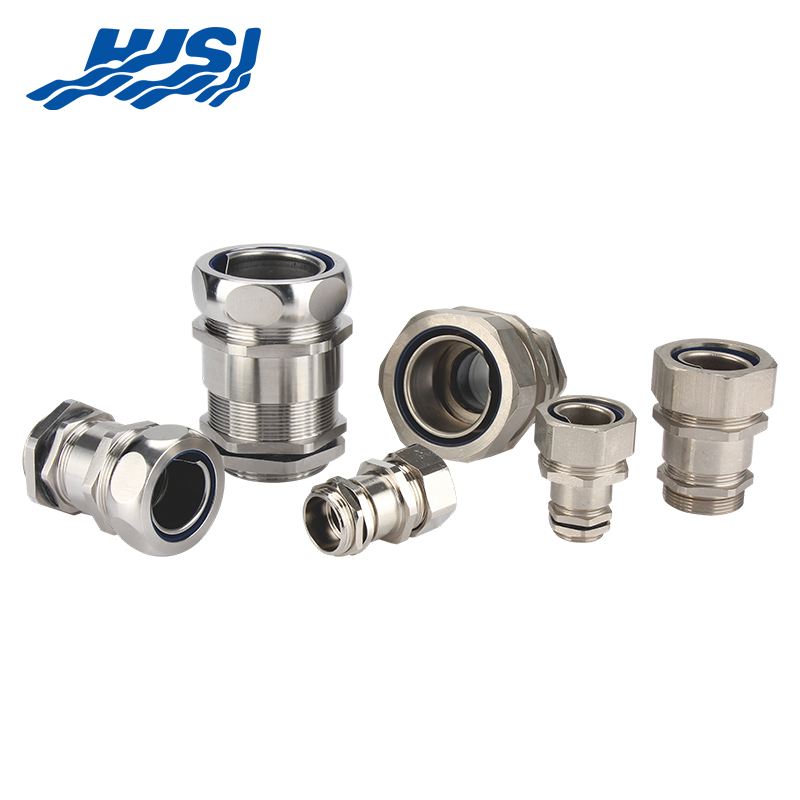
Walk into any offshore wind conference this year and you will hear the same handful of words repeated in every hallway conversation: turbines, substations, floating platforms, and, quietly, the small fitting that keeps seawater out of all of them. It sounds odd at the beginning. A cable entry is, after all, one of the cheapest components in an entire wind project. Yet project engineers, commissioning crews, and even insurance assessors keep circling back to it, because experience has taught the industry an uncomfortable lesson: on the open sea, small parts decide big outcomes.
Wind power has moved steadily away from calm coastal waters and toward deeper, rougher sites. Floating foundations, larger rotor diameters, and substations placed further from shore all share one characteristic: more electrical cable, more penetrations through steel enclosures, and more chances for water to find its way inside.
Every one of those penetrations needs a sealed termination point. Multiply a single tower by dozens of circuits, then multiply again by a farm of eighty turbines, and the humble gland stops being an accessory. It becomes a system decision that affects maintenance schedules, downtime statistics, and warranty claims for the next twenty years.
Shipyards discovered this decades ago. Wind farm developers are now learning the same lesson, and the vocabulary they use in tenders has changed accordingly. Requests for quotation that once said simply cable gland now read like full marine cable gland data sheets, specifying seawater resistance, clamping reliability, and classification approvals in the same breath.
Insurance data adds its own pressure. Claims linked to electrical faults caused by moisture penetration have pushed underwriters to ask harder questions during risk surveys, and those questions travel down the supply chain until they land on component specifications.
A land-based installation worries about dust and rain. A turbine standing in the North Sea faces a different order of punishment, and it helps to break that punishment into two categories.
A tower flexes in the wind. A floating platform pitches and rolls. Cables inside move with the structure, and every movement tugs at the point where the cable enters its enclosure. A fitting that only compresses a rubber seal, without gripping the cable jacket itself, will slowly work loose. Once the seal relaxes, moisture follows.
This is why offshore specifications now ask about clamping force on the outer sheath, not just about the seal around the conductors. The fitting must hold the cable mechanically, so the sealing element never carries the load alone.
Corrosion does not wait for immersion. Salt carried by wind and fog reaches equipment many meters above the waterline, settles on surfaces, and attacks any metal without a protective composition. Condensation inside enclosures adds a second, slower attack that happens even on dry days.
Material choice therefore matters as much as ingress protection. Nickel-plated brass handles routine deck-level duties well, while 316-grade stainless steel has become the default answer for splash zones, external runs, and anything near the foundation where water routinely makes contact.
Fixed-bottom turbines move, yet floating platforms introduce an entirely different vocabulary of motion: heave, sway, and yaw that continues around the clock. Cables running from a floating unit to its mooring and export systems bend and twist in patterns that no land installation ever experiences.
For sealing hardware, this changes the engineering brief in three ways. Strain relief becomes a survival feature rather than a comfort feature, because every flex cycle transfers load into the entry point. Redundancy in sealing design earns its place, since a single element carrying both water blocking and mechanical retention ages faster. And inspection access turns into a genuine constraint, because reaching a floating platform costs a crew transfer before anyone touches a spanner.
Manufacturers who test against dynamic bending rather than static pull-out alone have found their products referenced more often in floating tenders. Buyers, likewise, have started asking how a candidate fitting behaves after thousands of flex cycles instead of how it behaves in the box.
None of this makes floating projects impractical; it simply moves quality decisions earlier in the process. Teams that involve sealing specialists during the layout phase report fewer surprises, because thread standards, cable entry orientations, and access envelopes get agreed while changes are still cheap.
Talk to procurement teams working on sea-based projects and the same questions appear again and again. If you are preparing a tender, these are worth answering on paper before suppliers do it for you.
Suppliers who can answer all five with documents rather than promises tend to move to the front of the shortlist. Suppliers who answer with brochures alone tend to disappear from it.
Failure data from marine electrical maintenance paints a consistent picture. Water rarely causes a dramatic, immediate breakdown. It causes slow degradation that surfaces months later, usually at the worst possible moment.
| What Goes Wrong | What It Triggers | Where the Cost Lands |
|---|---|---|
| Seal relaxation after cable movement | Insulation resistance drifts downward | Unplanned vessel hire for inspection |
| Corrosion at the body or locknut | Thread damage makes reuse impossible | Whole fitting replacement plus re-termination |
| Condensation inside the enclosure | Tracking and eventual short circuit | Converter downtime across an entire string |
| Incorrect clamp assembly during retrofit | Armour not earthed as designed | Non-conformity findings during survey |
Notice the pattern in the middle column: none of these are component failures in the classic sense. They are installation and selection failures that a better-specified fitting would have prevented or at least delayed.
Classification societies have sharpened their focus on cable entries as electrical systems aboard vessels and floating structures grow more complex. Approval documents that were once optional reading are now tender requirements.
Practical buyers check three things: whether the manufacturer holds type approval relevant to marine electrical installations, whether test reports cover both ingress protection and mechanical pull-out, and whether the same approval covers the full size range being ordered. A partial approval covering only a few sizes creates awkward conversations during commissioning.
Projects that skip this verification often discover the gaps after delivery, when replacing a supplier mid-project costs far more than asking one extra question at the start.
If you are responsible for procurement on a sea-based project, the following sequence has saved many teams from repeat orders and schedule slips.
The last step sounds obvious, yet skip it and you will discover assembly issues during commissioning, when every hour carries a steep price.
Wind farm conversation tends to center on power cables, yet the turbines of this decade are also data machines. Blade sensors, condition monitoring systems, and control networks all depend on screened cable, and a screened cable needs an entry that bonds its shield properly.
Here the EMC-capable variant of the marine cable gland has moved from niche request to standard line item. A shield that is cut or left floating at the entry turns a well-engineered signal line into an antenna, and interference aboard a converter platform is not a theoretical concern. Installers have learned to treat the bonding of screen braids with the same seriousness as the sealing of power runs.
For teams drawing up their bill of materials, a practical rule has emerged: any circuit that carries measurement or control signals should be assigned a screened-cable entry from the beginning, with the bonding method written into the assembly instructions rather than left to improvisation on deck.
Two trends deserve attention. Floating wind brings motion loads that fixed foundations never imposed, pushing demand toward fittings with stronger strain relief and corrosion margins. Meanwhile, digital monitoring of enclosure humidity is spreading, which turns sealing quality into a measurable, reportable number rather than an assumption.
Both trends favor manufacturers with genuine marine experience over generalist suppliers. The gap between a catalogue fitting and a sea-proven fitting shows up in year three, not at delivery.
A last piece of advice from factory-floor experience: keep one common spare-kit standard across the fleet. Mixed fittings across turbines look harmless on paper, yet they multiply the part numbers a service vessel must carry and slow every repair that happens far from shore.
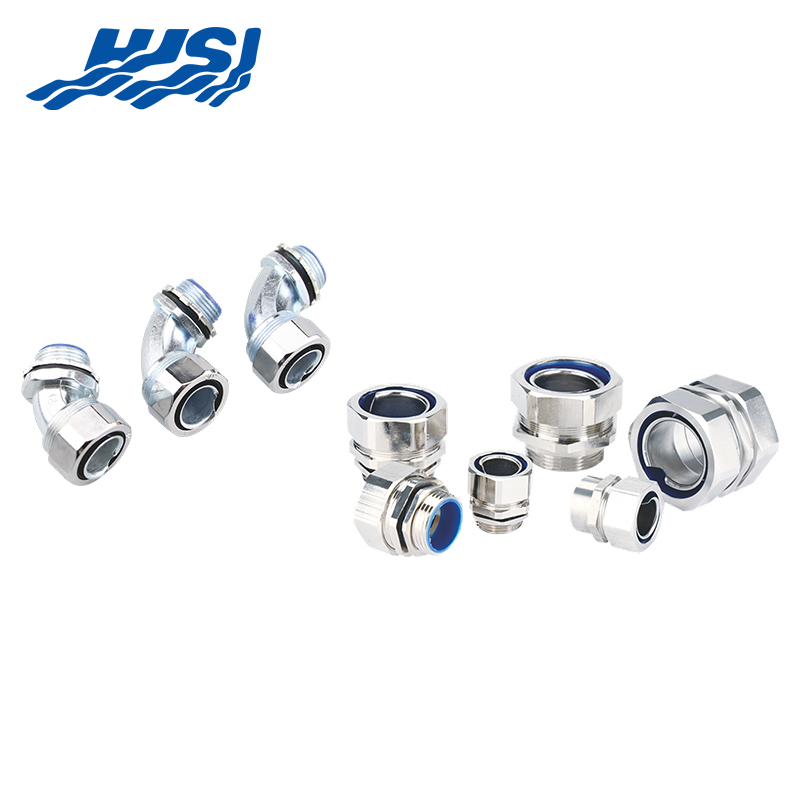
At HJSI, we have watched this shift from the factory floor: orders from wind-sector buyers now read more like shipyard specifications, with attention on stuffing-tight sealing, armour clamping, and salt-fog endurance. If you are building a specification list for a sea-based project, our waterproof metal cable gland range and JIS stuffing box series are reasonable starting points to compare against.
The conversation around offshore wind will keep growing, and the small fitting at the center of it will keep earning its attention. Handle it as a system decision, and it will reward you with quiet switchboards and calm maintenance logs for decades.

2nd Floor, Building 2, No. 188, Punan 3rd Road, Economic Development Zone, Yueqing City, Wenzhou City, Zhejiang Province, China

Copyright @ Zhejiang HJSI Connector Co., Ltd. All rights reserved.

China Waterproof Breathable Valve Manufacturer
 +86-15858552966
+86-13356176555
 English
 русский
 عربى