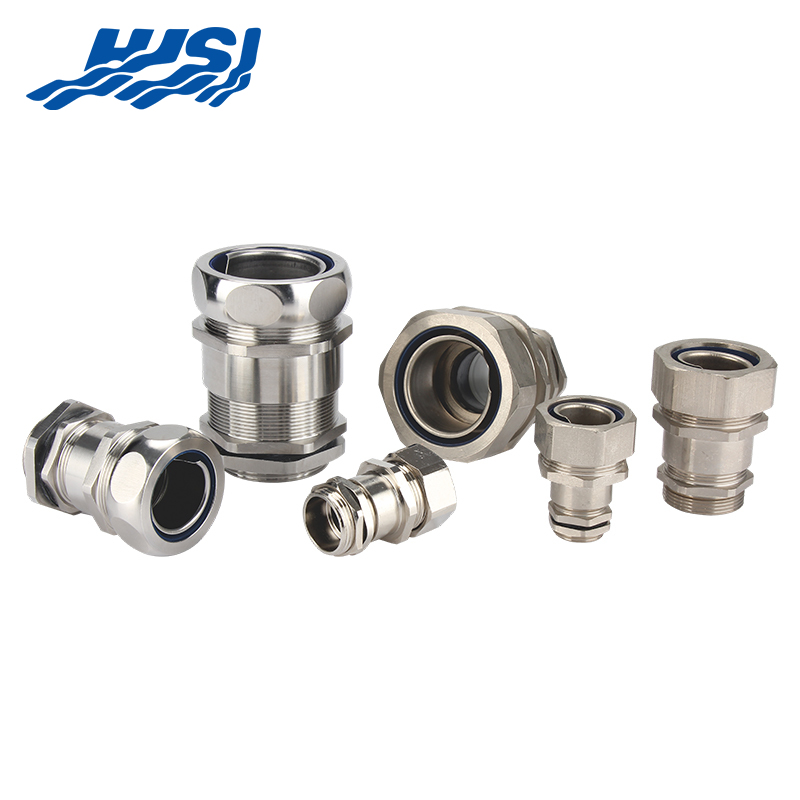
In modern electrical installations, ensuring both mechanical integrity and electromagnetic compatibility is essential. EMC cable glands play a critical role in this regard by providing secure cable entries while maintaining continuous shielding and grounding for sensitive electronics. These specialized components help protect equipment from electromagnetic interference while supporting durable and secure cable connections across diverse environments.
An EMC cable gland is a specialized cable entry device designed not only to seal and secure cables but also to maintain the continuity of electromagnetic shielding and grounding. It ensures that the protective braid or foil shield on a cable remains electrically bonded to the enclosure's metal body, thereby preventing the ingress or emission of EMI through the cable entry point.
In contrast to standard cable glands - which focus primarily on mechanical clamping and environmental sealing (dust, moisture) — EMC cable glands add shielding continuity and grounding capability. This dual function is vital in industrial automation, instrumentation racks, telecom equipment, marine electronics, and other installations where EMI could compromise performance or safety.
Electrical systems often include sensitive equipment — control panels, data servers, instrumentation, communication devices — that may be disturbed by electromagnetic interference (EMI). At the same time, cable entries where power or signal cables pass into enclosures represent a potential weak point for shielding and grounding. This is where an EMC cable gland becomes essential.
When shielded cables enter an enclosure, the shield must remain connected to the enclosure's ground reference. An EMC cable gland includes a conductive housing and internal components (such as a metal nut, clamping inserts, and shielding clamp) that compress onto the cable's outer shield (braid or foil). This clamping creates a low-resistance path between the cable shield and the enclosure's grounded metal surface.
Such grounding prevents the shield from acting like an antenna and radiating noise, and it prevents external electromagnetic fields from coupling into the cable core. In setups with multiple shielded cables, each cable needs an EMC passage to ensure overall system integrity.
In many installations, especially outdoors or in industrial environments, cable entries require sealing against dust, moisture, oil, or chemicals. EMC cable glands strike a balance: they offer effective environmental sealing (like standard glands) while preserving electrical conductivity. Their design often includes a sealing insert made of rubber or elastomer — compressible yet non-conductive — combined with a braided shield clamp that maintains metallic contact. This dual design protects internal electronics from environmental stress while maintaining EMI protection.
Industrial and marine environments may subject cables to vibration, movement, or mechanical stress, which can loosen connections or damage cables. EMC glands typically have robust metal bodies (e.g., stainless steel, brass, nickel-plated metal) and strong clamping mechanisms that resist loosening, ensuring long-term mechanical and electrical stability under vibration or shock. This capacity protects both the physical cable integrity and electromagnetic shielding.
Many installations must adhere to international or regional EMC regulations for safety, signal integrity, and interference reduction. Using EMC cable glands helps meet those requirements. Their conductive design and proper shielding reduces electromagnetic emissions and susceptibility, helping installers comply with standards by preventing unintended radiation or interference at cable entry points.
| Feature | Description |
|---|---|
| Shield Continuity and Grounding | EMC cable glands ensure the cable shield is grounded to the enclosure, preventing noise radiation. |
| Environmental Sealing | Dual design for sealing against moisture, dust, and chemicals while maintaining EMI protection. |
| Mechanical Security | Robust metal bodies and clamping mechanisms resist loosening under vibration, ensuring long-term stability. |
| Compliance with EMC Standards | EMC cable glands help meet international/regional EMC regulations, reducing emissions and interference. |
Choosing between an EMC cable gland and a standard gland involves evaluating performance needs, environmental requirements, installation complexity, and cost trade-offs.
For applications involving sensitive electronics, signal transmission, or EMI compliance, an EMC gland is typically necessary; a standard gland may suffice only when shielding is unnecessary.
Both types of glands provide sealing against dust, moisture, and contaminants, but:
For environments with moisture, oil, or chemical exposure plus EMI risk, EMC glands deliver a comprehensive solution where standard glands cannot.
Installing an EMC cable gland often involves more steps: ensuring shield termination is correct, verifying grounding continuity, and applying the correct torque. Proper installation ensures the shielding clamp contacts the cable braid evenly and screws are properly tightened without damaging the cable insulation. Standard glands are simpler: insert the cable, tighten the nut, and sealing is achieved. Because of the shielding function, improper installation of an EMC gland may compromise EMI protection — a risk not present with standard glands.
Standard glands generally cost less and offer quick installation for straightforward, non-shielded applications. They are suitable for basic wiring in dry, controlled environments where EMI is not a concern. EMC cable glands typically carry a higher acquisition cost and demand careful installation. Their use becomes justified when shielded cables, sensitive electronics, or regulatory compliance necessitate EMI shielding and grounding.
The material used in the body of a cable gland significantly impacts its performance under environmental stressors. Choices typically include stainless steel, brass, nickel-plated metals, and sometimes other corrosion-resistant alloys. Material selection should align with environmental conditions, mechanical demands, and longevity expectations.
Corrosion Resistance and Environmental Robustness
Stainless steel excels in corrosive or high-moisture environments: coastal, marine, offshore installations, chemical processing, or outdoor exposure. Its resistance to saltwater, moisture, chemicals, and temperature variation makes it highly reliable over long service periods.
Mechanical Strength and Vibration Resistance
With strong structural integrity, stainless steel glands resist vibration and mechanical stress, which prevents loosening or degradation over time. This makes them suitable for industrial plants, heavy machinery, or mobile equipment where steady vibrations or mechanical impacts occur.
Longevity vs Cost
Though often the higher-cost option, stainless steel glands deliver long-term value through reliability and minimal maintenance in demanding environments. For installations in harsh conditions, they represent a durable investment that avoids frequent replacements.
Balanced Strength in Controlled Environments
Brass offers reasonable strength and conductivity, making it suitable for indoor electrical panels, enclosures in controlled environments, or installations without extreme exposure.
Ease of Machining and Installation
Brass is relatively easier to machine and thread, facilitating installation or retrofitting. For standard industrial or commercial wiring where conditions remain stable, brass glands provide a balance between performance and cost.
Limitations in Harsh Conditions
Under heavy mechanical stress, saltwater exposure, or chemical environments, brass may corrode or degrade faster than stainless steel. For short to medium-term installations in benign environments, brass remains practical; for heavy-duty applications, stainless steel is often preferred.
Enhanced Corrosion and Wear Resistance
Nickel plating over a base metal provides improved surface hardness, corrosion resistance, and reduced friction. These glands suit environments where moderate corrosion, moisture, or chemical exposure may occur, offering an intermediate level of protection between brass and stainless steel.
Electrical Conductivity and Shielding Integrity
Metal glands maintain necessary conductivity for shield grounding. Proper plating ensures contact reliability and longer service life, especially in dusty, humid, or mildly corrosive environments.
Cost-Effectiveness for Medium-Demand Use
Such glands strike a balance: better environmental resistance than bare brass, lower cost than stainless steel, and acceptable shielding performance — making them viable for general industrial or commercial use where extreme exposure is unlikely.
The application environment — moisture, vibration, temperature, chemical exposure, and long-term durability needs — dictates the optimal material choice.
EMC cable glands find use across various sectors and electrical installation types due to their combined sealing, grounding, and EMI shielding capabilities. Some common application categories include:
These applications highlight the versatility of EMC cable glands, especially in installations where electrical performance and environmental durability must coexist.
Even a well-designed EMC cable gland can fail to deliver proper shielding if not installed correctly. Key best practices when installing or retrofitting include:
Following these practices ensures the gland continues to provide both environmental sealing and EMI shielding over its service life.
| Best Practice | Description |
|---|---|
| Proper Shield Termination | Evenly distribute the shield around the gland insert for good grounding. |
| Correct Torque & Tightening | Follow torque settings to avoid over or under-tightening. |
| Use Compatible Washers & Locknuts | Ensure stable connection using washers or locknuts. |
| Grounding of Enclosure | Proper grounding ensures a valid reference ground connection. |
| Regular Inspection & Maintenance | Periodically check for wear, corrosion, or loosening. |
| Avoid Mixed Conductor Materials | Prevent corrosion by avoiding dissimilar metals without bonding. |
While EMC cable glands are robust solutions, certain issues can arise if selection or installation does not match the application demands. Common problems include:
Addressing these challenges requires careful material selection, correct installation procedures, and regular maintenance — especially where environmental, mechanical, or regulatory demands are high.
Selecting a gland type involves a series of evaluative questions focused on performance requirements, environmental conditions, and long-term reliability:
This approach helps ensure that the selected gland matches both technical requirements and environmental demands, avoiding under-or over-specification.
Evolution in cable gland design reflects broader shifts in industrial requirements: increased automation, stricter EMC regulations, and greater emphasis on environmental durability. Some ongoing developments include:
These trends demonstrate how EMC cable glands adapt to complex challenges, balancing mechanical, environmental, and electromagnetic requirements.
By selecting the right gland type, installing it properly, and maintaining its integrity, users can ensure consistent shielding, mechanical stability, and environmental protection over the life of their systems. Zhejiang HJSI Connector Co., Ltd. provides solutions that address these requirements, offering high-quality EMC cable glands designed for long-term performance and adaptability in industrial, commercial, and outdoor applications.

2nd Floor, Building 2, No. 188, Punan 3rd Road, Economic Development Zone, Yueqing City, Wenzhou City, Zhejiang Province, China

Copyright @ Zhejiang HJSI Connector Co., Ltd. All rights reserved.

China Waterproof Breathable Valve Manufacturer
 +86-15858552966
+86-13356176555
+86-15858552966
+86-13356176555
 English
 русский
 عربى
عربى