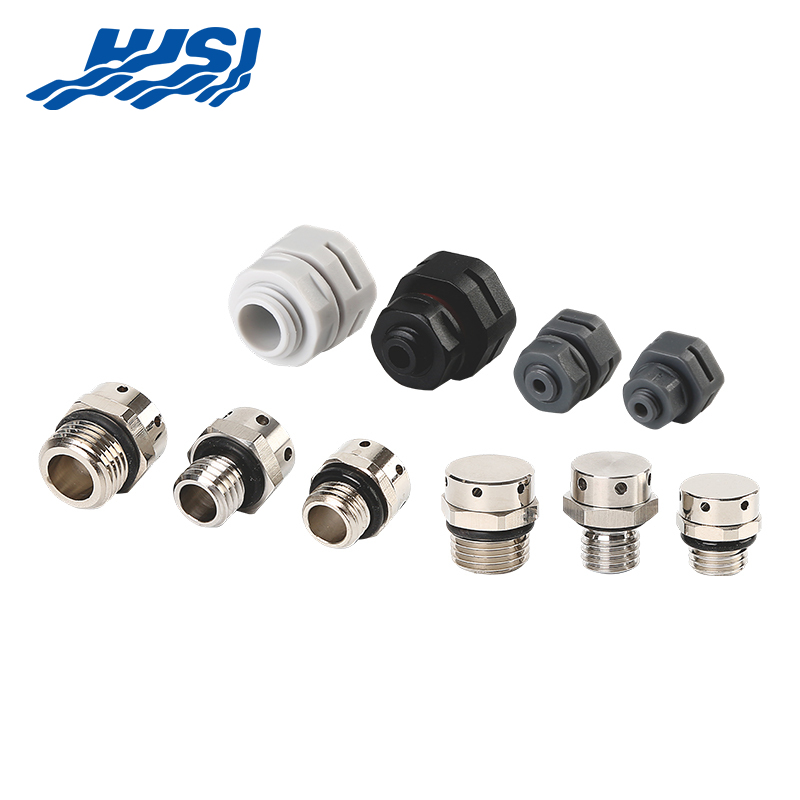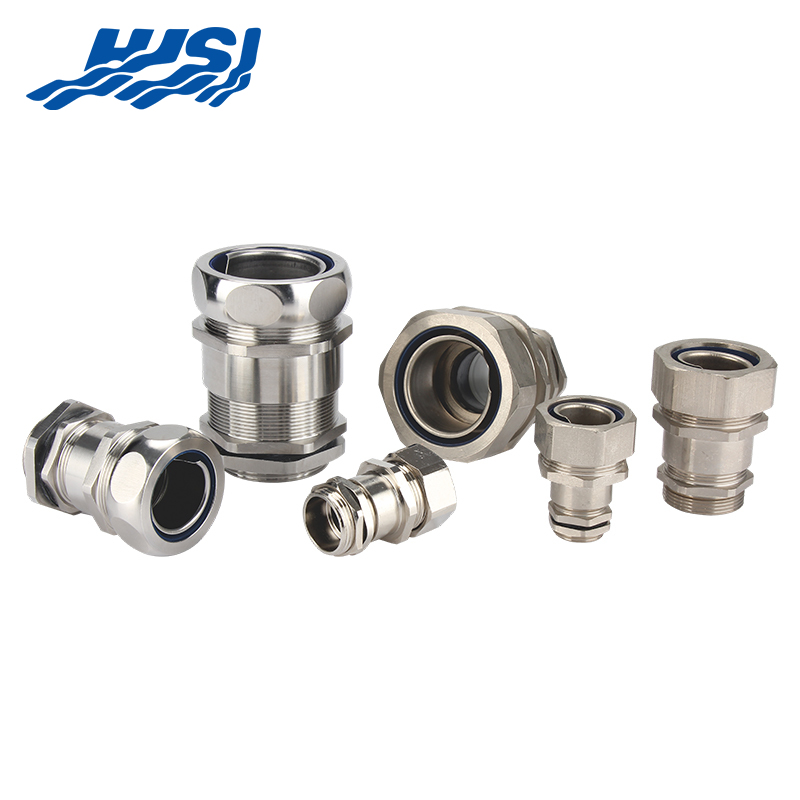
Waterproof Breathable Valve and non-waterproof venting solutions both serve the fundamental purpose of relieving pressure in sealed enclosures, yet their structural approaches lead to meaningful differences in how they perform under exposure to moisture, contaminants, temperature shifts, and other environmental factors. Waterproof venting incorporates a dedicated selective barrier—typically a porous membrane or treated plug—that permits air and vapor to pass in either direction while actively repelling liquid water. This design makes it well suited to locations where rain, condensation, splashes, fog, or high ambient humidity appear regularly. Non-waterproof venting relies on simpler, more open pathways such as drilled holes, slotted covers, perforated panels, or basic mesh screens that prioritize unrestricted airflow over any specific resistance to liquids. This type fits better in dry, indoor, or well-protected settings where moisture risk remains low or can be managed through careful placement and supplementary measures.
The core need for venting in any enclosed system stems from the fact that trapped air expands when heated by sunlight, internal components, or ambient temperature increases, and contracts when cooled. Altitude changes during transport or operation also create differentials. Without a venting mechanism, these pressure shifts repeatedly stress seals, gaskets, and enclosure walls, eventually causing micro-cracks, loss of compression, extrusion of sealing material into gaps, or complete detachment. Waterproof venting manages this breathing process while keeping water out; non-waterproof venting addresses the pressure relief but leaves the interior more vulnerable to whatever conditions surround the enclosure.
Waterproof venting centers on a thin, microporous barrier element fixed securely inside a protective housing. The barrier, often a stretched polymer film, contains a uniform network of sub-micron channels that allow gas molecules to diffuse freely. The surface receives a treatment that imparts strong hydrophobicity, so water droplets bead up and roll away rather than penetrate the pores. The housing—typically molded from durable plastic or a corrosion-resistant metal—shields the barrier from mechanical damage and includes mounting features such as external threads, snap-fit collars, or flange edges for attachment to the enclosure wall.
This arrangement supports natural bidirectional flow. When internal air warms and expands from heat sources or sunlight, pressure drives vapor outward through the channels until equilibrium returns. When the air cools and contracts, external air enters, filtered by the barrier's structure. The waterproof characteristic arises from the combination of pore size, surface tension, and the hydrophobic coating: liquid water faces too much resistance to enter under ordinary conditions. An outer protective screen, cap, or perforated cover often sits over the membrane to deflect impacts, large debris, or direct water jets without significantly restricting gas movement. During assembly, the barrier bonds tightly to the housing so no air or water can circumvent the element along the edges.
Waterproof venting suits enclosures that must function reliably in outdoor locations, near water bodies, in humid climates, or in industrial settings where condensation forms easily. The structure keeps the interior dry during normal pressure-driven air exchange, lowering the chance of corrosion on metal parts, short circuits in electronics, mold growth, or contamination of sensitive components.
Non-waterproof venting uses straightforward, minimally obstructed openings such as round or slotted holes, louvered covers, perforated metal or plastic plates, or coarse wire mesh. The structure avoids any dedicated water-repelling layer or tight pore network, relying instead on the path itself to allow air to move in response to pressure gradients. In some cases a basic filter—foam insert, fabric screen, or expanded metal—sits across the opening to capture larger dust particles or insects, but it does not block liquids.
Air flows freely in both directions: expanding warm air exits outward, contracting cool air enters from outside. The design keeps flow resistance low, so pressure equalization occurs rapidly and with minimal restriction. The housing, when included, primarily holds the opening in place and provides some mechanical protection. No hydrophobic surface treatments or capillary-resistant pores exist, so water can enter freely if the vent faces rain, spray, or pooling.
Non-waterproof venting works effectively in indoor cabinets, climate-controlled rooms, covered outdoor areas, or any setting where moisture levels stay consistently low. The uncomplicated construction reduces material cost and assembly time while still providing the necessary pressure relief.
Protection level stands out as one of the primary distinctions. Waterproof venting delivers a significantly higher degree of defense against liquid ingress. The barrier withstands direct exposure to water from rain, hose spray, condensation drips, or occasional submersion up to moderate depths, preventing passage under typical operating pressures. This keeps the enclosure interior dry even when external conditions become wet, reducing the likelihood of electrical faults, rust on metal surfaces, mold inside, or contamination on optics and circuits.
Non-waterproof venting provides a lower, more basic level of protection that centers on airflow and exclusion of larger debris. Open paths or simple screens stop rocks, leaves, or big insects but allow water to enter freely if the vent faces rain, splashing, or pooling. In dry environments this level suffices, but in wet conditions the enclosure must depend on careful positioning, additional covers, sloped surfaces, or drainage features to avoid moisture-related issues.
| Aspect / Feature | Description / Protection Offered | Limitations / Risks in Wet Conditions | Required Mitigations in Wet Environments |
|---|---|---|---|
| Primary Focus | Airflow and exclusion of larger debris | Allows water to enter freely if exposed | Careful positioning, additional covers, sloped surfaces, drainage features |
| Debris Protection | Stops rocks, leaves, big insects via open paths or simple screens | No resistance to liquid water (rain, splashing, pooling) | Relies on enclosure design and placement to avoid direct exposure |
| Suitability | Sufficient in dry environments | Inadequate in wet/humid conditions without extra measures | Use supplementary features to prevent moisture ingress |
| Overall Protection Level | Lower, basic (airflow-oriented) | High vulnerability to water-related issues | Dependent on external precautions rather than built-in barrier |
For airborne dust, pollen, or fine particulates, both types can incorporate filters, but waterproof designs usually integrate filtration more seamlessly with the barrier, maintaining consistent defense without major flow reduction. In terms of pressure equalization, both keep differentials small enough to protect seals, but waterproof venting achieves this while excluding contaminants that non-waterproof venting may permit. Waterproof solutions therefore suit applications that require comprehensive shielding from environmental elements; non-waterproof fits scenarios where moisture risk can be managed otherwise.
Material selection reflects the different priorities of each venting type. Waterproof venting uses specialized polymers for the barrier, chosen for their ability to maintain uniform porosity, strong water repellency, and resistance to environmental breakdown. These materials endure prolonged ultraviolet exposure, repeated temperature cycles, and occasional contact with mild chemicals or salt, preserving their gas-diffusion and liquid-blocking properties over extended periods. The housing often employs reinforced engineering plastics or corrosion-resistant metals that withstand vibration, impacts, and weathering.
Non-waterproof venting relies on more conventional materials—stainless steel mesh, molded plastic louvers, aluminum perforated sheets, or basic foam filters—selected for mechanical durability, airflow efficiency, and low production cost. These materials handle physical stress adequately in stable conditions but can corrode, warp, discolor, or accumulate residue faster in wet, salty, or chemically aggressive environments. Filters, when included, use simple mesh or foam that captures particles but lacks inherent water resistance and may need replacement or cleaning more often.
In airflow capacity, non-waterproof designs generally permit higher volume due to their open construction, while waterproof venting balances flow rate with protection, sometimes resulting in slightly lower rates under the same pressure differential. Waterproof materials, however, tend to maintain their performance characteristics longer under stress, with reduced clogging, cracking, or loss of repellency. Non-waterproof options perform reliably in controlled settings but may require more frequent attention in harsher ones.
Environmental adaptability shows how each venting type responds to different surroundings and conditions. Waterproof venting adapts effectively to wet, humid, dusty, or seasonally variable weather. The barrier repels liquid water and allows vapor to escape, making it suitable for outdoor electronics, transportation applications, marine equipment, agricultural machinery, or industrial installations where condensation forms easily. The materials tolerate wide temperature ranges, ultraviolet exposure, and airborne particulates, providing consistent pressure relief and protection across changing seasons.
Non-waterproof venting adapts well to dry, indoor, or protected environments where airflow takes priority over moisture defense. It performs reliably in climate-controlled rooms, warehouses, ventilated cabinets, or covered outdoor areas but requires additional precautions—such as sloped roofs, drip edges, or relocation—in rain, fog, or high-humidity conditions to prevent water entry. Adaptability here depends heavily on site selection and supporting features.
In locations with persistent dust or sand, waterproof venting's integrated filters offer better adaptability by blocking particles while maintaining breathability. Non-waterproof designs may need separate add-on screens that can reduce flow over time or require more frequent cleaning. For corrosive air—salt spray near coasts, chemical fumes in factories, or acidic vapors—waterproof materials often include resistant coatings or formulations, while non-waterproof may need specialized versions or more regular replacement.
Waterproof venting therefore covers a broader spectrum of environmental conditions; non-waterproof suits specific, lower-risk applications where simplicity outweighs the need for liquid exclusion.
Waterproof venting appears frequently in outdoor lighting fixtures—street lamps, floodlights, pathway lights, and illuminated signs—where the enclosure protects drivers, wiring, and control circuits from rain while venting heat from the lamp or electronics. The barrier keeps water out during storms and adapts to daily temperature shifts without allowing condensation to form inside.
In automotive and heavy equipment applications, waterproof vents in electronic control units, battery compartments, sensor housings, and lighting assemblies balance pressure from altitude changes, engine heat, or cabin heating while repelling road spray, puddles, and dust. The structure withstands vibration and road debris, helping seals around covers and connectors remain intact.
Solar inverters, combiner boxes, and battery enclosures in open fields or on rooftops use waterproof venting to manage intense daytime heating followed by rapid nighttime cooling. The vent releases vapor before it condenses on bus bars or terminals and blocks rain and dust, supporting reliable power output in remote or variable-weather locations.
Telecommunication cabinets on poles, towers, or rooftops rely on waterproof vents to equalize pressure from wind-driven temperature changes and equipment heat, keeping amplifiers, radios, and power supplies dry and functional.
Non-waterproof venting fits indoor server racks, network cabinets, and data center equipment, where high airflow cools components in climate-controlled rooms without moisture concerns. The open design adapts to stable indoor conditions.
In consumer appliances such as refrigerators, freezers, or HVAC units, non-waterproof vents circulate air inside the cabinet or ducting, relying on the enclosed setting to avoid water exposure.
Warehouse storage lockers, control panels, or utility boxes in dry indoor areas use non-waterproof venting for basic pressure relief, with materials performing reliably in consistent, low-humidity environments.
The decision between waterproof and non-waterproof venting depends on the expected environmental exposure. In locations with regular rain, humidity, condensation, or splash risk, waterproof venting's higher protection level and broader adaptability justify the added cost and slightly reduced airflow. In consistently dry, indoor, or well-sheltered settings, non-waterproof venting's simplicity, higher flow capacity, and lower cost offer clear advantages.
| Environment / Exposure Type | Recommended Venting Type | Key Advantages | Trade-offs / Considerations |
|---|---|---|---|
| Regular rain, humidity, condensation, splash risk | Waterproof venting | Higher protection against liquid ingress, broader adaptability to wet/humid conditions | Slightly higher cost, marginally reduced airflow |
| Consistently dry, indoor, or well-sheltered settings | Non-waterproof venting | Simplicity, higher airflow capacity, lower cost | Lower protection against moisture; requires careful placement or supplementary measures in wet conditions |
Material performance considerations play a role in longevity planning. Waterproof types reduce the need for frequent maintenance or replacement in harsh conditions; non-waterproof works well for low-exposure uses where cleaning or occasional replacement remains manageable.
Environmental adaptability should guide site-specific choices. Waterproof venting handles a wider range of weather and contaminant challenges; non-waterproof requires careful placement and possibly supplementary features to manage unexpected moisture.
HJSI waterproof venting solutions stand as a practical and dependable choice for managing pressure balance in enclosed systems while delivering strong protection against liquid ingress. Their selective barrier design—combining a microporous membrane with hydrophobic treatment and a robust housing—enables reliable air and vapor exchange in response to temperature fluctuations, altitude variations, internal heat, and humidity cycles, all without allowing water, dust, or contaminants to penetrate.
This balanced performance sets HJSI venting apart from non-waterproof alternatives by providing a higher level of environmental shielding, better material durability under ultraviolet exposure, temperature extremes, and particulates, and wider adaptability across wet, humid, dusty, or variable conditions. From outdoor lighting fixtures that remain dry during storms, vehicle electronic modules that resist road spray, solar inverters that handle daily thermal shifts in open fields, to telecom cabinets on exposed towers, HJSI venting helps preserve seal integrity, prevents micro-cracks or extrusion, and maintains clean, corrosion-free internals that support consistent operation.
By addressing both pressure differentials and liquid exposure at their source rather than relying on supplementary covers or frequent repairs, HJSI waterproof venting offers a straightforward yet effective path to more durable, reliable systems wherever environmental challenges require both breathability and robust protection.

2nd Floor, Building 2, No. 188, Punan 3rd Road, Economic Development Zone, Yueqing City, Wenzhou City, Zhejiang Province, China

Copyright @ Zhejiang HJSI Connector Co., Ltd. All rights reserved.

China Waterproof Breathable Valve Manufacturer
 +86-15858552966
+86-13356176555
+86-15858552966
+86-13356176555
 English
 русский
 عربى
عربى