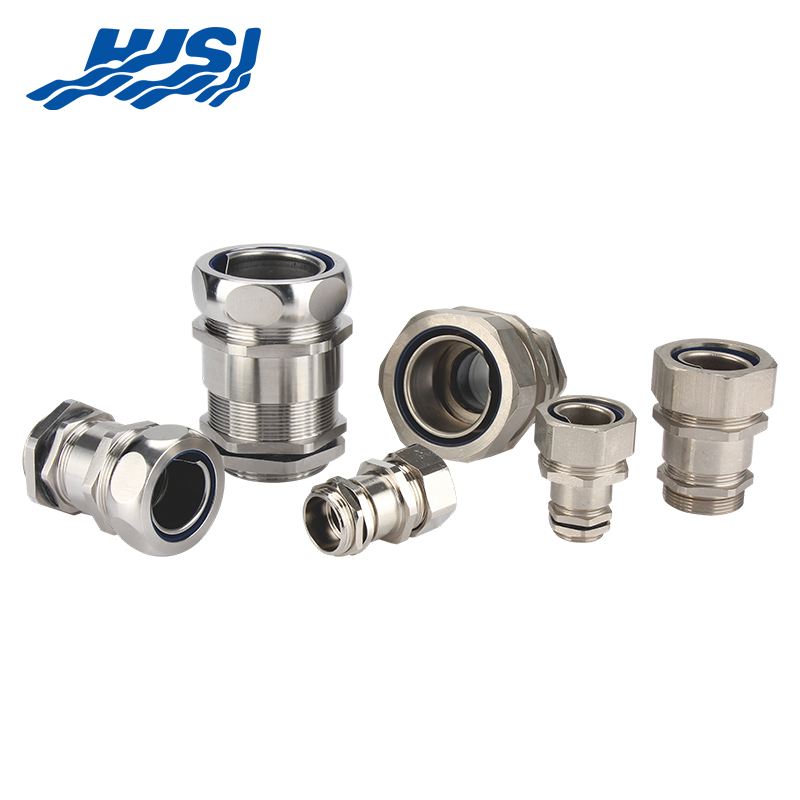
When a buyer asks this question, the real worry is simple: will the parts in my hand hold this cable properly? The armour layer is what a gland grips, so the metal used in that layer does influence how a kit should be chosen and fitted. Many kits are designed to cover both steel wire and aluminium wire, yet a few details still deserve a check before an order goes out.
Armour is a layer of metal wires wrapped around the inner cores of a cable. It protects against impact, crushing, and pulling force. In many installations it also works as an earth path, carrying fault current if something goes wrong.
The cable gland holds that armour at the point where the cable enters equipment. If the grip is poor, the cable can slip, the seal can loosen, and the earth connection can weaken. A small part carries a big responsibility.
Steel and aluminium have different habits.
These differences do not always call for a different gland. They do change how the gland should be set up, tightened, and checked.
Many industrial kits are built to work with both steel wire and aluminium wire. The clamping parts are shaped to hold a range of wire sizes, and the installer adjusts them on site.
Still, a kit made for both types is not a reason to skip the details. A kit can suit the armour and still be wrong for the cable if the thread, cable diameter, or environment does not match.
With these answers ready, a supplier can recommend a suitable kit much faster.
| Topic | Steel Wire Armour | Aluminium Wire Armour |
|---|---|---|
| Feel | Firm, holds shape | Lighter, softer |
| Clamping | Tolerates firm tightening | Needs even, gradual pressure |
| Typical use | Power cables in plants, buildings, buried runs | Single core cables, where magnetic effects matter |
| Weight | Heavier | Lighter |
| Corrosion concern | Needs protection in damp or salty places | Naturally resistant, but contact with other metals needs attention |
| Gland attention point | Secure grip and earth path | Even pressure and clean contact surfaces |
In short, the same gland body may work for both. The way it is fitted can differ.
Single core cables carry alternating current in one conductor. A steel armour layer around that conductor can heat up because of magnetic effects. For this reason, single core installations often use aluminium armour, together with glands made from non-magnetic material.
If your project uses single core cable, say so at the enquiry stage. The gland material may need to be non-magnetic, and this is one of the most useful details a supplier can receive.
Most failures are quiet. They build slowly and show up after the equipment has been running for a while.
Most of these can be avoided with a careful check of cable details before purchase and correct tightening on site.
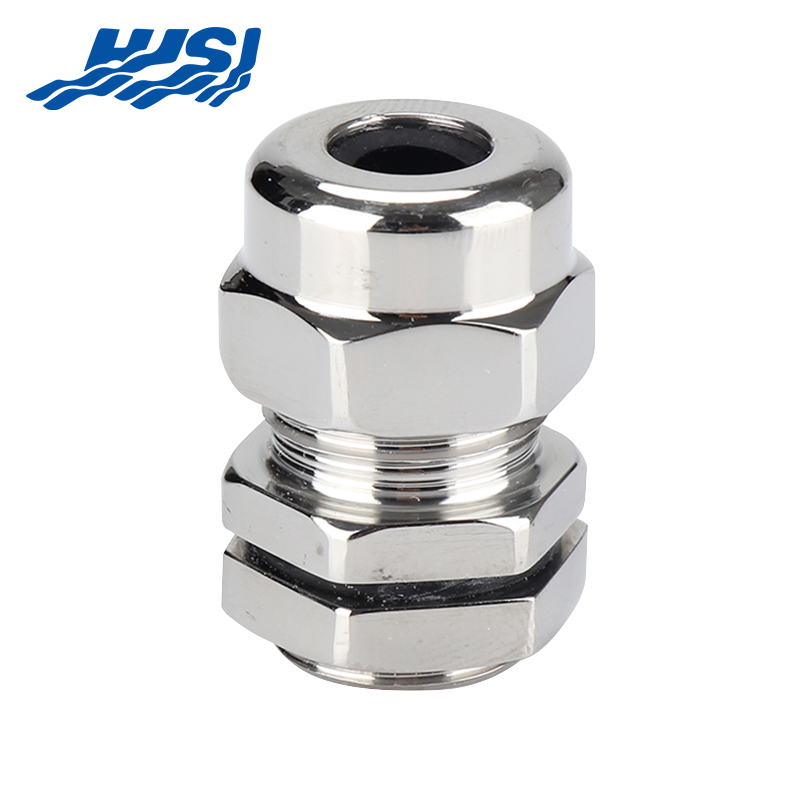
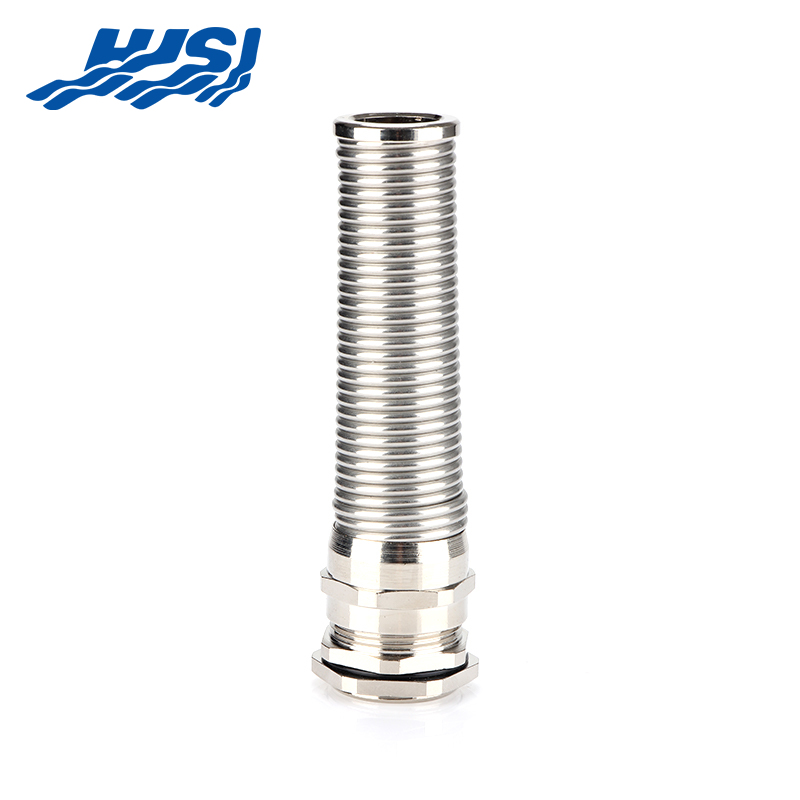
A typical armoured cable gland for industrial use has several parts working together:
The armour wires are opened out over the cone, and the clamp presses them in place. This creates a mechanical grip and an electrical contact at once. With firm steel wires the grip is easy to feel. With soft aluminium wires the installer must watch the pressure.
A gland kit brings the main components together in one set. Depending on the supplier, it may include the body, clamping parts, seals, lock nut, and sometimes a shroud or washer.
Armour type is only one piece of the picture. The environment shapes which material and finish make sense.
| Environment | What to Think About |
|---|---|
| Indoor dry areas | Standard materials are often enough |
| Outdoor exposure | Seals and finishes should handle sun, rain, and temperature swings |
| Coastal or marine areas | Salt in the air calls for strong corrosion resistance |
| Chemical or washdown areas | Seal and metal grade should suit the substances present |
| High vibration sites | Secure clamping and locking matter more |
A kit that works well in a dry workshop may not suit a harbour yard. Mentioning the location is just as useful as mentioning the armour type.
No, and many buyers mix these up.
Glands for non-explosive atmospheres are made for ordinary industrial and commercial use. Glands for hazardous areas follow separate rules, testing, and marking, because gas or dust could ignite. If your site carries any explosion risk, an ordinary gland is not suitable, whatever the armour type. Check the site classification with the project engineer before ordering.
Yes, whenever the armour serves as an earth conductor. The gland must touch the armour firmly, and the link to the enclosure must stay clean and tight.
Rules vary between countries and projects, so installers should work from the local standard and project drawings.
Good habits matter as much as good parts. Here is a routine many electricians follow:
With aluminium wires, tighten gradually and stop once the grip feels firm. With steel wires, the clamp can usually take more force, but the sheath seal still needs even pressure.
None of these are hard to fix. They only need a short conversation before the order is placed.
A clear enquiry saves days of back and forth. Include:
Drawings or photos of the cable end are a big help too.
Often yes, if the kit is designed to cover both. Confirm with the supplier and follow the fitting steps with care.
It is lighter and softer, so it needs gentler clamping. Strength requirements depend on the cable design and the job.
Possibly. Non-magnetic gland material is often preferred. State the cable type clearly when asking for a quote.
The armour does not seal the cable. The outer seal does. Even so, poorly clamped armour can let the cable move, which may loosen the seal over time.
Many manufacturers can adjust materials, finishes, or packaging to suit a project. Share your needs early so the options can be reviewed.
Sometimes the kit stays the same, and sometimes small details shift. What changes most is the care taken in matching the gland to the cable, the site, and the circuit type. Both steel wire and aluminium wire work well when the gland is chosen and fitted with attention.
The path is simple: know your armour, know your cable size, know your site, and share all three with your supplier. That short list prevents most of the problems described above.

2nd Floor, Building 2, No. 188, Punan 3rd Road, Economic Development Zone, Yueqing City, Wenzhou City, Zhejiang Province, China

Copyright @ Zhejiang HJSI Connector Co., Ltd. All rights reserved.

China Waterproof Breathable Valve Manufacturer
 +86-15858552966
+86-13356176555
 English
 русский
 عربى