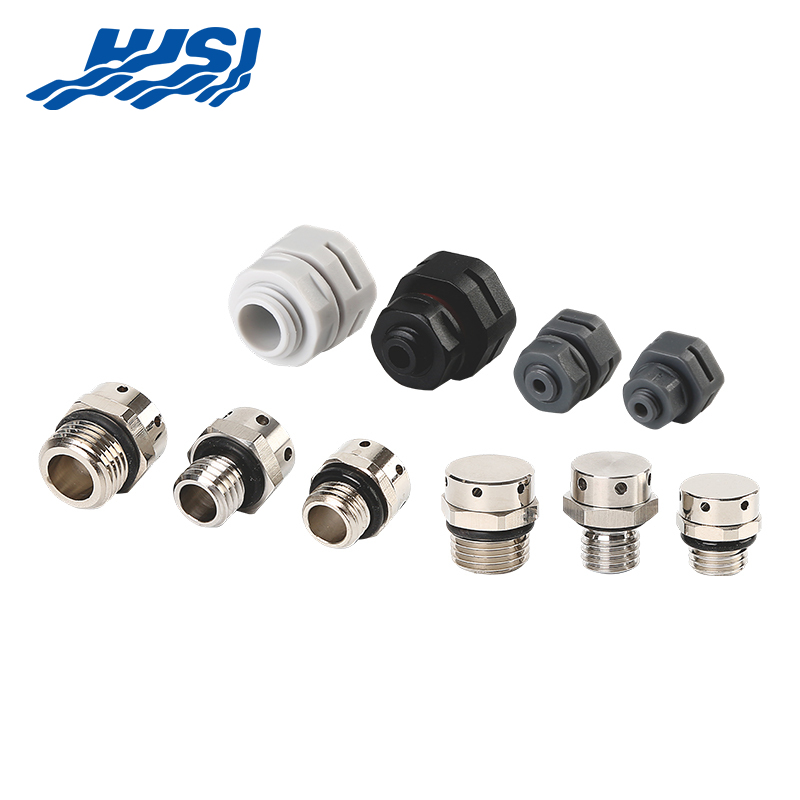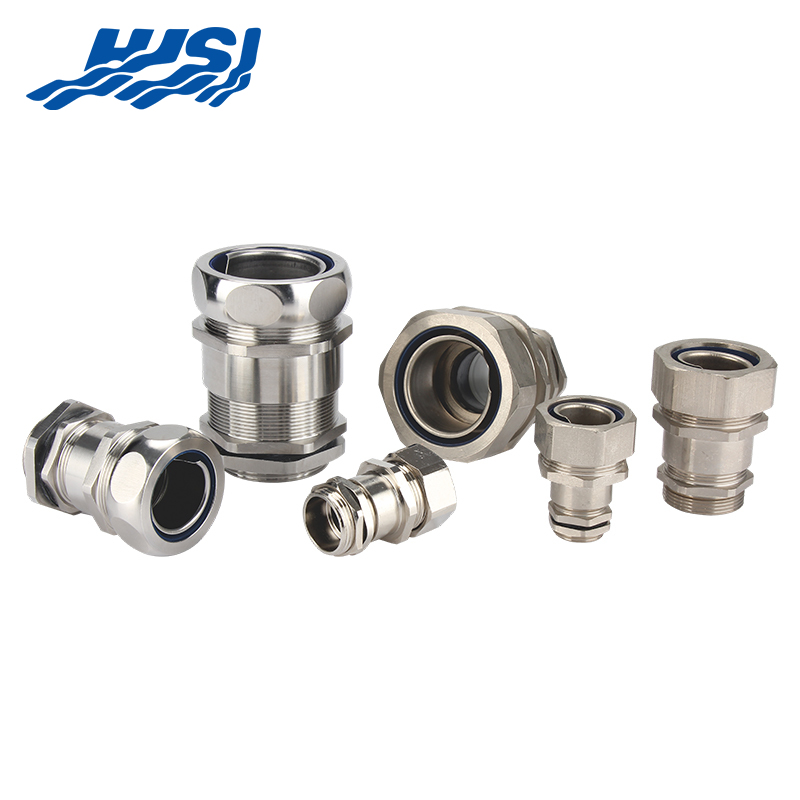
Sealed enclosures sound like a straightforward solution for outdoor LED fixtures. Keep everything out, keep everything safe. The problem is that sealing an enclosure does not freeze the air inside it. Temperature shifts during normal operation -- and especially between on and off cycles -- cause the internal air pressure to change. That pressure has to go somewhere, and if there is no controlled path for it, it pushes and pulls on the housing seals until they start to give. A Waterproof Breathable Valve handles this by letting air move in and out while keeping water and contaminants from doing the same. Getting the selection right, though, involves more than picking one off a shelf. The deployment environment, enclosure geometry, assembly process, and long-term maintenance access all feed into the decision.
Here is what actually happens inside a running LED fixture. Heat from the light engine warms the air inside the enclosure, pressure rises, and some of that air works its way out through any gap it can find. When the fixture shuts down and cools, internal pressure drops. The enclosure effectively tries to pull air back in -- and whatever path that air takes, it brings humidity with it.
This back-and-forth cycle does two things over time. It gradually fatigues the gaskets and seals, reducing how well they hold the rated IP protection level. And it introduces progressively more moisture into a space that has no way to dry out.
Moisture that gets in does not just sit there harmlessly. As the enclosure cools, vapor condenses on whatever surface it touches first -- often the lens, the circuit board, or the driver components. From there:
A valve that equalizes pressure consistently limits how much air the enclosure exchanges with the outside, which limits how much moisture gets in during each cycle.
The ingress protection rating on a Waterproof Breathable Valve needs to at least match the target rating of the enclosure as a whole. If it does not, the valve becomes the weakest point and caps the effective protection level of the entire assembly, regardless of how well everything else is sealed.
A rough framework for outdoor LED applications:
That said, IP rating describes ingress protection under test conditions. It does not say anything about how the valve holds up to UV exposure over several years, whether the membrane clogs in dusty environments, or how the housing material responds to industrial cleaning agents. Those factors need separate evaluation.
Expanded polytetrafluoroethylene (ePTFE) is a widely used membrane material for outdoor applications, and for good reason -- its pore structure lets air and vapor pass through freely while blocking liquid water droplets, which are far larger than gas molecules. But not all ePTFE membranes are built the same way, and catalog descriptions rarely capture the differences.
A few attributes worth confirming directly with the manufacturer:
When these attributes are not clearly documented, ask for test data rather than accepting a product category description as confirmation.
This is the factor that gets skipped over during selection more than any other. Air permeability describes the rate at which a Waterproof Breathable Valve allows gas exchange at a given differential pressure. It determines how quickly the enclosure can equalize after a temperature shift.
For smaller fixtures with modest temperature swings, a lower permeability rate is usually adequate. For larger enclosures, or for fixtures that experience rapid cooling -- sudden rain on a hot fixture being the classic example -- a valve that cannot exchange air fast enough will still allow pressure differentials to build, just more slowly.
When comparing products, ask for air permeability values measured at a consistent differential pressure. It is the only way to make a like-for-like comparison. Qualitative terms like "high airflow" are not comparable between different manufacturers' datasheets.
The housing holds everything together, but it also defines how the valve survives its installation environment over time. Three materials come up regularly:
The housing material also defines what cleaning agents can be used on or near the valve without degrading the seal interface. A valve housing that slowly softens or swells from chemical exposure will compromise the seating seal gradually, even if the membrane itself stays intact.
These three formats suit different production environments and maintenance scenarios. Choosing the wrong one creates problems down the line even if the Waterproof Breathable Valve itself is well-specified.
Threading into a pre-tapped port gives a mechanically secure connection that can be removed and replaced if needed. That replaceability is worth something in LED fixtures with long expected service lives.
A few things to get right during assembly:
These press into a prepared hole and lock mechanically without threading. They work well for high-volume assembly lines where torque-controlled installation adds time and complexity.
The trade-off is that they are generally not field-replaceable without damaging the valve or the enclosure. The hole diameter and wall thickness also need to be precisely matched to the valve's specification -- a loose fit compromises the seal, and a tight fit can crack the housing during press-in.
Adhesive vents bond to the enclosure surface without requiring a drilled or tapped port. They are practical for thin-walled enclosures or designs where structural modifications are not feasible.
The bonding surface needs to be clean, flat, and chemically compatible with the adhesive. High-temperature environments are where adhesive bonds tend to fail first -- the adhesive temperature rating should be checked against the actual surface temperature of the enclosure at operating conditions, not just the ambient air temperature. These vents are not field-replaceable.
The valve should be placed where water naturally drains away from the membrane rather than pooling against it. Side-mounted or downward-facing positions with a cap or hood that sheds water are generally preferable to any position where the membrane faces directly upward into rainfall.
Positions to avoid:
In a small fixture, the valve position relative to the internal air volume does not matter much. In a larger or compartmentalized enclosure, it does. A valve placed near the area of greatest thermal activity will respond more quickly to internal pressure changes than one mounted at a far corner of the housing.
For fixtures with distinct internal zones -- a driver compartment separated from the optics chamber, for example -- a single valve may not provide adequate equalization to both areas. That is worth checking during the design phase rather than discovering during field testing.
IP rating is the one criterion that shows up on every datasheet, which is probably why it tends to dominate the selection process. But a Waterproof Breathable Valve that meets the IP requirement and falls short on membrane durability, housing chemical resistance, or air permeability is still a poor fit for the application.
ePTFE membrane quality varies between manufacturers in ways that are not visible from the outside. Pore structure, surface treatment, and the way the membrane is bonded to the housing all affect how the component performs after extended UV exposure and repeated wet-dry cycling. Where service life is a real concern, field performance data is worth asking for.
The valve-to-enclosure interface is another area that gets less attention than it deserves. A well-performing membrane in a valve that is not properly seated -- whether from thread mismatch, incorrect installation torque, or an incompatible seating geometry -- will allow ingress at the interface. The membrane never gets the chance to prove itself.
Valve selection rarely comes down to a single specification. It involves matching several performance requirements simultaneously -- IP rating, membrane properties, housing material, installation format, and positioning -- against the specific conditions of the deployment environment. Getting all of those right from a catalog description alone is difficult. Zhejiang HJSI Connector Co., Ltd. supplies Waterproof Breathable Valve components with clearly defined performance specifications for outdoor LED and electronics enclosure applications. If you are working through the design or sourcing phase of an LED enclosure project, contact the team to discuss your application requirements and identify components that align with your protection, installation, and service life needs.

2nd Floor, Building 2, No. 188, Punan 3rd Road, Economic Development Zone, Yueqing City, Wenzhou City, Zhejiang Province, China

Copyright @ Zhejiang HJSI Connector Co., Ltd. All rights reserved.

China Waterproof Breathable Valve Manufacturer
 +86-15858552966
+86-13356176555
+86-15858552966
+86-13356176555
 English
 русский
 عربى
عربى