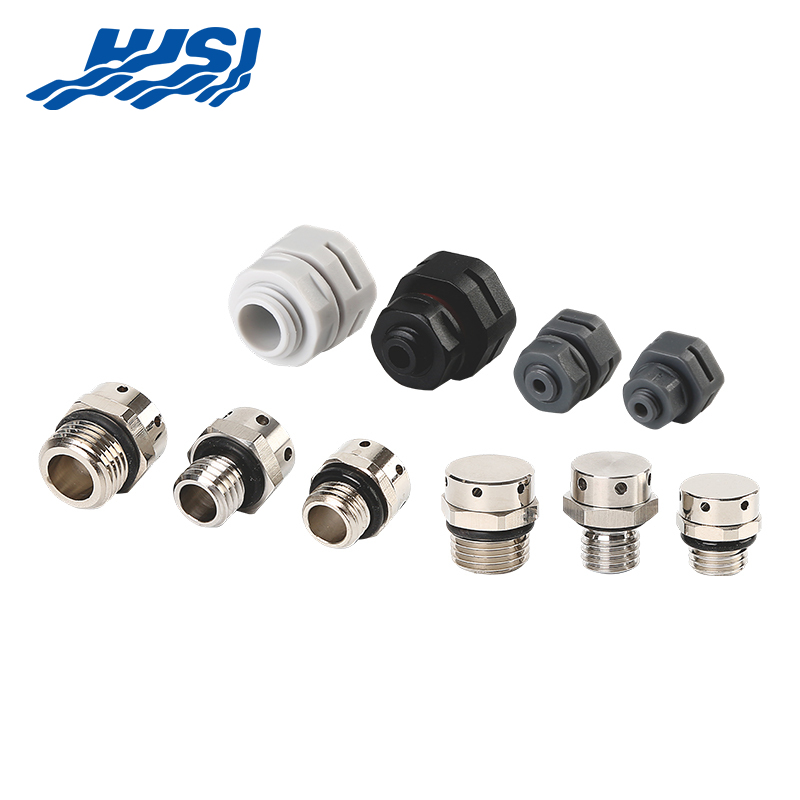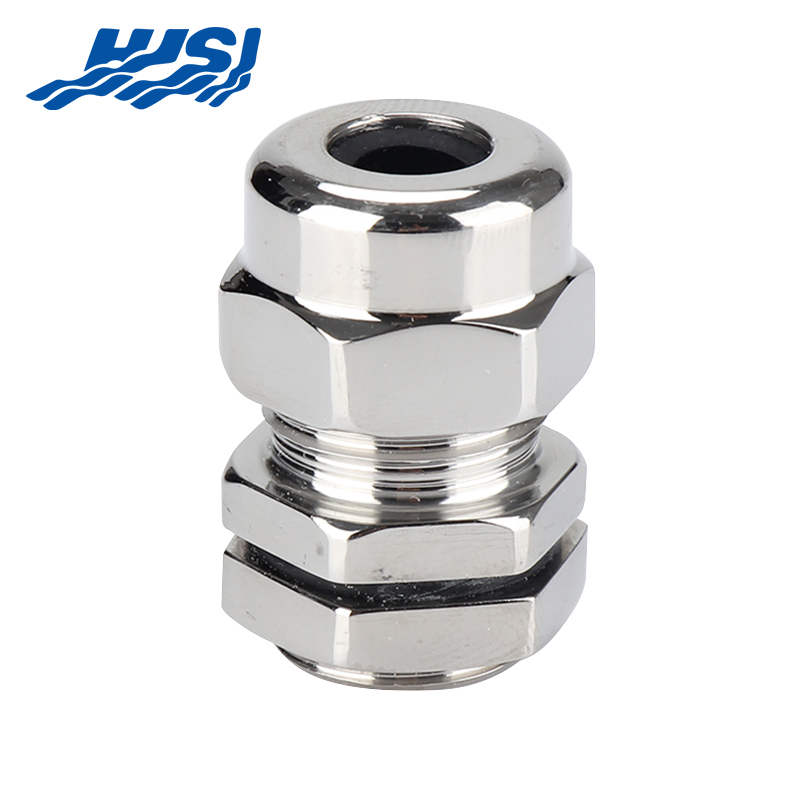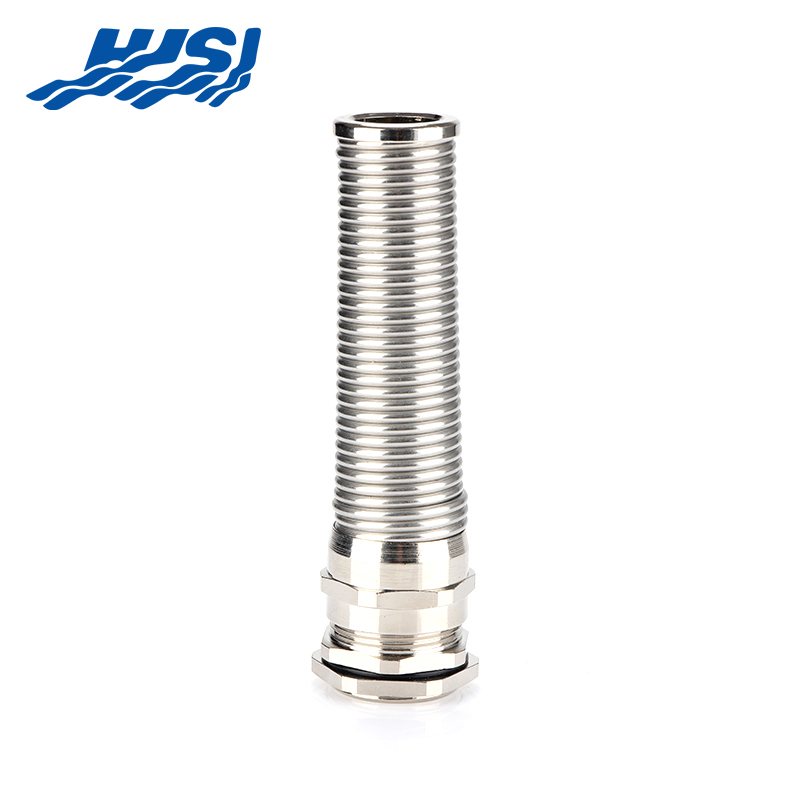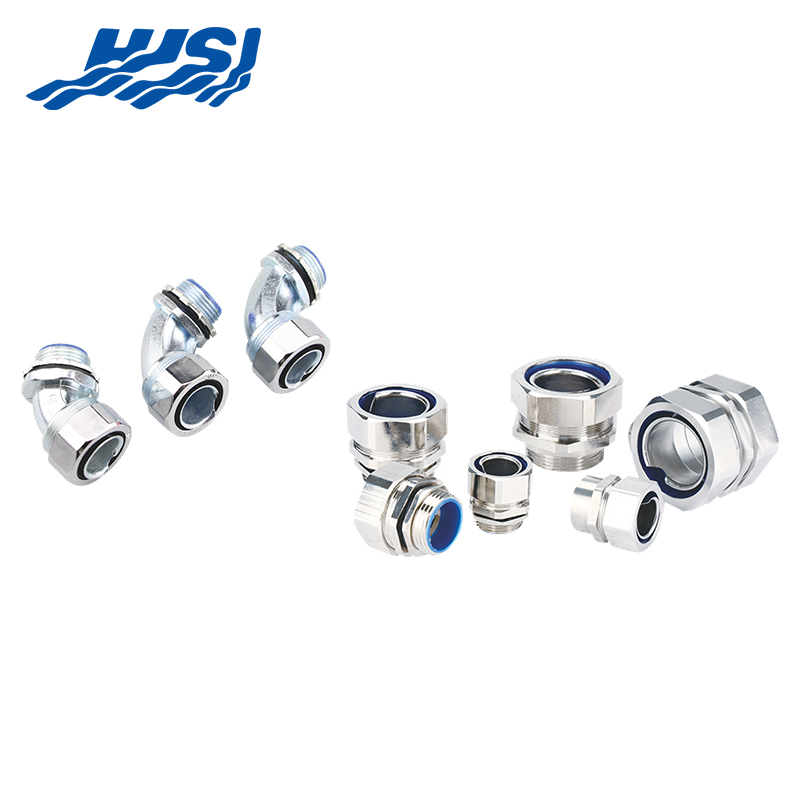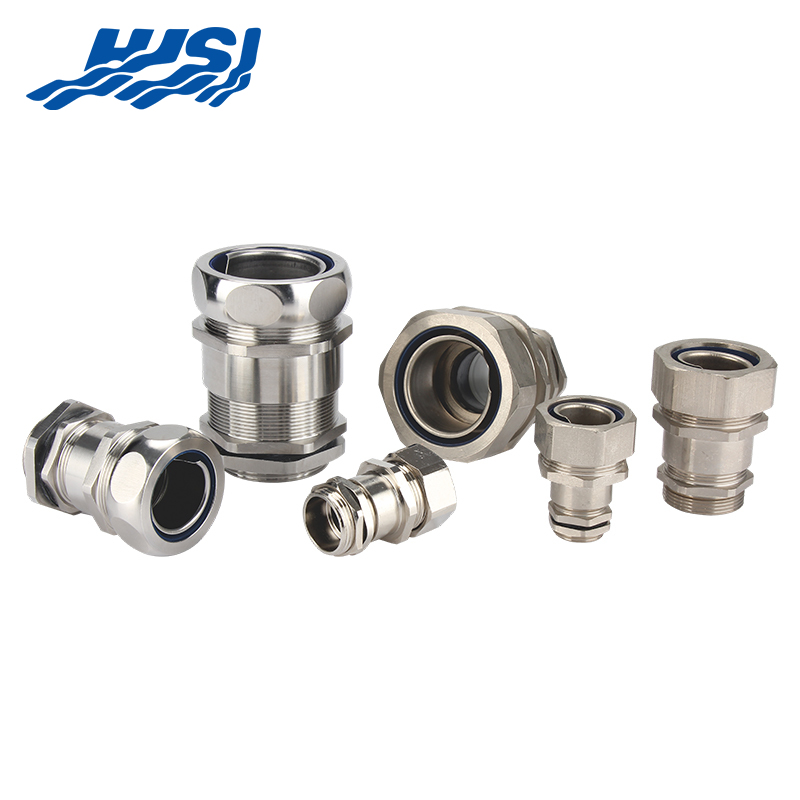
Modern medical instruments and technical laboratory devices operate in environments saturated with electromagnetic energy. Power converters switch at high frequencies, wireless networks transmit data packets, electric motors generate broadband noise, fluorescent ballasts produce harmonics, and even nearby cell phones emit pulses. All of these sources create fields that can couple into cables and induce voltages or currents in places where only the intended signal should exist. Properly designed EMC Cable Gland solutions play a critical role here, ensuring that cable entry points maintain continuous shielding integrity and prevent electromagnetic leakage or ingress at the point where cables pass through equipment enclosures.
When the induced disturbance is large enough, it appears as noise on analog sensor lines, bit errors on digital communication buses, false triggers on control inputs, or instability in feedback loops. In a patient monitor, such noise can mask a subtle arrhythmia. In a precision balance or chromatograph, it can shift a measurement by an amount larger than the acceptable tolerance. In automated manufacturing test stands, it can cause erroneous pass/fail decisions. The goal of electromagnetic compatibility design is to keep those unwanted voltages and currents below levels that affect function.
Cable assemblies are among the longest and most exposed conductive paths in any system. They act as unintentional antennas—both receiving external fields and radiating energy generated inside the equipment. The connectors at each end of the cable are the gateways where shielding must transition from the cable braid or foil to the equipment enclosure. A well-engineered EMC cable connector maintains electrical continuity of the shield, minimizes impedance discontinuities, and provides a low-resistance path to ground so interference currents can return to their source instead of flowing through sensitive circuits.
An EMC cable connector has several functional zones that work together to preserve shielding integrity while allowing reliable signal and power transfer.
The outer body or shell is typically a machined or die-cast metal component—aluminum for lower weight, stainless steel for corrosion resistance in harsh environments, or zinc alloys for cost-effective production. The shell encloses the contact insert and forms the primary Faraday cage around the terminations. Its wall thickness and material conductivity determine how much electromagnetic energy is reflected or absorbed before reaching the internal contacts.
The contact insert holds the pins or sockets. These are arranged in patterns that separate high-voltage or high-current conductors from low-level analog or high-speed digital lines whenever possible. Gold-over-nickel plating on the contacts reduces contact resistance and prevents oxidation that could introduce intermittent noise. Some inserts include insulating barriers or grounded guard rings between critical signal pins to reduce capacitive coupling inside the connector itself.
The cable entry area includes a back-shell or gland that clamps the cable jacket and allows the shield braid to be terminated directly to the connector body. Common termination methods include a metal ferrule crimped over the folded-back braid, a compression ring that presses the braid against an internal cone, or a solder cup that accepts the braid wires. The goal is to achieve a 360-degree, low-impedance connection so that shield currents flow directly into the connector shell rather than radiating from an incomplete joint.
The mating interface is where plug and receptacle meet. Threaded couplings provide high clamping force and reliable contact pressure. Bayonet mechanisms allow quick connection while still maintaining circumferential metal-to-metal contact. Push-pull designs rely on spring-loaded fingers or multi-lam contacts to ensure consistent shielding even after many mating cycles. Conductive O-rings, fingerstock gaskets, or metallized elastomer seals close any remaining gaps at the mating plane.
Strain relief and environmental sealing elements protect the cable entry from mechanical stress and ingress of dust or liquids. These features do not directly contribute to shielding but are essential for long-term reliability in clinical or laboratory settings.
Shielding effectiveness is the ratio of electromagnetic field strength on the unprotected side to the field strength on the protected side, usually expressed in decibels. At low frequencies magnetic fields dominate, and shielding relies on high-permeability materials or thick conductors. At radio frequencies electric fields are more prominent, and conductivity and enclosure continuity become the dominant factors.
In practice, the connector must maintain shield continuity from the cable braid through the back-shell, across the shell body, through the mating interface, and into the equipment chassis. Any slot, seam, or poor contact creates an aperture that allows energy to leak. The size of the aperture relative to the wavelength determines how much leakage occurs: apertures smaller than about one-tenth of the wavelength attenuate strongly, while larger ones behave as efficient radiators.
To minimize apertures, designers use overlapping metal surfaces, multiple contact points around the circumference, and spring elements that compensate for manufacturing tolerances, plating wear, or thermal expansion. Grounding the connector shell to the equipment enclosure at multiple points provides redundant paths for interference currents and reduces the voltage drop that could drive noise into the system.
Medical devices must operate reliably in hospitals, clinics, ambulances, and sometimes home care settings where electromagnetic environments vary widely. Connectors in these systems protect low-amplitude bio-potentials, high-frequency imaging signals, and control lines from corruption.
Physiological monitoring systems connect electrodes or transducers to central stations or bedside units. The signals from ECG leads, EEG scalp electrodes, or invasive pressure transducers are typically in the microvolt to millivolt range. Even a few microvolts of 50/60 Hz power-line interference or radiofrequency pickup can obscure diagnostic features. Connectors with continuous 360-degree shield termination and low contact resistance keep common-mode noise low and preserve waveform fidelity.
Ultrasound scanners use connectors to attach probes that contain dozens of piezoelectric elements. The cables carry both transmit pulses at several megahertz and receive echoes that are orders of magnitude weaker. Shielding inside the connector prevents external noise from mixing with the echoes and appearing as artifacts on the image. Quick-release or bayonet styles allow probes to be changed rapidly during examinations.
Endoscopic and laparoscopic systems transmit high-definition video along with illumination control and insufflation signals. Connectors at the sterile-field interface must maintain shielding while permitting disconnection for autoclaving. Designs that separate video lines from power and control conductors reduce internal coupling, preserving image quality during long procedures.
Infusion pumps, ventilators, and dialysis machines connect flow sensors, pressure transducers, and valve actuators through multi-conductor cables. In intensive care units or operating theaters, these cables run near electrosurgical units, defibrillators, and imaging equipment. EMC connectors prevent radiated emissions from one device from entering another and ensure that control signals remain free of induced noise.
Portable and wearable medical devices—ambulatory ECG recorders, pulse oximeters, or insulin pumps—require compact connectors that still provide effective shielding. These connectors balance size, weight, and mating durability while protecting against interference from household appliances or cellular networks.
Laboratory and industrial technical equipment often measures phenomena at the edge of detectability. Connectors in these systems shield against interference from the laboratory environment itself.
Spectroscopic instruments—UV-Vis, infrared, fluorescence, Raman—connect light sources, detectors, and monochromators through shielded cables. A small amount of line-frequency pickup or radiofrequency interference can shift absorption peaks or raise the noise floor, degrading resolution. Connectors that maintain shield continuity from fiber-optic interface to data-acquisition card help preserve signal-to-noise ratio.
Chromatography systems link pumps, injectors, columns, and detectors. Flow and pressure signals are low-level analog; detector outputs can be picoampere currents or microvolt voltages. EMC connectors reduce noise from nearby vacuum pumps, chillers, or computer power supplies, ensuring reproducible retention times and peak areas.
| Instrument Type | Key Connected Components | Interference Risks & Effects | Role of EMC Connectors |
|---|---|---|---|
| Spectroscopic Instruments (UV-Vis, IR, Fluorescence, Raman) | Light sources, detectors, monochromators (via shielded cables) | Line-frequency pickup or RF interference shifts absorption peaks, raises noise floor, degrades resolution | Maintain shield continuity from fiber-optic interface to data-acquisition card, preserving signal-to-noise ratio |
| Chromatography Systems | Pumps, injectors, columns, detectors | Noise from vacuum pumps, chillers, or computer power supplies affects low-level analog flow/pressure signals and picoampere/microvolt detector outputs | Reduce induced noise, ensuring reproducible retention times and peak areas |
Mass spectrometry and atomic emission instruments handle extremely low ion currents or photon fluxes. Connectors in the high-vacuum interface or ion-source region must provide shielding while accommodating differential pumping and thermal isolation. Triple-shielded or triaxial connectors are sometimes used to achieve the required isolation.
Test and measurement racks—containing oscilloscopes, function generators, spectrum analyzers, or arbitrary waveform generators—use EMC connectors for probe leads, reference inputs, and synchronization lines. Shielding prevents pickup from the instrument's own switching supplies or from adjacent test setups, allowing engineers to observe true signal characteristics.
Industrial automation and process control systems connect field sensors and actuators to programmable controllers. In factories filled with variable-frequency drives, arc welders, and induction heaters, connectors shield analog 4–20 mA loops and digital fieldbus lines from common-mode noise and radiated disturbances.
Scientific experiments—laser interferometry, cryogenic detectors, particle beam diagnostics—require connectors that preserve signals in the femtoampere or nanovolt range. These applications often use custom or heavily modified connectors with double shielding, guard rings, and low-triboelectric cables.
Designers face several recurring trade-offs.
Size versus shielding performance: Adding more metal or more contact fingers improves shielding but increases connector diameter and weight. Miniature connectors for portable devices often sacrifice some low-frequency magnetic shielding to stay compact.
Mating durability versus contact resistance: Connectors intended for thousands of cycles need spring-loaded or resilient contact elements. These can wear or relax over time, raising resistance and potentially introducing noise. Designs that balance spring force and material fatigue extend reliable life.
Environmental protection versus EMC continuity: Seals that keep liquids and dust out can introduce non-conductive barriers unless conductive gaskets or back-drilled shells are used.
Cost versus system-level reliability: A higher-quality EMC connector increases bill-of-materials cost but reduces field failures, rework, and warranty claims. In medical and high-value technical equipment, the long-term savings usually outweigh the initial expense.
Vibration and shock resistance: Mobile carts, ambulances, and robotic systems subject connectors to continuous vibration. Positive locking, redundant contact points, and robust strain relief help maintain shield continuity under acceleration.
Thermal cycling: Equipment that moves between cold storage and heated sterilization or outdoor field use experiences expansion and contraction. Connectors must maintain low resistance and shielding effectiveness across the temperature range.
Installation practices directly influence EMC performance.
Cable preparation must preserve the shield integrity. The braid should be flared evenly and clamped without cutting strands. Inner conductors should be stripped to the correct length to avoid excess exposed wire that could act as an antenna.
Termination requires full circumferential contact between shield and connector body. Crimping tools must apply even pressure; hand-soldering needs careful heat control to avoid damaging the braid.
Cable routing should keep sensitive cables away from high-current power lines, switching converters, and inductive loads. Crossing power cables at right angles reduces coupling. Using shielded conduits or separate cable trays adds protection.
Grounding philosophy depends on the system. In many medical devices, single-point grounding at the equipment chassis avoids loops. In mixed-signal systems, analog and digital grounds may be separated and joined only at one point.
Periodic inspection during preventive maintenance checks for loose back-shells, corroded contacts, or damaged strain relief. Cleaning with approved solvents removes oxidation without leaving conductive residues.
Component-level testing measures the transfer impedance of the connector alone. A known current is injected onto the shield, and the resulting voltage inside is measured. Lower transfer impedance indicates better shielding.
System-level immunity testing places the complete equipment in a field generated by antennas or TEM cells. The device is monitored for susceptibility while operating under normal conditions.
Emission testing measures radiated and conducted energy leaving the equipment through the cables. Connectors that minimize leakage help the system pass these tests.
Accelerated life testing combines temperature cycling, vibration, humidity, and mating cycles while monitoring shield continuity and contact resistance.
Field trials in real environments—busy hospital wards, noisy factories, or research labs with multiple instruments—confirm performance under actual interference conditions.
| Test Type | Description / Method | Purpose / Outcome Measured |
|---|---|---|
| Emission Testing | Measures radiated and conducted energy emitted via cables | Ensures connectors minimize leakage so equipment meets emission limits |
| Accelerated Life Testing | Combines temperature cycling, vibration, humidity, and repeated mating cycles | Monitors long-term shield continuity and contact resistance under stress |
| Field Trials | Real-world deployment in busy hospital wards, noisy factories, or multi-instrument labs | Confirms reliable performance against actual environmental interference |
Connector technology continues to evolve to meet emerging needs.
Smaller, lighter connectors with maintained or improved shielding support the growth of portable and wearable medical devices.
Connectors that integrate diagnostic monitoring—contact resistance, shield continuity, temperature—allow predictive maintenance and early detection of degradation.
New materials—conductive polymers, advanced composites, nanomaterials—promise lighter weight and higher performance.
As wireless power transfer, 5G/6G communication, and high-power switching electronics become more common, connectors will need to handle wider frequency ranges and stronger fields.
Sustainable design practices—recyclable housings, reduced use of hazardous substances, longer service life—align with broader environmental goals.
In the demanding world of medical and technical equipment, where signal integrity, patient safety, and measurement precision depend on flawless electromagnetic compatibility, HJSI delivers connectors engineered with unwavering attention to the details that truly matter. Every design prioritizes continuous 360-degree shield termination, low-impedance mating interfaces, robust strain relief, and reliable grounding paths—ensuring that external interference stays outside and internal signals remain clean from the first connection to the last. Engineers and system integrators appreciate the consistent shielding performance across vibration, temperature cycling, and repeated mating, while maintenance teams value the durability that reduces field failures and simplifies troubleshooting.
Above all, HJSI understands that a cable connector is far more than a mechanical link—it is the silent guardian that protects the accuracy of diagnostics, the reliability of life-support systems, and the validity of scientific data. By selecting HJSI, you partner with a team that treats electromagnetic compatibility not as an afterthought, but as the foundational element that enables medical devices to save lives and technical instruments to reveal truth, project after project, connection after connection.

2nd Floor, Building 2, No. 188, Punan 3rd Road, Economic Development Zone, Yueqing City, Wenzhou City, Zhejiang Province, China

Copyright @ Zhejiang HJSI Connector Co., Ltd. All rights reserved.

China Waterproof Breathable Valve Manufacturer
 +86-15858552966
+86-13356176555
+86-15858552966
+86-13356176555
 English
 русский
 عربى
عربى