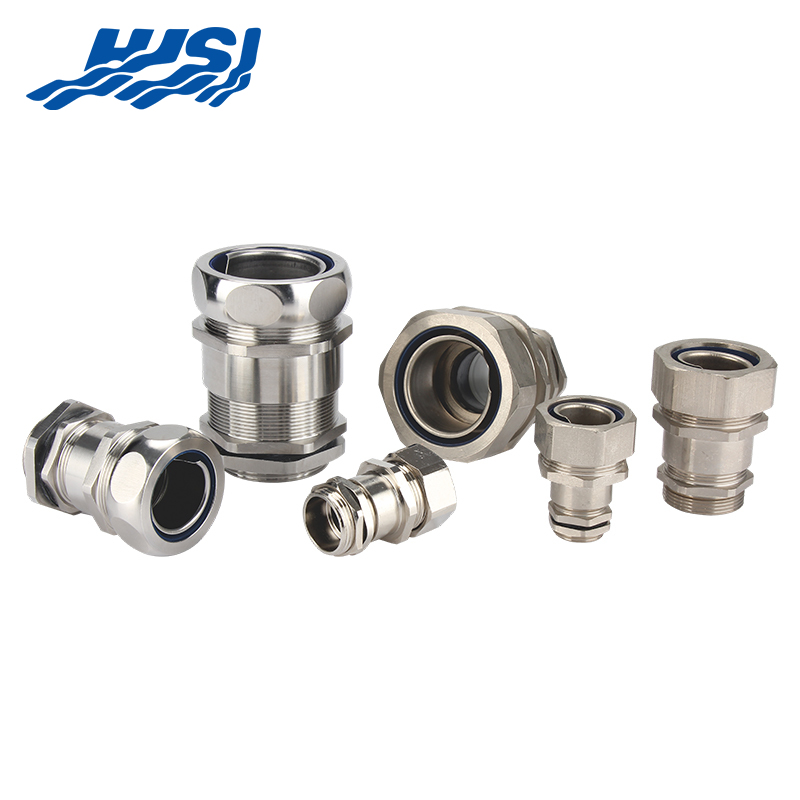
Electrical conduits serve as protective pathways for conductors in virtually every type of building and industrial facility. They shield wires from physical harm, moisture, chemicals, abrasion, and accidental contact while organizing cabling for easier identification, maintenance, and future modifications. Flexible metal conduits are particularly valuable when rigid pipe would be impractical—around moving machinery, through tight spaces, across expansion joints, or in locations subject to vibration or occasional impact. Three widely used flexible metal conduit types are Corrugated Metal Conduit (CMC), electrical flexible metal conduit (EFMC), and electrical metal flex conduit (EMFC). Although all three are metallic and flexible, their construction methods, mechanical behavior, environmental resistance, and preferred applications differ in meaningful ways.
These conduits are manufactured primarily from galvanized steel strip or, less commonly, aluminum. The metal provides inherent grounding continuity (when installed correctly), good crush resistance, and a level of electromagnetic shielding that plastic conduit cannot offer. Flexibility is created through deliberate geometric features: annular corrugations in CMC and helical or interlocked windings in EFMC and EMFC. Each style balances bendability against strength, durability, and ease of installation differently.
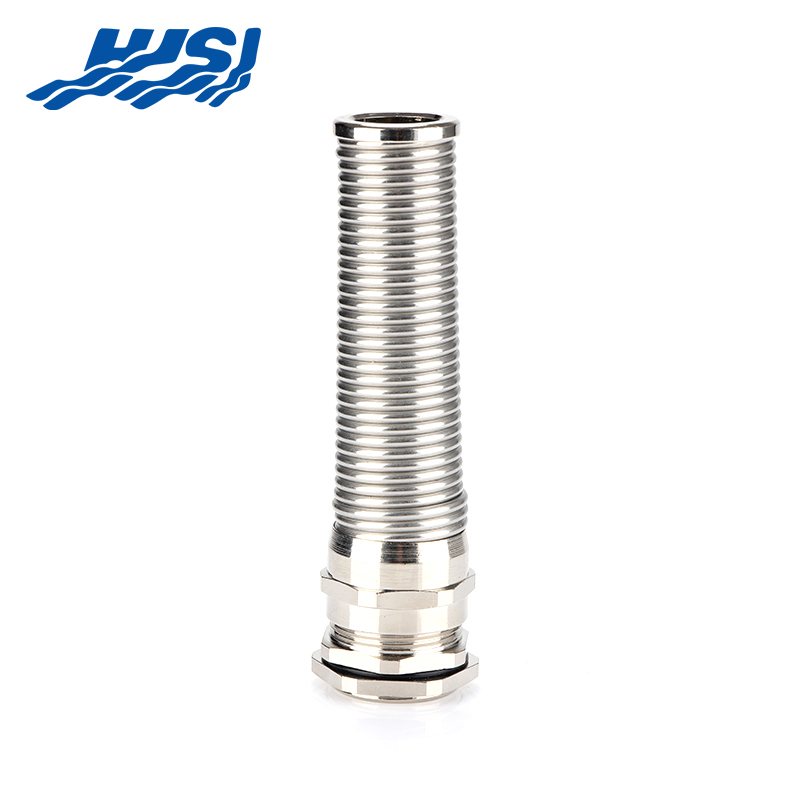
CMC is characterized by a continuous series of evenly spaced annular ridges running the full length of the tube. This corrugated profile resembles a flexible accordion or bellows and is the source of the conduit's ability to bend smoothly in any direction without collapsing or kinking severely.
The conduit is typically roll-formed from flat steel strip that is welded or mechanically locked along a longitudinal seam, then corrugated in a separate operation. Aluminum versions exist for weight-sensitive or corrosion-prone environments. Many manufacturers apply an outer coating or jacket to enhance liquid-tight performance, although uncoated versions are also common for dry locations.
The corrugations serve several purposes. They allow tight-radius bends without the need for factory elbows or excessive fittings. They distribute impact forces across many small ridges rather than concentrating stress at one point, improving crush resistance. They also create small air pockets that provide a degree of thermal insulation, helping to protect conductors from rapid temperature changes.
CMC is frequently chosen for outdoor branch circuits, landscape lighting, sign installations, temporary construction power, rooftop equipment connections, and any run exposed to rain, snow, lawn irrigation, or occasional chemical splash. Its liquid-tight versions (when fitted with appropriate compression fittings) are accepted in wet locations per applicable codes. The conduit's ability to hold shape after bending simplifies securing it to walls, ceilings, or structural members.
| Category | Details / Common Uses | Key Advantage / Reason |
|---|---|---|
| Typical Applications | Outdoor branch circuits | Exposed to weather; needs reliable protection |
| Landscape lighting | Flexible routing around gardens/paths | |
| Sign installations | Bends to fit frames or poles | |
| Temporary construction power | Quick setup for job-site wiring | |
| Rooftop equipment connections | Handles wind, rain, temperature swings | |
| Runs exposed to rain, snow, irrigation, chemical splash | Liquid-tight versions seal effectively | |
| Wet Location Suitability | Liquid-tight with proper compression fittings | Accepted in wet/damp areas per code |
| Shape Retention | Holds shape after bending | Easier to secure to walls, ceilings, or structures |
Installation begins with careful measurement and cutting. A rotary cutter or fine-tooth hacksaw works well; jagged edges should be deburred to protect conductor insulation. Bends are usually made by hand or with a bending spring/tool, respecting the manufacturer's minimum bend radius to avoid over-stressing the metal. Support straps or clamps are installed at intervals dictated by code, with additional support near terminations and fittings. Liquid-tight connectors compress a gasket against the corrugations to maintain the seal. Pulling lubricant reduces friction when drawing conductors through longer runs.
Routine inspection involves checking for dents, corrosion at fittings, loosening of supports, or damage from impact or abrasion. Damaged sections can be cut out and replaced using a coupling and short length of new conduit. Because CMC is relatively stiff when straight, it resists incidental deformation better than smoother flexible types.
EFMC is made by winding a flat metal strip into a helix so that the edges interlock or overlap, creating a continuous, spiral tube. This helical construction allows the conduit to stretch, compress, twist, and flex repeatedly without permanent deformation.
Most EFMC is produced from galvanized steel strip, although stainless steel is available for highly corrosive atmospheres. Some versions include a thin thermoplastic or PVC jacket over the metal core for additional corrosion protection and liquid-tight performance. The smooth interior surface reduces friction during conductor installation.
The spiral design gives EFMC exceptional dynamic flexibility. It can absorb repeated bending, vibration, and axial movement without fatigue failure. This makes it a standard choice for connections to reciprocating or vibrating equipment—pumps, compressors, machine tools, HVAC units, conveyors, and similar apparatus. It is also used to cross building expansion joints, supply power to movable control panels, and connect portable tools or equipment that is repositioned regularly.
EFMC accommodates minor axial displacement because the helix can elongate slightly under tension. The continuous metal-to-metal contact along the spiral provides a reliable grounding path when fittings are properly installed and tightened.
Installation requires cutting the conduit with a rotary cutter or hacksaw designed for spiral conduit, followed by deburring to remove sharp edges. Bend radii should be observed to prevent the helix from opening or collapsing. Fittings are usually screw-in or compression types that grip the convolutions securely. Grounding continuity must be verified at each connection point.
Inspection focuses on fatigue cracking along the helix, corrosion in exposed areas, or loosening of fittings caused by vibration. In high-vibration applications, additional support clamps may be needed to limit whip action and reduce stress on terminations.
Electrical metal flex conduit refers to a family of heavy-duty flexible metal conduits that prioritize mechanical strength while retaining usable flexibility. Terminology varies, but EMFC typically describes interlocked or square-locked designs that are noticeably more robust than standard EFMC.
The conduit is formed by winding a thicker metal strip so that the edges hook together in an interlocking pattern, creating a very strong yet still bendable tube. Steel is the primary material, with stainless steel offered for severe corrosion environments. The interlocking joint resists pulling apart under tension and provides excellent crush resistance.
EMFC is selected when the installation demands greater protection than standard flexible conduit can provide. Typical applications include connections to heavy industrial equipment, routing through areas subject to occasional foot traffic or light vehicle movement, and installations in facilities where mechanical abuse is possible. The robust construction also makes EMFC suitable for use as an equipment grounding conductor in some jurisdictions.
The interlocking design produces a conduit that resists longitudinal compression and stretching far better than spiral-wound EFMC. This dimensional stability is valuable when the conduit must maintain a fixed length between terminations on moving equipment.
Installation follows similar steps to EFMC but requires heavier-duty fittings capable of gripping the thicker, interlocked profile. Bend radii are larger than those for EFMC, and more gradual bends are preferred. Support requirements are often more stringent due to the higher weight per foot.
Maintenance involves checking for deformation, joint separation, or corrosion. Because the conduit is mechanically very strong, significant damage is usually obvious and localized, making repairs straightforward.
Here are the main ways corrugated metal conduit (CMC), electrical flexible metal conduit (EFMC), and electrical metal flex conduit (EMFC) differ in real-world performance.
| Aspect | CMC (Corrugated) | EFMC (Helical) | EMFC (Interlocked) |
|---|---|---|---|
| Bend Radius & Flexibility | Tight bends (corrugations compress evenly) | Widest motion + best fatigue resistance | Moderate flexibility, better shape retention |
| Crush & Impact Resistance | Good (ridges spread load) | Adequate for vibration/light contact | Highest (interlocking joint) |
| Liquid-Tight Capability | Excellent with fittings | Good when jacketed | Usually dry-location only |
| Vibration / Movement | Static or occasional repositioning | Best for constant/high-frequency vibration | Moderate movement + good stability |
| Weight & Support Needs | Lighter → fewer supports | Lighter → fewer supports | Heavier → closer supports required |
| EMI Shielding | Good metal shielding | Good metal shielding | Good; slight edge from continuous contact |
Installation practices common to all three
Good installation practices are similar regardless of conduit type and are essential for safety, code compliance, and long service life.
Routine inspection and maintenance
Regular checks help catch problems early and extend conduit life.
In high-vibration locations, check fittings more often for loosening. If a section is damaged, replace it rather than trying to patch—the repair rarely returns the conduit to its original strength and reliability.
Corrugated metal conduits, flexible metal conduits, and metal hoses each fulfill different specific needs in electrical installations, ranging from waterproof protection in exposed or damp areas to superior fatigue resistance under continuous vibration and robust mechanical strength in heavy-duty environments. The correct choice depends on a clear assessment of movement, environmental exposure, potential physical damage, grounding requirements, and applicable code requirements. When a conduit can operate reliably for many years, it effectively protects conductors, reduces maintenance hassles, and ensures the safe and compliant operation of the electrical system.
For contractors and facility managers seeking consistently high-quality products across these three conduit types, HJSI products are a trusted choice. Their flexible metal conduits emphasize uniform material thickness, precise interlocking or corrugated geometry, robust corrosion-resistant coatings, and fittings designed for secure and reliable connections—features that help maintain grounding continuity, resist fatigue, and simplify installation in practical applications. HJSI products focus on practical durability, ease of field handling, and long-term reliability, providing conduits that perform well under vibration, moisture, and mechanical stress while minimizing labor time and rework.
Choosing HJSI means choosing conduits designed to meet the real-world challenges of construction sites, ensuring that wiring systems remain protected and operational day after day, year after year.

2nd Floor, Building 2, No. 188, Punan 3rd Road, Economic Development Zone, Yueqing City, Wenzhou City, Zhejiang Province, China

Copyright @ Zhejiang HJSI Connector Co., Ltd. All rights reserved.

China Waterproof Breathable Valve Manufacturer
 +86-15858552966
+86-13356176555
+86-15858552966
+86-13356176555
 English
 русский
 عربى
عربى